

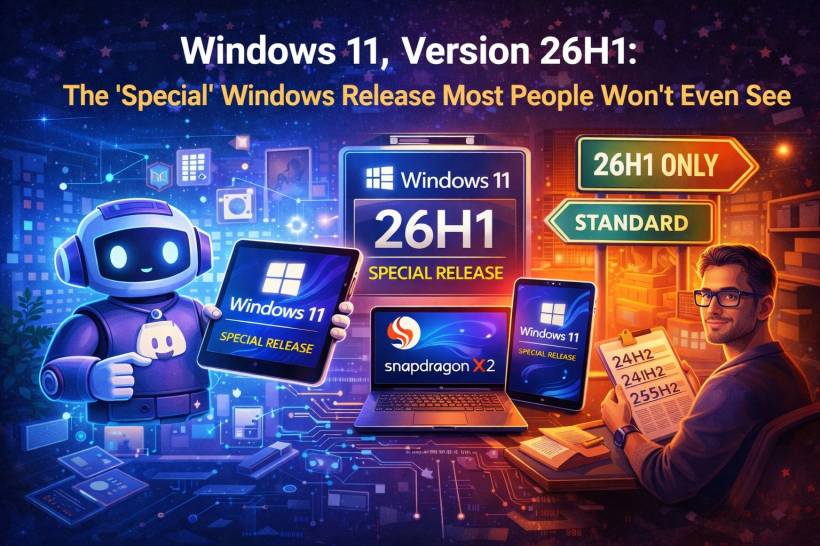
Every now and then, Microsoft ships a Windows build that isn't really meant for the usual "click Windows Update and install it" crowd. Windows 11, version 26H1 is exactly that kind of release. Instead of being a mainstream feature update for everyone, 26H1 is a targeted Windows 11 version built to support specific new hardware arriving in early 2026. Think of it as Windows making room for new silicon and device capabilities without shaking up the predictable rollout plan most businesses depend on.
Why 26H1 exists in the first place
Microsoft's main message is: this release is about enabling new device innovation, not pushing a big new user-facing update to the whole world.
At launch, Microsoft says new devices with Qualcomm Snapdragon X2 Series processors will ship with Windows 11, version 26H1. This is why it's scoped: it's designed around specific platform changes for that silicon generation.
The most important thing: it's not replacing your current Windows plan
If you're an IT admin (or you're the one who gets stuck doing IT admin things), the reassurance is straightforward:
In plain language: you don't need to "wait for 26H1." Unless you're specifically buying the new hardware that comes with it, it's basically not your problem.
What "scoped release" really means
Microsoft spells out the boundaries pretty clearly:
So if you're on a normal Windows 11 machine right now, you're not going to open Windows Update one day and suddenly see "26H1" waiting for you.
Updates still happen… but there's a big catch for feature upgrades
Even though 26H1 is a special track, it still behaves like a properly supported Windows build in day-to-day life:
- It will keep receiving the usual monthly security, quality, and feature servicing updates, just like 24H2 and 25H2.
But here's the catch Microsoft highlights:
That's a very "platform engineering" way of saying: 26H1 is doing something under the hood that doesn't line up cleanly with the usual upgrade train.
One more notable limitation: no hotpatch support
Microsoft also calls out that Windows 11, version 26H1 does not support hotpatch updates. (Hotpatch is the "fewer reboots" dream feature many orgs care about, so it's worth noticing when a release doesn't support it.)
Manageability: the tooling stays familiar
For enterprise management, Microsoft says 26H1 security updates remain manageable through the same kinds of tools admins already use, including:
So while the release is special, the management story isn't meant to be.
What this means for IT planning (and normal humans)
If you want a simple way to think about it:
And for everyone else: you'll probably only hear about 26H1 when someone posts a screenshot of the version number and the internet goes, "Wait… what is that?"
Final thoughts
Windows 11, version 26H1 is basically Microsoft saying: "We can support brand-new hardware platforms on their own schedule, without messing up the predictable H2 update rhythm that businesses rely on."
If you're already rolling out 24H2 or planning for 25H2, Microsoft's guidance is clear: keep going. There's no advantage to pausing just because 26H1 exists—unless you're specifically targeting the new devices built for it.











Comments