

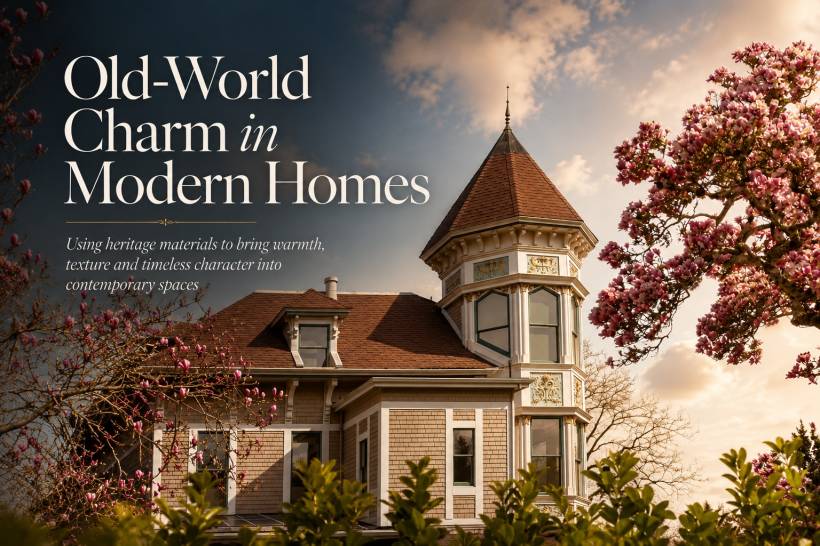
Natural stone, reclaimed timber, handmade finishes and aged metals are helping modern interiors feel warmer, more lived-in and full of personality. Modern homes do not need to look cold, overly polished or freshly manufactured from every angle. More homeowners are now moving away from glossy surfaces, uniform tiles and quick-fix finishes in favour of materials that feel real, textured and timeless.
This is where old-world aesthetics come in.
Heritage-inspired materials such as natural stone, reclaimed wood, lime plaster and aged brass can bring depth into a contemporary home. They make a room feel grounded, as though it has a story behind it, even when the property itself is brand new.
The key is not to recreate an old cottage or turn your living room into a museum. The goal is to take the warmth, texture and character of traditional materials, then pair them with clean modern design.
Why Heritage Materials Are Making a Comeback
People are becoming more selective about the materials they bring into their homes. Instead of choosing finishes that simply look good for a few years, more homeowners want materials that can age well and still feel beautiful over time.
Synthetic surfaces may look perfect when first installed, but many eventually start to feel dated or artificial. A glossy tile, laminate floor or imitation wood finish can show its age quite quickly once it chips, scratches or loses its shine.
Natural materials behave differently.
Stone develops a soft patina. Reclaimed timber becomes richer as it wears. Brass and copper slowly change tone, creating a finish that feels personal rather than worn out.
That is the attraction of heritage materials. Their imperfections are not flaws. They are part of their appeal.
Start From the Ground Up With Natural Stone Flooring
One of the easiest ways to introduce old-world character into a modern home is through natural stone flooring.
A stone floor immediately gives a space more presence. It can make a newly built kitchen, hallway or living area feel established, calm and welcoming. Unlike many manufactured tiles, stone has natural variation in colour, texture and pattern, so the finished floor never looks flat or repetitive.
Rustic limestone is especially popular for homes that want a warm, relaxed and slightly weathered appearance. Its soft neutral tones work well with modern cabinetry, light walls and minimalist furniture.
Other stone options can create very different moods:
• Travertine brings soft cream tones and a naturally textured finish.
• Slate creates a darker, moodier and more dramatic look.
• Sandstone adds warmth with earthy golden and beige shades.
The best option depends on the feeling you want your space to have. A bright, airy home may suit limestone or travertine, while a more contemporary or industrial interior may benefit from slate.
Adding underfloor heating can also make stone flooring far more practical, giving you the visual appeal of a traditional material without sacrificing comfort.
The Best Modern Homes Know How to Mix Eras
The biggest mistake with heritage styling is going too far in one direction.
When every surface is weathered, reclaimed or antique-looking, the home can start to feel staged. It may look like a themed restaurant, a historical set or a room designed entirely around one era.
The best interiors create contrast.
A rough stone floor can look amazing beside sleek cabinetry. Exposed timber beams can sit beautifully above a modern kitchen island. A handmade tiled backsplash can give personality to an otherwise simple, contemporary space.
A useful approach is the 70/30 balance.
Let one style lead the room, while the other adds contrast. In many homes, this means keeping the overall layout modern and clean, then introducing heritage touches through flooring, walls, fixtures or furniture.
For example, you could combine:
• Minimalist furniture with reclaimed wood flooring.
• Modern pendant lighting with lime plaster walls.
• Handle-less kitchen cabinets with rustic stone tiles.
• Neutral painted walls with aged brass taps and handles.
This balance keeps the home feeling current while still giving it warmth and character.
Heritage Materials That Work Beautifully in Modern Interiors
Not every old-fashioned material works in every setting, but a few options are surprisingly versatile and can fit into almost any contemporary home.
Reclaimed Timber
Reclaimed wood has a personality that new timber often cannot replicate. Marks, knots, grain variations and old nail holes give it depth and history.
It works particularly well for exposed beams, wide-plank flooring, feature walls, shelving and kitchen islands. Even a small amount can soften a clean modern room and make it feel less sterile.
Aged Brass and Copper
Chrome and ultra-polished finishes can sometimes make a space feel too clinical. Aged brass, antique bronze and brushed copper introduce warmth without being overly traditional.
These finishes are ideal for kitchen handles, bathroom taps, light fittings, mirrors and cabinet hardware. They also develop more character as they age, which makes them a natural match for heritage-inspired interiors.
Lime Plaster Walls
Lime plaster is one of the oldest wall finishes still used today, and it has become increasingly popular in modern homes because of its soft, chalky texture.
Unlike a perfectly smooth painted wall, lime plaster creates subtle movement and depth. It can make a room feel warmer, more natural and more expensive without needing bold colours or decorative wallpaper.
It also has practical benefits, as lime plaster can help manage moisture and allow walls to breathe more naturally.
Handmade Tiles
Handmade tiles are not perfectly identical, and that is exactly why they work so well.
Slight differences in shape, colour and glaze give them a handmade quality that machine-produced tiles often lack. They are especially effective in kitchen splashbacks, shower walls, fireplaces and small feature areas.
Instead of looking overly polished, they add texture and charm.
Common Mistakes to Avoid
Heritage materials can transform a home, but they need to be used carefully.
Trying to Make Everything Look Old
A room full of reclaimed wood, distressed furniture, rustic stone and antique accessories can quickly become overwhelming. Leave room for modern elements so the older materials can stand out properly.
Choosing Cheap Imitations
Faux stone, imitation reclaimed wood and artificial "weathered" finishes often look convincing only from a distance. Up close, they can make a space feel less authentic rather than more charming.
It is usually better to use fewer genuine materials than to fill a room with low-quality substitutes.
Ignoring the Floor
The floor has a major impact on the overall atmosphere of a room. A great floor can make simple furniture look more impressive, while an unsuitable floor can make even expensive décor feel disconnected.
When planning a heritage-inspired interior, start with the flooring whenever possible. It gives the rest of the room a clear visual foundation.
Forgetting About Maintenance
Natural materials are beautiful, but they do require care.
Stone may need sealing. Timber may need oiling or refinishing. Metal surfaces may develop patina, which some people love but others may prefer to control.
Before investing, make sure the material fits your lifestyle as well as your design preference.
Bringing the Look Together
Old-world materials are not about copying the past. They are about choosing finishes that feel genuine, lasting and full of character.
Start with one strong foundation element, such as natural stone flooring or reclaimed timber. Then build around it with smaller details like handmade tiles, aged brass fixtures or textured lime plaster walls.
Keep the overall design clean, avoid overloading every surface with rustic features, and let modern lines create contrast.
Final Thoughts
The appeal of heritage materials comes from their ability to improve with age rather than fall out of style. Stone becomes softer, timber becomes richer and metal develops a finish that feels more personal over time.
When used thoughtfully, these materials can make a modern home feel less temporary and more meaningful. They add warmth, texture and a sense that the space belongs to the people living in it, not just to the latest design trend.











Comments 0