

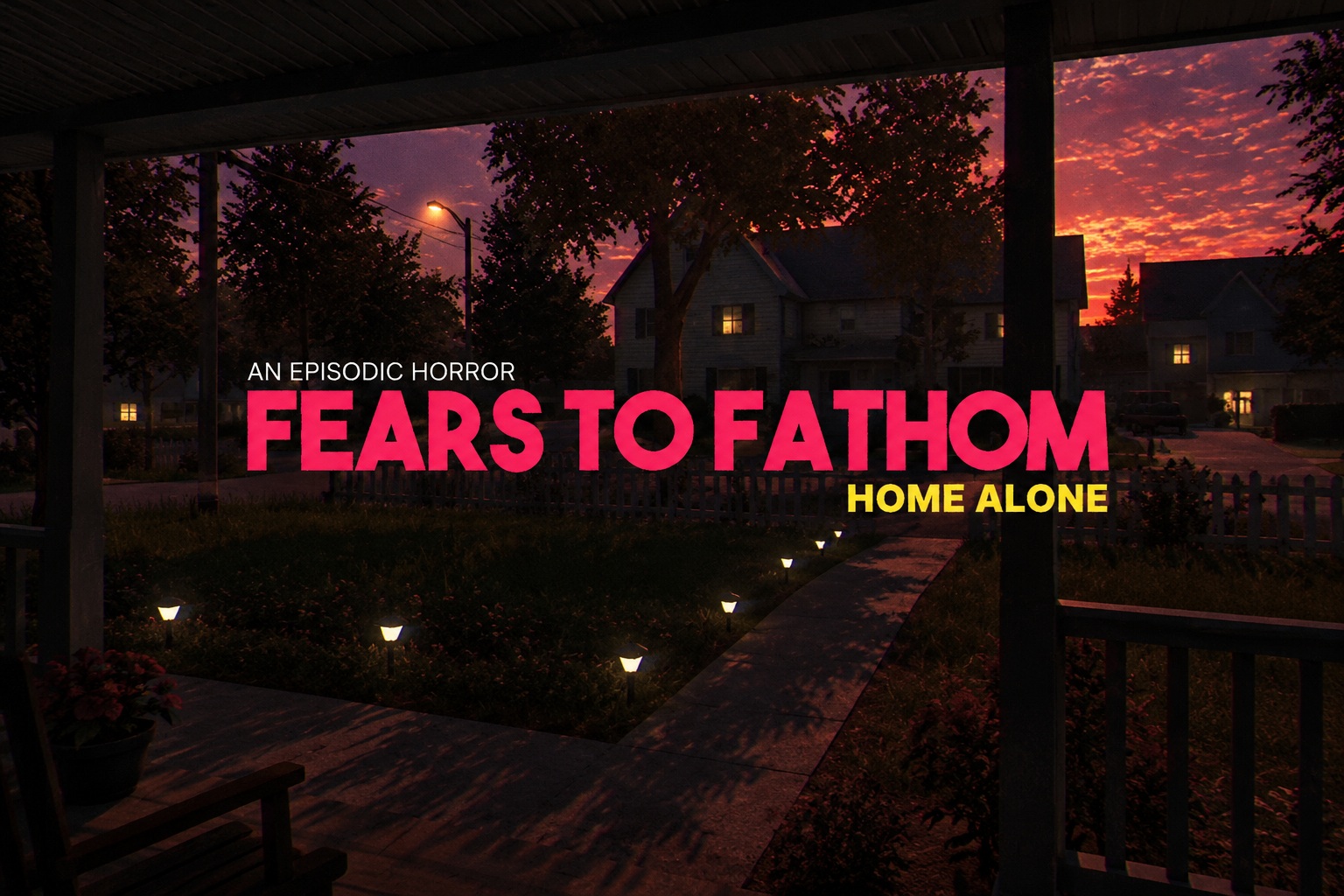
Fears to Fathom: Home Alone is the first episode of the Fears to Fathom psychological horror anthology, created by Rayll and built around a frighteningly simple idea: being home alone when something does not feel right. Players take control of Miles, a 14-year-old boy whose parents have left town for a work trip, leaving him alone in the family house for the weekend. What begins as an ordinary evening of waking from a nap, checking messages, eating dinner, watching television, and completing homework gradually becomes increasingly uncomfortable. The horror works because almost everything Miles does initially feels completely normal.
Unlike horror games filled with supernatural creatures or constant combat, Home Alone creates fear through uncertainty and everyday vulnerability. Strange noises, suspicious movement outside the house, unexpected messages, dark rooms, and the possibility that someone may be watching slowly transform familiar surroundings into something threatening. Players are encouraged to notice details rather than simply wait for a monster to appear. The result is a short but memorable horror experience where tension grows from the possibility that the danger could genuinely happen.
Now playable online through Lemon Web Games, Fears to Fathom: Home Alone brings its first-person exploration, realistic suburban setting, phone conversations, VHS-style visuals, psychological tension, and disturbing home-invasion storyline directly into the web browser. Players can follow Miles through his ordinary evening routine while paying increasingly close attention to windows, doors, sounds, messages, and unexplained activity around the house. There are no weapons or traditional combat systems to provide reassurance, so surviving depends more on awareness and making sensible choices. That vulnerability is precisely what makes Home Alone so effective.
The Story Begins With an Ordinary Weekend
Miles does not begin the evening expecting anything unusual. His parents have left town, and he has been trusted to remain at home by himself for the weekend.
The situation immediately feels believable because there is nothing extraordinary about it. Many players can remember being left alone at home and experiencing how completely normal rooms can suddenly feel strange after dark.
That familiarity gives the game an advantage from the beginning. Home Alone does not need to convince players that the house is dangerous because the possibility of danger is enough.
Miles Is a Normal Teenager, Not a Horror Hero
Miles has no special abilities, combat training, or supernatural powers. He is simply a teenager trying to get through an evening alone.
This makes every suspicious event more threatening. There is no expectation that Miles can confront an intruder directly or defeat whatever might enter the house.
The player therefore experiences fear from the perspective of someone genuinely vulnerable. Staying unnoticed and making careful decisions matters far more than fighting back.
Text Messages Make the World Feel Real
A major part of the storytelling comes through messages exchanged with Miles' parents and friends. These conversations provide context about where everyone is, what Miles is supposed to do, and what other people know about the situation.
The phone also makes the isolation more believable. Miles is physically alone, but he is still connected to people outside the house.
As events become more suspicious, those messages take on greater importance. A simple notification can provide reassurance one moment and create anxiety the next.
Everyday Tasks Build the Atmosphere
Home Alone spends significant time allowing players to perform ordinary activities before anything seriously frightening happens. Miles heats leftover lasagna, eats dinner, watches television, and works on homework.
These mundane tasks might seem unnecessary in a traditional horror game, but they are essential here. They establish the house as a familiar living space instead of immediately presenting it as a haunted location.
The longer players settle into the routine, the more effective the later tension becomes. Horror begins interrupting normal life rather than replacing it from the opening scene.
The House Becomes More Uncomfortable After Dark
During the early portion of the game, the house feels relatively safe. As the evening progresses, however, familiar rooms begin feeling increasingly exposed.
Windows become particularly uncomfortable because players can look outside but cannot always determine whether something is looking back. Dark hallways similarly become difficult to trust once suspicious activity begins.
Nothing about the architecture needs to change. The player's understanding of the situation changes instead, transforming the same environment into something frightening.
Sound Is One of the Game's Strongest Horror Tools
Home Alone relies heavily on environmental audio. Footsteps, doors, outdoor noises, television sounds, and subtle disturbances can make players stop immediately and question what they heard.
The game often allows enough silence that an unusual sound becomes impossible to ignore. Players naturally begin listening more carefully as tension increases.
This creates fear without constantly showing the source of danger. Sometimes hearing something somewhere in the house is more frightening than seeing it directly.
The VHS-Style Visuals Strengthen the Unease
Fears to Fathom uses a grainy VHS-inspired presentation that makes the world feel slightly distorted and uncomfortable.
The effect does not prevent players from understanding the environment, but it removes some visual clarity. Dark areas become less certain, distant shapes become more suspicious, and ordinary objects can briefly resemble something threatening.
This visual style also gives the episode a found-footage quality. The story feels less like a polished cinematic horror production and more like a disturbing memory being reconstructed.
Realistic Environments Make the Horror More Believable
The family home looks intentionally ordinary. Bedrooms, the kitchen, living areas, stairs, windows, and surrounding neighbourhood resemble places that could exist almost anywhere.
This realism is crucial because the game is not asking players to fear an impossible fantasy location. It asks them to fear their own assumptions about safety.
A familiar house becoming dangerous is psychologically powerful because players understand exactly how exposed someone might feel inside it. Home is supposed to be the safe place.
Looking Through Windows Becomes Increasingly Dangerous
Windows provide information about what is happening outside, but looking through them can also create some of the most uncomfortable moments in the game.
Players may notice something unusual and then question whether it was actually there. A distant figure or movement can be difficult to interpret through darkness and visual noise.
The uncertainty keeps players watching longer than they probably should. Curiosity becomes part of the horror.
The Game Uses Suspicion Instead of Constant Jumpscares
Home Alone does contain frightening moments, but it does not rely entirely on sudden loud scares. Much of the tension comes from knowing that something may be wrong without immediately understanding what it is.
A quiet room can feel dangerous because players remember a sound heard somewhere else. A door that was previously ignored may suddenly feel like the only thing separating Miles from danger.
This slow escalation creates sustained tension. The game wants players to remain uneasy even when nothing visible is happening.
Home Invasion Is More Frightening Because It Feels Possible
The central horror is rooted in a situation that could happen in reality. Someone alone at home may genuinely become vulnerable if a stranger decides to approach or enter the property.
This possibility gives Home Alone a different atmosphere from supernatural horror. Players do not need to accept demons, ghosts, or fictional mythology before the fear works.
The threat is understandable immediately. That realism allows even minor events to become deeply unsettling.
The Player Has Limited Control Over the Situation
Many horror games eventually give players weapons or powerful defensive tools. Home Alone keeps Miles vulnerable for most of the experience.
The player can move, investigate, hide, and react, but cannot transform the situation into an action game. There is no point where Miles suddenly becomes capable of overpowering every threat.
This maintains tension throughout the episode. Survival depends on avoiding danger rather than dominating it.
Observation Can Make the Difference
Because combat is not the focus, paying attention becomes extremely important. Players need to notice suspicious behaviour, unusual sounds, and changes in the environment.
Something seen earlier may become important later. Likewise, ignoring a warning sign can leave the player unprepared when the situation escalates.
The game rewards cautious players who treat the environment seriously. Curiosity is useful, but careless curiosity can also put Miles at risk.
Routine Makes the Horror More Personal
One of the smartest design choices is allowing players to participate in Miles' normal evening before the danger becomes obvious.
Eating dinner, completing homework, and moving around the house create familiarity. Players begin understanding where rooms are located and how the house normally feels.
When that routine is disrupted, the difference becomes immediately noticeable. The game effectively teaches players what normal looks like before showing them what happens when normal disappears.
The Television Creates a False Sense of Safety
Watching television is one of the most ordinary things someone might do while home alone. Noise from the television can make the house feel occupied and comfortable.
However, it can also mask other sounds. The player may become distracted by what is happening inside while something develops elsewhere.
This tension between comfort and awareness works extremely well. Ordinary entertainment becomes another reason players may fail to notice danger immediately.
Homework Creates an Unusual Horror Situation
Few horror games make completing schoolwork part of the experience, yet Home Alone uses it effectively.
Sitting down to work implies concentration and safety. Miles is expected to behave like an ordinary student even though the player may already feel that something is wrong.
The contrast becomes increasingly uncomfortable. The world expects normal behaviour while the player suspects that the situation is no longer normal at all.
Being Alone Changes How Every Room Feels
The game understands a universal psychological effect: a familiar home can feel completely different when nobody else is there.
During daytime, a hallway may be meaningless. At night, after hearing something suspicious, that same hallway can feel like an exposed path between safe rooms.
This transformation happens mostly inside the player's mind rather than through dramatic environmental changes. That subtlety is one of Home Alone's greatest strengths.
The Episode Is Short but Carefully Paced
Home Alone does not attempt to stretch its concept across an enormous campaign. The story is compact enough that almost every activity contributes either to characterization, atmosphere, or escalating tension.
The opening routine creates familiarity, the middle introduces uncertainty, and the final portion turns that unease into immediate danger.
Because the episode is short, the tension rarely becomes repetitive. It ends before its central idea loses effectiveness.
The Anthology Format Fits This Kind of Horror
Fears to Fathom presents separate stories rather than following one continuous protagonist across every episode.
This format allows each instalment to focus on a specific frightening scenario. Home Alone can concentrate completely on isolation and home invasion without needing to establish a larger supernatural mythology.
The result feels almost like hearing someone describe a disturbing event that happened to them years ago. That storytelling style reinforces the sense of realism.
The First-Person Perspective Makes Isolation Stronger
Seeing everything through Miles' eyes places players directly inside the house.
There is no external camera revealing whether someone is standing behind him. If the player cannot see into a room, they genuinely do not know what is there.
This limited perspective makes checking corners, windows, and hallways naturally tense. The player receives only the information Miles could realistically have.
Knowing Something Is Wrong Is Worse Than Knowing Exactly What
Home Alone repeatedly creates situations where players understand that danger exists without knowing precisely where it is.
That uncertainty encourages imagination to fill the gaps. Every sound becomes suspicious and every dark window deserves another look.
The game rarely needs to exaggerate the threat because players do much of that work themselves. Fear grows from incomplete information.
Playing Fears to Fathom: Home Alone Online Today
Through Lemon Web Games, Fears to Fathom: Home Alone can now be played directly in your web browser with no downloads or setup required. Features of the web-based version include:
New players should avoid rushing simply because the opening appears uneventful. Pay attention to messages, look around the environment, and notice whether anything seems different from how it appeared earlier. Home Alone builds much of its horror through details that become significant only after the situation changes.
It is equally important to remember that Miles is not an action hero. When something genuinely dangerous happens, staying cautious and avoiding unnecessary confrontation is usually far more sensible than investigating everything directly.
Who Should Play Fears to Fathom: Home Alone
Fears to Fathom: Home Alone is particularly suitable for players who find believable situations more frightening than supernatural monsters. The idea of being watched or targeted while alone at home requires almost no fictional explanation to become uncomfortable.
It should also appeal to players who enjoy horror built around atmosphere and anticipation. Much of the experience comes from waiting, listening, and wondering whether the next ordinary sound is actually ordinary.
Play Fears to Fathom: Home Alone Online Now
Fears to Fathom: Home Alone begins with one of the most ordinary situations imaginable: a teenager spending the weekend alone while his parents are away. Wake from a late nap, answer messages, heat dinner, watch television, finish homework, and prepare for another quiet night. Then pay closer attention to the windows.
Through Lemon Web Games, players can experience this unsettling first chapter of Fears to Fathom directly in the browser and discover how quickly an ordinary home can become frightening when there is nobody else around. Stay alert, trust the warning signs, and remember that sometimes the most terrifying possibility is simply realizing you were never as alone as you thought.
Final Thoughts
Fears to Fathom: Home Alone works because it understands that horror does not need supernatural creatures to become effective. A familiar house, a dark window, an unexpected noise, and the possibility of an unwanted visitor are enough to create enormous tension when the player controls someone as vulnerable as Miles. The realism allows every small disturbance to feel significant.
The ordinary opening is equally important. Cooking lasagna, watching television, checking messages, and completing homework make the house feel lived in before fear begins changing the player's relationship with the environment. The game does not simply tell players that home is supposed to feel safe; it allows them to experience that safety first.
Through Lemon Web Games, Fears to Fathom: Home Alone can now be enjoyed directly in the browser as a short but highly effective psychological horror experience. Its VHS presentation, realistic setting, subtle storytelling, and gradual escalation create fear through plausibility rather than spectacle. For anyone who has ever heard an unexplained noise while alone at night and immediately wondered whether they should check it, Home Alone knows exactly how to turn that feeling into horror.











Comments 0