

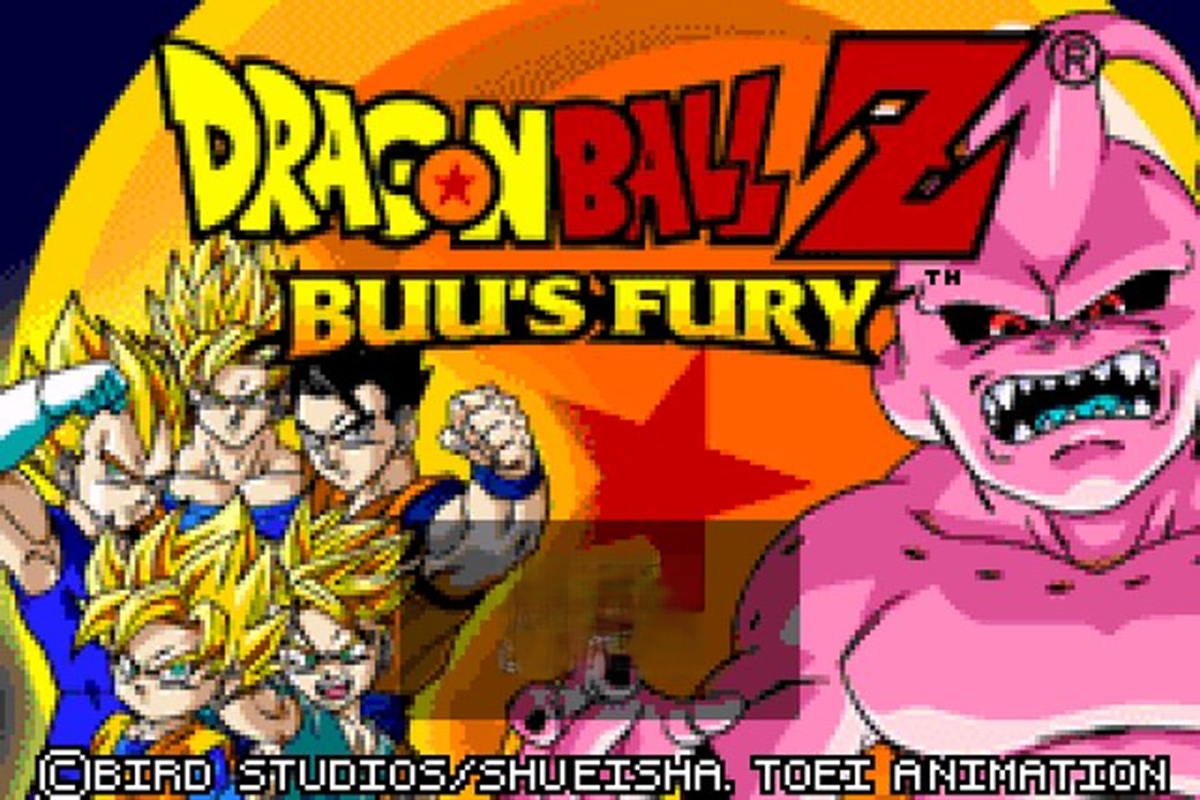
Dragon Ball Z: Buu's Fury takes one of the most explosive chapters of the Dragon Ball Z story and turns it into a surprisingly deep handheld action RPG. Released in 2004, the game continues the style established by Dragon Ball Z: The Legacy of Goku II, combining real-time combat with character progression, equipment, exploration, and story-driven objectives. Rather than presenting the Majin Buu Saga as a simple sequence of fighting stages, Buu's Fury gives players large areas to explore while gradually developing several of the series' most recognizable heroes. The result is an adventure that feels much closer to a compact Dragon Ball Z RPG than a traditional licensed action game.
Dragon Ball Z: Buu's Fury – Relive the Majin Buu Saga in a Classic Action RPG Adventure
Dragon Ball Z: Buu's Fury takes one of the most explosive chapters of the Dragon Ball Z story and turns it into a surprisingly deep handheld action RPG. Released in 2004, the game continues the style established by Dragon Ball Z: The Legacy of Goku II, combining real-time combat with character progression, equipment, exploration, and story-driven objectives. Rather than presenting the Majin Buu Saga as a simple sequence of fighting stages, Buu's Fury gives players large areas to explore while gradually developing several of the series' most recognizable heroes. The result is an adventure that feels much closer to a compact Dragon Ball Z RPG than a traditional licensed action game.
The game follows the final major storyline of Dragon Ball Z, beginning during the years after the defeat of Cell and eventually leading into the battles against Majin Buu. Players experience important moments involving Goku, Gohan, Vegeta, Goten, Trunks, Babidi, the Supreme Kai, and the many different forms of Buu. Along the way, the adventure incorporates training sequences, transformations, fusion, side activities, and numerous locations inspired by the anime. It balances serious battles with the humor and quieter character moments that have always been an important part of Dragon Ball Z.
Now playable online through Lemon Web Games, Dragon Ball Z: Buu's Fury can be experienced directly in a modern web browser without needing the original handheld console. Players can revisit the Majin Buu Saga, develop multiple characters, explore familiar locations, and unleash iconic energy attacks through the same action RPG structure that made the original release so enjoyable. Whether you previously played the game during the Game Boy Advance era or are discovering it for the first time, the browser-based version provides a convenient way to experience one of Dragon Ball Z's most memorable handheld adventures. Its combination of exploration, progression, and fast-paced combat still gives it plenty of appeal for fans of classic Dragon Ball games.
The Final Chapter of the Legacy of Goku Series
Buu's Fury is the third major entry in the Legacy of Goku series, following the original Dragon Ball Z: The Legacy of Goku and its considerably improved sequel, The Legacy of Goku II. By the time Buu's Fury arrived, the developers had refined the action RPG formula into something much more ambitious than the relatively simple design of the first game. Movement feels more responsive, combat offers more options, and the RPG systems provide greater control over how each character develops. These improvements help make Buu's Fury feel like the most complete realization of the series' handheld formula.
The adventure also benefits from covering a storyline packed with major transformations, dramatic battles, and unusual character combinations. The Majin Buu Saga introduces everything from the Great Saiyaman and the World Martial Arts Tournament to Super Saiyan 3, Gotenks, Vegito, and the final confrontation with Kid Buu. This gives the game a constant stream of recognizable moments to adapt into missions and boss encounters. Even players already familiar with the anime can enjoy seeing how those events are translated into an overhead action RPG.
Rather than rushing immediately from one famous battle to another, the game frequently allows players to explore towns, wilderness areas, caves, mountains, and other environments between major story events. This slower structure makes the world feel larger and provides space for side quests and optional discoveries. It also creates a stronger sense of progression because characters become noticeably more powerful as the storyline advances. By the time the final battles arrive, the heroes feel dramatically different from how they performed near the beginning.
Five Main Playable Heroes with Different Abilities
Dragon Ball Z: Buu's Fury centers around five primary playable characters: Goku, Gohan, Vegeta, Goten, and Trunks. Different parts of the story place the player in control of different heroes, while later sections allow greater freedom to switch characters at designated locations. Because each fighter gains experience independently, players are encouraged to spend time developing more than one character rather than relying entirely on a single favorite. This becomes especially important when certain areas require a specific hero or minimum character level.
Goku naturally plays an important role throughout the adventure and has access to many of the abilities fans associate with him. Vegeta provides another powerful option, while Gohan's storyline covers his transformation from the Great Saiyaman into one of the saga's strongest fighters. Goten and Trunks initially appear as younger warriors but gradually gain access to increasingly powerful techniques and transformations. Their involvement also leads directly into the game's fusion mechanics.
The characters share the same basic movement and melee controls, making it easy to switch between them without learning an entirely different combat system. Their special techniques, transformations, statistics, and story roles provide the meaningful differences. Players can therefore build familiarity with the controls while still experimenting with different fighters. This balance keeps the combat approachable while supporting the RPG-style character progression at the heart of the game.
Real-Time Combat with Melee and Energy Attacks
Combat takes place directly within the game's environments rather than switching to separate battle screens. Players can punch and kick nearby enemies, fire energy blasts from a distance, and use special techniques that consume energy. The immediate nature of the combat allows exploration and fighting to flow together naturally, with enemies appearing throughout forests, caves, mountains, and other locations. It gives Buu's Fury a faster rhythm than a traditional turn-based RPG.
Normal melee attacks are particularly useful because they do not consume energy and can quickly overwhelm weaker opponents. Stronger enemies require more careful positioning, especially when they can fire projectiles or attack from several directions at once. Energy attacks provide useful ranged options but must be managed because repeatedly using them drains the character's available energy. Knowing when to rely on melee attacks and when to use powerful techniques becomes increasingly important during tougher encounters.
Each character also gains access to recognizable Dragon Ball techniques as the story progresses. These abilities help reinforce the personalities of the different fighters and make combat feel connected to the anime rather than being a generic action system. Stronger techniques can deal significant damage, but their energy cost prevents players from using them endlessly. The result is a simple but effective combat system built around movement, timing, resource management, and character development.
Transformations and the Power of Super Saiyans
Transformations are naturally an important part of a game based on the Majin Buu Saga. Characters capable of becoming Super Saiyans can temporarily increase their effectiveness once the necessary transformation conditions are met. Activating a transformation changes the character's appearance and provides a noticeable boost in battle, allowing players to deal with stronger enemies more efficiently. However, transformed states consume energy over time, preventing them from becoming permanent upgrades.
This creates an interesting tactical decision during difficult battles. Transforming immediately can make combat easier, but using too much energy early may leave the player with fewer options later in the encounter. Waiting until a dangerous enemy or boss appears can therefore be the better choice. Players who carefully manage their energy can make much more effective use of transformations.
The game eventually introduces some of the most iconic power-ups from the later Dragon Ball Z storyline. These moments are particularly enjoyable because the RPG structure allows players to feel the difference in strength rather than simply watching the transformation occur during a cutscene. Character progression, stat increases, and transformations all contribute to the sensation that the heroes are becoming dramatically stronger. This gradual escalation fits the Dragon Ball Z universe particularly well.
Fusion Brings Gotenks and Vegito into Battle
Fusion is one of the defining concepts of the Majin Buu Saga, and Buu's Fury incorporates it directly into its gameplay. Goten and Trunks eventually learn the Fusion Dance, allowing them to become Gotenks during appropriate sections of the adventure. The fused warrior is considerably stronger than either child individually and has access to abilities suited to his exaggerated personality. Playing as Gotenks provides a noticeable change of pace during the later stages of the story.
The game also recreates the Potara fusion between Goku and Vegeta, creating Vegito for the battle against one of Super Buu's most dangerous forms. This is primarily tied to the storyline rather than functioning as an unrestricted character option throughout the entire adventure. Even so, controlling Vegito provides one of the game's most memorable power-fantasy moments. After spending hours developing individual characters, suddenly controlling a fusion warrior emphasizes just how powerful these combinations are supposed to be.
For players willing to explore beyond the main storyline, the game also contains additional secrets connected to powerful characters and collectible exhibits. These optional goals provide incentives to revisit earlier locations and search areas more thoroughly. They are not necessary for completing the main adventure, but they add another layer for completionists. This combination of story-driven fusion and optional unlockables helps extend the game's appeal beyond the final battle.
A More Detailed RPG Progression System
One of the biggest improvements in Buu's Fury is the amount of control players receive over character development. Defeating enemies awards experience points, and accumulating enough experience increases the active character's level. Leveling improves overall performance while also providing points that can be invested into important character attributes. This gives players some freedom to shape how their fighters develop rather than relying entirely on predetermined stat growth.
Players can emphasize physical strength for stronger melee attacks, increase power to improve energy-based techniques, or invest in endurance to survive more damage. Different approaches can make the same character feel noticeably different during combat. A player who prefers close-range fighting may build a character differently from someone who frequently relies on energy attacks. Although the system is not as complicated as a full-scale role-playing game, it adds meaningful customization.
The game also occasionally uses level-gated character barriers that require a particular hero to reach a specified level before entering an area. These barriers encourage players to keep their entire roster reasonably well developed instead of allowing one character to handle every possible encounter. They can occasionally require additional training if a character has been neglected, but they also reinforce the idea that every hero has an important role in the story. For players who enjoy RPG progression, this provides another reason to fight enemies and explore optional areas.
Equipment Adds Another Layer of Character Customization
Buu's Fury expands its RPG mechanics through a much more developed equipment system. Characters can equip items across several categories, including body equipment, hand equipment, footwear, and accessories. Different items can improve attributes or provide other useful benefits, allowing players to further customize their preferred fighters. Equipment can be discovered during exploration, obtained from enemies, or purchased through the game's shops.
Some pieces of equipment involve useful trade-offs rather than simply providing higher numbers. Weighted training equipment, for example, can help characters gain experience more quickly while reducing movement speed. This creates interesting decisions when preparing for different situations. Equipment that is useful while training may not necessarily be the best choice for a difficult boss battle.
The inventory system also allows players to store healing items and other supplies rather than immediately consuming everything they collect. Being able to prepare before dangerous encounters makes the game feel more like a traditional action RPG. Players can enter major battles with healing items, optimized equipment, and a carefully developed character rather than depending entirely on reflexes. This combination of preparation and real-time combat gives Buu's Fury much of its depth.
Exploring Towns, Wilderness Areas, and Familiar Dragon Ball Locations
The world of Buu's Fury is divided into numerous interconnected regions accessed through a larger world map. Players travel between towns, forests, caves, mountains, deserts, and other environments as the storyline moves across Earth and beyond. Many locations are directly inspired by places seen throughout Dragon Ball Z, helping the game feel connected to the wider universe. Capsule Corporation, tournament areas, and several important battle locations all play roles during the adventure.
Exploration usually involves more than simply walking toward the next objective marker. Areas may contain hidden chests, optional enemies, side quests, collectibles, and passages that reward players who investigate beyond the most obvious route. Certain objectives require speaking with characters or collecting specific items before the story can continue. These tasks provide breaks from combat and give the adventure a broader RPG structure.
The world is not enormous by modern standards, but it feels substantial for a handheld action RPG. Returning to previously visited areas later in the story can reveal new objectives or previously inaccessible content. The mixture of story progression and optional exploration also makes the journey feel less linear than a conventional fighting game adaptation. Instead of experiencing Dragon Ball Z only through major battles, players spend time living within its world.
Side Quests, Collectibles, and Optional Secrets
Buu's Fury includes numerous optional activities that reward players who are willing to explore thoroughly. Side quests frequently involve helping characters, finding missing objects, defeating certain enemies, or investigating areas away from the main storyline. These tasks provide additional experience and rewards while offering quieter moments between the saga's major confrontations. They also make towns and other populated locations feel more useful than simple transition areas.
Two particularly notable collectible categories are the Z-Fighter Exhibits and Hercule Exhibits. These items are scattered throughout the game and can be placed within their respective museum collections. Finding every exhibit requires considerable exploration and encourages players to revisit locations they may otherwise ignore after completing the main objective. Completing these collections is tied to some of the game's most interesting optional content.
There are also smaller secrets hidden throughout the adventure, including unusual equipment and optional challenges. Some are easy to discover during normal exploration, while others require more deliberate searching. For completionists, these additional objectives can significantly extend the amount of time spent with the game. They also provide a reason to continue exploring even after the main path becomes obvious.
The Scouter Makes Exploration More Informative
The Scouter is another useful feature carried over and expanded from the previous Legacy of Goku game. It can provide information about characters, enemies, and areas while also helping players understand the world around them. Scanning opponents offers useful details about what the player is facing, turning the familiar Dragon Ball device into a functional gameplay tool. This is a clever way of integrating a recognizable piece of series technology into the RPG mechanics.
The Scouter also works alongside regional and world-map information to help players navigate the game's larger environments. Because Buu's Fury contains numerous areas and objectives, having access to location information makes exploration easier to manage. It reduces some of the confusion that can occur when travelling between distant regions. At the same time, it reinforces the feeling that the player is actively using technology from the Dragon Ball universe.
For fans of the series, features like this contribute greatly to the game's personality. The developers could have presented the same information through an ordinary menu, but incorporating the Scouter makes the interface feel more authentic. Similar small details appear throughout the game and help connect its RPG systems to the source material. These touches are part of what makes Buu's Fury more than a generic action game with Dragon Ball characters.
Boss Battles and the Escalating Threat of Majin Buu
The Majin Buu Saga provides no shortage of powerful enemies, and Buu's Fury uses many of them as major combat encounters. Early sections gradually build toward Babidi's plan to awaken Majin Buu, while later battles involve increasingly dangerous transformations of Buu himself. The escalating strength of these opponents mirrors the constantly rising power levels of the anime. Each major confrontation therefore feels like another milestone in the player's progression.
Boss battles generally require more careful movement than ordinary combat because powerful enemies can deal heavy damage very quickly. Charging directly into an opponent without considering attack patterns can result in a rapid defeat. Energy techniques provide opportunities to attack from safer distances, while transformations can dramatically increase offensive power when used at the right moment. Healing items and suitable equipment become increasingly valuable as the difficulty rises.
The later portions of the adventure are particularly effective at delivering the exaggerated scale associated with Dragon Ball Z. Characters who seemed extremely powerful earlier in the story are eventually surpassed by new forms, transformations, and fusion warriors. The game reflects this through both narrative events and gameplay progression. By the time the final confrontation with Kid Buu arrives, the journey feels like the culmination of everything the player has developed throughout the adventure.
Pixel Graphics That Capture the Dragon Ball Z Style
Visually, Buu's Fury uses colorful two-dimensional sprites viewed from an overhead perspective. Character designs are immediately recognizable despite the limitations of the Game Boy Advance screen, with different costumes and transformations represented throughout the storyline. Energy attacks use bright effects that stand out clearly against the environments, while transformations provide visual changes that make power increases easy to recognize. The presentation builds effectively on the style introduced in The Legacy of Goku II.
The environments are similarly colorful and varied, ranging from peaceful towns and forests to barren battlefields and supernatural locations. Although certain environmental elements are reused, the game does a good job of giving important areas recognizable identities. Buildings, terrain, and background details help distinguish populated regions from dangerous wilderness areas. This variety helps maintain a sense of progression during a relatively long adventure.
The audio complements the action with energetic background music and familiar-style sound effects. Energy blasts, melee impacts, menu interactions, and transformations all receive clear feedback that suits the fast-moving gameplay. The handheld hardware naturally limits how closely the audio can reproduce the television series, but the overall presentation remains energetic. Together with the pixel artwork, it creates a distinctly early-2000s Dragon Ball gaming atmosphere.
Why Buu's Fury Still Stands Out Among Dragon Ball Games
Many Dragon Ball games focus almost entirely on fighting, making Buu's Fury unusual because it gives equal importance to exploration and character development. Players spend time travelling between locations, speaking with characters, managing equipment, completing quests, and improving statistics before entering major battles. This slower progression makes the famous confrontations feel more meaningful because they occur within a larger adventure. It also provides something different for players who want more than repeated one-on-one fights.
The game's RPG systems are particularly important to its lasting appeal. Leveling characters, assigning stat points, discovering stronger equipment, and preparing useful items create a continuous sense of improvement. Combined with transformations and fusion, these mechanics capture the central Dragon Ball idea of becoming stronger through training and experience. Few handheld adaptations of the era integrated that concept as naturally.
Buu's Fury also benefits from adapting one of the most varied story arcs in Dragon Ball Z. The saga moves between comedy, tournament competition, training, exploration, dramatic sacrifices, transformations, fusion, and increasingly spectacular battles. That variety gives the developers plenty of material to translate into different gameplay situations. Even when the core combat becomes familiar, the constantly changing storyline keeps the adventure moving forward.
Playing Dragon Ball Z: Buu's Fury Online Today
Through Lemon Web Games, Dragon Ball Z: Buu's Fury can now be played directly in your web browser with no downloads or setup required. Features of the web-based version include:
Playing Buu's Fury through a browser makes it much easier to revisit one of the most ambitious Dragon Ball handheld adventures from the early 2000s. The game works particularly well for longer sessions because character progression, exploration, and story objectives continually provide new goals. Players can spend time leveling their favorite heroes, searching for equipment, completing optional tasks, or simply progressing through the Majin Buu storyline. Its straightforward controls also make it relatively easy to return to after many years away.
For newcomers, the browser-based experience provides an opportunity to discover a different side of classic Dragon Ball gaming. Instead of immediately placing players into a traditional fighting tournament, Buu's Fury allows them to explore the world and gradually develop their characters. The game may look simple compared with modern action RPGs, but the underlying combination of combat, equipment, statistics, transformations, and exploration remains surprisingly engaging. That makes it especially enjoyable for players who appreciate retro RPG design.
Who Should Play Dragon Ball Z: Buu's Fury
Buu's Fury is particularly easy to recommend to players who enjoy watching characters gradually become stronger. Almost every part of the game reinforces progression, whether through experience levels, equipment upgrades, transformations, stronger techniques, or new playable heroes. This makes regular exploration and combat feel meaningful because even ordinary encounters contribute toward future improvements. Players who enjoy optimizing statistics and equipment will find more depth here than they might expect from a licensed handheld game.
It is equally suitable for Dragon Ball fans who want to experience the Majin Buu Saga from a more interactive perspective. Instead of simply watching famous moments unfold, players participate in the journey between those events and spend time exploring the world around them. Smaller conversations and side activities help fill the gaps between the major battles. This gives the storyline room to develop while still delivering the transformations and confrontations fans expect.
Play Dragon Ball Z: Buu's Fury Online Now
Dragon Ball Z: Buu's Fury remains one of the strongest examples of how the Dragon Ball universe can work within an action RPG. Its combat is accessible enough for casual players, but the character development systems provide additional depth for those who want to customize their fighters. Exploring large areas, collecting equipment, completing quests, and gradually unlocking new powers creates an enjoyable sense of progression throughout the adventure. The inclusion of transformations and fusion makes that progression feel especially appropriate for Dragon Ball Z.
Through Lemon Web Games, players can experience the adventure directly through a modern web browser and revisit the final chapter of the Legacy of Goku series without relying on the original handheld hardware. Returning fans can rediscover familiar locations and battles, while newcomers can experience a style of Dragon Ball game that differs considerably from modern arena fighters. The combination of action, RPG mechanics, and recognizable story moments has aged surprisingly well. For anyone interested in retro Dragon Ball games, it remains an easy adventure to become absorbed in.
Final Thoughts
Dragon Ball Z: Buu's Fury succeeds because it understands that Dragon Ball is about more than simply winning individual fights. Training, exploration, discovering new abilities, becoming stronger, and eventually surpassing seemingly impossible opponents are all fundamental parts of the series, and the game translates those ideas into straightforward RPG mechanics. Its real-time combat keeps the action moving, while leveling, stat allocation, equipment, and transformations provide a consistent feeling of growth. That combination gives the adventure considerably more depth than a simple collection of battles.
The game also benefits from the sheer variety of the Majin Buu Saga. Players move from everyday life and tournament competition into increasingly dangerous confrontations involving Babidi, Majin Vegeta, multiple forms of Buu, powerful transformations, and fusion warriors. Because these events unfold across a substantial RPG adventure, the later battles feel like genuine milestones rather than isolated stages. Optional quests, collectible exhibits, and hidden rewards provide additional reasons to explore beyond the main storyline.
More than two decades after its original release, Dragon Ball Z: Buu's Fury remains an enjoyable example of classic handheld action RPG design. Its graphics and mechanics are naturally simpler than those of modern Dragon Ball games, but the central progression loop remains rewarding and the Majin Buu storyline provides a strong foundation for the adventure. Through Lemon Web Games, players can once again train their favorite heroes, explore the Dragon Ball world, unleash powerful techniques, and work toward the final confrontation with Kid Buu directly in their browsers. For fans of Dragon Ball Z, retro RPGs, and the Legacy of Goku series, Buu's Fury remains a standout handheld adventure worth experiencing.











Comments 0