

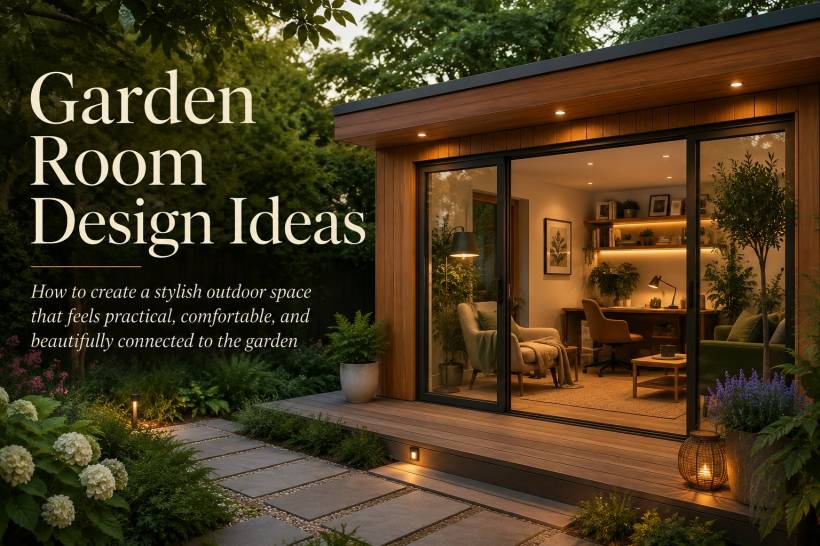
A well-designed garden room is no longer just a shed with better windows. It can become a peaceful work-from-home office, an art studio, a compact gym, a guest retreat, a family snug or a social space for evenings and weekends.
The most successful garden rooms feel connected to the house while still giving you a sense of separation. They offer a change of scenery without needing to leave home, and with thoughtful planning, they can be comfortable in every season rather than used only during warm weather.
Start With How You Want to Use It
Before choosing cladding, furniture or paint colours, decide what the room needs to do.
A garden office needs a quiet layout, reliable internet, practical storage and good light for video calls. A gym needs open floor space, durable flooring and ventilation. An art studio benefits from generous daylight and easy-to-clean surfaces, while a family room or garden bar needs comfortable seating and a more relaxed atmosphere.
Trying to make one small room do everything can lead to clutter. However, a flexible layout can make a garden room useful at different times of day. A desk can double as a hobby table, built-in benches can provide hidden storage, and a compact sofa can create a relaxed corner for reading or informal meetings.
The key is to design for real daily use, not only for how the space will look in photographs.
Make a Garden Office Feel Like a Proper Workspace
A garden office remains one of the strongest reasons to invest in an outdoor room. It creates a clearer boundary between work and home life while avoiding a long commute.
Positioning the desk near a window can make the room feel more open and less isolated. Natural light is helpful for comfort, but avoid placing the screen directly in front of a bright window where glare becomes a problem.
Storage should be planned early. Built-in cupboards, floating shelves and cable management can stop the office from becoming dominated by printers, chargers, files and visible wires. A small armchair or bench can also make the room feel less like a box built only for work.
For anyone using the room through the year, insulation, ventilation and dependable heating should be part of the original plan rather than an afterthought.
Use Glazing to Bring the Garden Closer
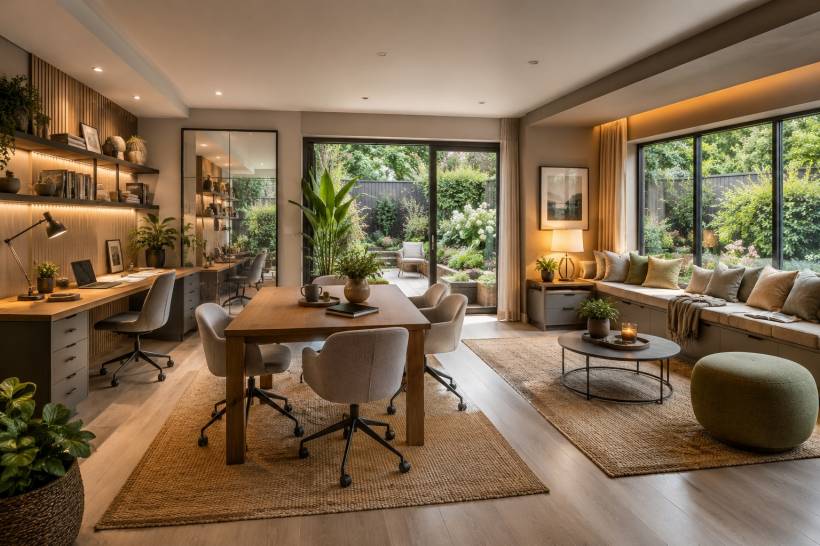
Large windows, sliding doors and bi-fold doors can make a compact garden room feel dramatically larger. More importantly, they turn the garden into part of the visual experience.
A view of mature trees, planting beds or a carefully landscaped corner can become the room's best feature. Instead of placing windows randomly, think about what you want to frame when sitting at a desk, relaxing on a sofa or opening the doors on a warm day.
A softer palette can help the room blend naturally with its surroundings. Timber, warm neutrals, muted greens, textured fabrics and indoor plants work particularly well because they continue the visual language of the garden indoors.
Glass should still be balanced with privacy and shade. Too much direct sunlight can make a room uncomfortable, so blinds, curtains, overhangs or carefully positioned planting may be needed.
Choose Materials That Add Warmth
Garden rooms should not feel temporary or overly clinical. Natural materials help create a more settled, inviting atmosphere.
Timber cladding, wood flooring, woven furniture, linen cushions, stone accents and planting can all make the space feel warmer and more connected to the outdoors. You do not need to fill every surface with decoration. A few tactile materials usually have more impact than too many competing finishes.
A clean Scandinavian-inspired approach works well for people who prefer pale timber, simple lines and calm lighting. For a more nature-led feel, introduce more greenery, organic shapes, natural fibres and layered textures to create a biophilic retreat.
Both approaches can work beautifully because they focus on the same goal: making the room feel calm, intentional and comfortable.
Create Zones in a Multi-Purpose Room
A garden room can perform more than one job when the layout is clear.
Keep focused work against one wall, use flexible furniture in the centre and create a more relaxed area closer to the garden view. A dining table can become a meeting table, while a built-in window seat can provide storage underneath and extra seating when guests visit.
Mirrors can help smaller spaces feel more open, especially when they reflect daylight or greenery. Lighting also plays a major role. Brighter task lighting is useful for work and hobbies, while softer lamps and warm indirect lighting can transform the same room into a comfortable evening space.
The room does not need movable walls to be flexible. It simply needs furniture and lighting that support different moods.
Lighting Should Be Part of the Architecture
One central ceiling light may technically illuminate the room, but it rarely creates the best experience.
Layered lighting is much more effective. Use general lighting for brightness, task lighting for desks or creative work, and softer lamps or LED strips for atmosphere. Shelves, seating areas and roof edges can all become more inviting with gentle indirect light.
Do not forget the area immediately outside the garden room. Path lights, low wall lights or subtle planting illumination make the journey to and from the space safer after dark and help the building feel more connected to the wider garden.
A garden room that looks inviting at night is much more likely to be used throughout the year.
Build With the Garden, Not Against It
Position is one of the biggest design decisions.
Think about sunlight, privacy, views from the main house, access routes, neighbouring properties and where rainwater will go. A garden room pushed into the most convenient empty corner may not always be the best option once you consider how it will be seen and used.
Planting can soften the building and help it settle into the landscape. Tall grasses, hedging, climbing plants, pots and raised beds can define the area without making it feel boxed in. A small patio, gravel path or timber deck outside the doors can also create a useful transition space for morning coffee, informal dining or fresh-air breaks.
The goal is to make the garden room feel like it belongs there, rather than something dropped at the end of the garden.
Pick a Style That Respects the Main House
A garden room does not need to copy the house exactly, but it should not clash with it either.
Dark cladding can create a sharp contemporary look and help the building sit quietly against greenery. Natural timber tends to feel softer and more organic. Light painted finishes can make a small garden feel more open, while a pitched roof may suit a traditional home better than a very modern flat-roof design.
Look at the main house's materials, proportions and colour palette, then carry across one or two elements. This might be the same timber tone, similar window frames or a complementary roof colour.
That small amount of visual continuity can make the whole property feel more considered.
Plan the Practical Details Before Construction
Beautiful finishes cannot compensate for missing sockets, weak Wi-Fi or inadequate heating.
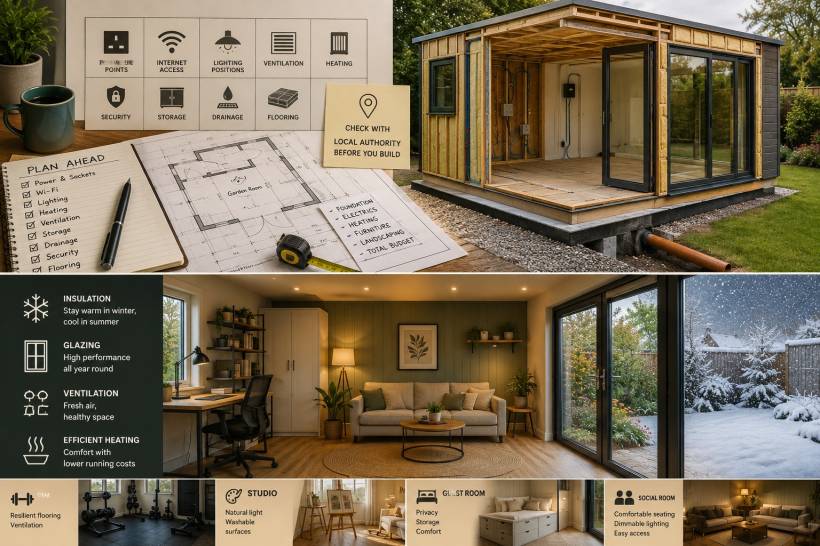
Think about power points, internet access, lighting positions, security, ventilation, flooring, storage and drainage before work begins. These choices are easier and usually cheaper to make during the build rather than after the room is complete.
The base also matters. A stable, level foundation is essential for durability, and the total budget should account for groundwork, electrics, heating, furniture and landscaping, not just the building itself.
Planning rules and building requirements vary by location, property type and intended use. In Scotland, official guidance for domestic ancillary buildings includes conditions around position, site coverage and height, with additional restrictions for buildings close to boundaries, in conservation areas or near listed properties. Check with the relevant local authority before committing to a design or supplier.
Design for Every Season
The best garden rooms are not simply summer spaces. They stay useful during colder, darker and wetter months because comfort has been built into the design.
Good insulation, suitable glazing, ventilation and efficient heating make a major difference. Ask suppliers how the walls, roof and floor are insulated, and compare thermal performance rather than choosing solely based on appearance.
Then match the interior to the room's real purpose. A gym needs resilient flooring and ventilation. A studio needs light and washable surfaces. A guest room needs privacy and storage. A social room benefits from comfortable seating, dimmable lighting and easy access from the house.
Final Thoughts
A stylish garden room is not defined by one trend, one material or one expensive feature. It works because the design balances purpose, comfort, light, storage and its relationship with the garden itself.
Whether it becomes a quiet home office, creative retreat, gym or flexible family space, the strongest results come from planning the practical details early and making every part of the room earn its place.











Comments 0