

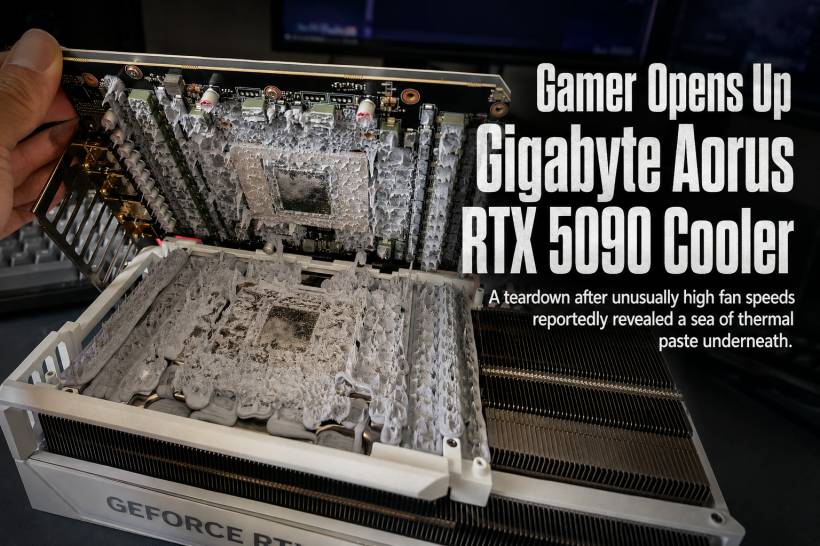
Opening up a graphics card is not something most people plan to do, especially when it is still relatively new and appears to be working normally on paper. But one Gigabyte Aorus RTX 5090 owner reportedly decided to inspect their card after noticing the cooling fans regularly climbing to around 2,000 RPM during gaming sessions. What they found underneath the cooler was far more dramatic than expected: a large amount of thermal interface material spread across much of the PCB.
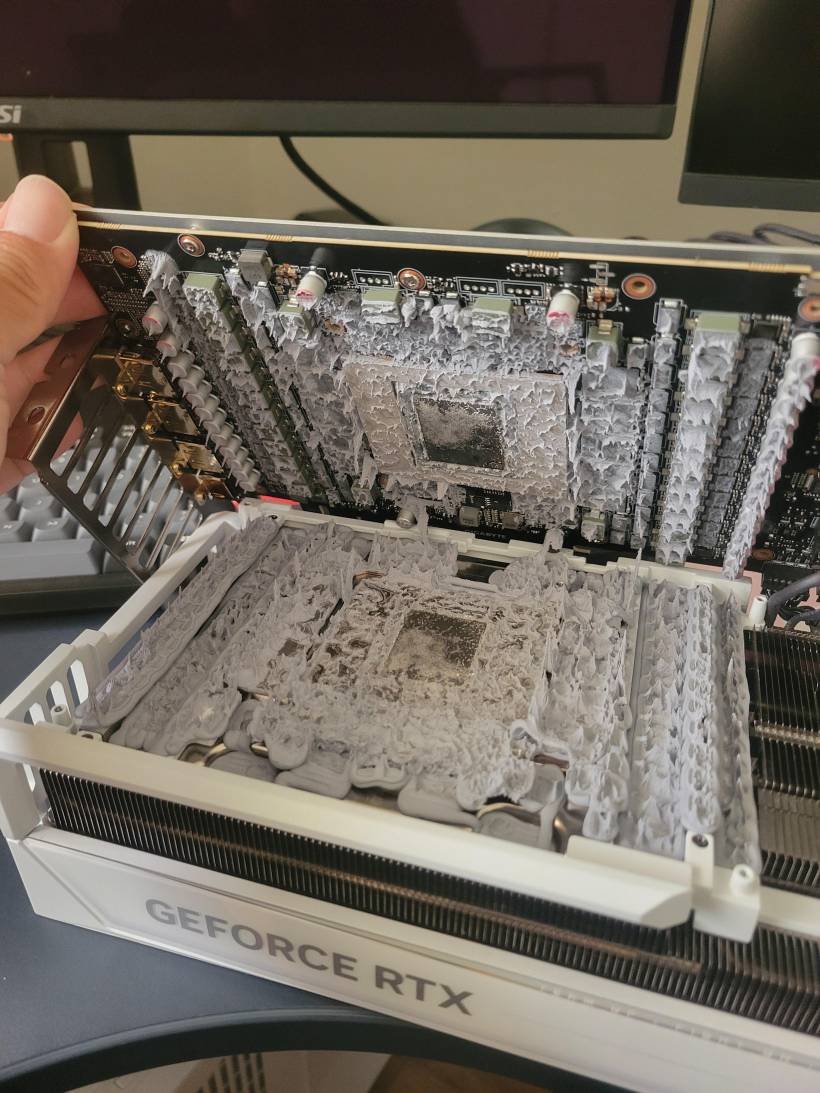
The original post appeared on Reddit before being removed, but images of the teardown were reportedly preserved elsewhere. They appeared to show an unusually generous amount of thermal gel or paste around the GPU area, far beyond what most users would expect to see inside a premium graphics card.
A Card That Looked Fine on Temperature Readings
According to the owner, the card's reported GPU temperature did not seem especially alarming. They said it generally stayed below roughly 76°C during use, which would normally sound acceptable for a high-end card under load.
However, temperatures alone do not always tell the entire story.
Modern graphics cards monitor several different areas, including the main GPU core, memory chips, power delivery components, and hotspot regions. A card may show a reasonable average core temperature while another part of the cooling setup is working harder than expected.
In this case, the frequent high fan speeds were what raised suspicion. The user felt that the card was becoming louder during gaming than it should have been, despite the reported temperature remaining within a seemingly normal range.
That led to the decision to remove the cooler and inspect the thermal material underneath.
More Thermal Paste Does Not Always Mean Better Cooling
Thermal paste, thermal gel, pads, and other interface materials are used to transfer heat from components into the cooler. They are essential, but applying too much is not automatically beneficial.
The goal is to create an even layer between the chip and cooling surface. Too little material can leave gaps and reduce heat transfer. Too much can create unnecessary mess, spread beyond the intended area, or make future maintenance harder.
The images reportedly showed thermal material extending well beyond the GPU die area and covering portions of the surrounding board. While it may not necessarily damage the card on its own, depending on the material used, it is not the kind of internal appearance most owners would expect from a flagship GPU.
The user also claimed that the original material appeared uneven around the GPU core. They believed there was limited coverage across part of the chip, while more material had gathered elsewhere near the vapour chamber.
Possible Pump-Out Concerns
One concern mentioned by the owner was "pump-out."
Pump-out is a term often used when thermal paste gradually shifts away from the most important contact area after repeated heating and cooling cycles. As a graphics card heats up and cools down during gaming, the GPU package and cooler can expand and contract slightly. Over time, some thermal materials may move away from the centre of the contact point.
That can leave coverage less consistent than it was when the card first left the factory.
It is difficult to confirm the exact cause from a single teardown, but the situation highlights why thermal interface materials matter so much in high-performance graphics cards. A powerful GPU such as an RTX 5090 generates a significant amount of heat, and even small cooling inconsistencies can affect fan behaviour, noise levels, or long-term performance.
The Owner Replaced the Factory Material
Rather than reinstalling the original thermal material, the user said they replaced it with PTM7950 on the GPU die.
PTM7950 is a phase-change thermal interface material that has become popular among enthusiasts because it is designed to soften under heat and create more consistent contact between the chip and cooler. The owner also reportedly used different thermal pads for memory modules and nearby components.
That kind of work can improve cooling in some cases, but it is not a casual upgrade. Opening a graphics card can be risky, and incorrect pad thickness, poor contact pressure, or damage during reassembly can make temperatures worse instead of better.
Anyone considering similar maintenance should first check the warranty conditions and, where possible, contact the manufacturer or retailer before removing the cooler.
Gigabyte Has Faced Similar Questions Before
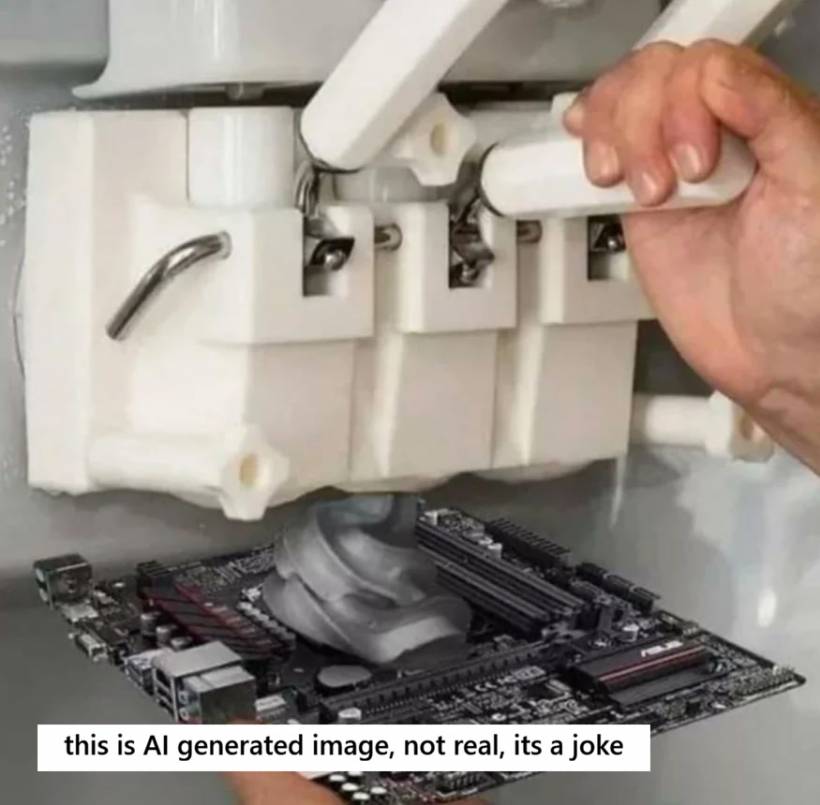
This is not the first time Gigabyte has faced discussion around excess thermal gel on RTX 50-series graphics cards. Previous reports suggested that some cards may have left production with more material than intended during assembly.
That does not mean every Aorus RTX 5090 has the same issue, nor does one user's experience prove a wider defect across the lineup. Still, high-end GPU owners who notice unusually loud fans, inconsistent temperatures, or unexpected cooling behaviour may want to keep an eye on their card's performance over time.
Monitoring GPU temperature, hotspot temperature, memory temperature where available, fan speed, and clock behaviour can provide a clearer picture than looking at one temperature reading alone.
Final Thoughts
The reported teardown is a reminder that a graphics card can appear healthy in software while still behaving in ways that feel unusual during real-world use.
A loud fan curve does not automatically mean a serious hardware problem, and excess thermal material does not always mean a card will fail. But when a flagship GPU begins running louder than expected, it is understandable that owners may start looking more closely at cooling performance.
For now, this remains one user's experience rather than confirmation of a widespread issue. Still, it is another example of how proper thermal application can make a noticeable difference in the performance, noise level, and long-term reliability of high-end graphics hardware.











Comments 0