


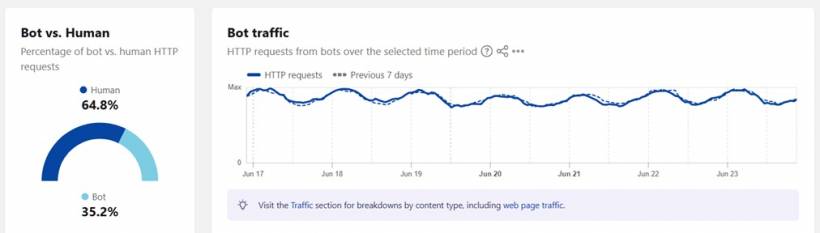
The modern internet has a trust problem. Websites are dealing with more automated traffic than ever before. Some of it is useful, such as search crawlers, accessibility tools and AI agents acting on behalf of users. Some of it is harmful, including fraud attempts, credential-stuffing attacks, spam and DDoS traffic.
The difficult part is telling the difference without making normal people jump through endless CAPTCHA puzzles, forced sign-ins and frustrating "prove you are human" checks.
Cloudflare believes there may be a better way. Together with the teams behind Firefox, Chrome and Microsoft Edge, the company is helping develop a new privacy-focused system called Private Access Control Tokens, or PACT.
The goal is to make the web safer while making it less annoying to use.
What Are Private Access Control Tokens?
PACT is designed as a way for browsers to present an anonymous proof that a user is legitimate, without revealing who that user is or where they have been browsing.
In simple terms, think of it as a privacy-friendly digital stamp.
A trusted service or website that has strong evidence that a real person is involved could issue an anonymous token. The browser could then present that token to another website when needed, helping confirm that there is a genuine user behind the request.
The receiving website would not necessarily know the person's name, identity or browsing history. It would only receive a limited assurance that the request meets a certain trust requirement.
That distinction is important. The idea is not to create a universal internet ID or a new tracking system. It is meant to reduce the amount of personal data websites need to collect simply to decide whether a visitor is likely to be real.
Why CAPTCHA Checks Have Become So Common
Most people have experienced the current approach.
You visit a website and suddenly have to click traffic lights, identify bicycles, wait for a security screen to load or complete a puzzle before you can continue. Sometimes it works smoothly. Other times, it appears repeatedly, even when you are doing nothing unusual.
These checks exist because websites need protection from automated abuse. A login page, online store or ticketing platform can be targeted by enormous volumes of scripted traffic in a short time. Without some form of filtering, real users may face slow pages, fraud attempts or unavailable services.
The problem is that today's tools can be blunt.
A real person using a VPN, public Wi-Fi connection, privacy-focused browser setting or unfamiliar device may be treated with suspicion. Meanwhile, increasingly sophisticated bots can imitate human behaviour well enough to avoid basic checks.
PACT is being positioned as a more refined way to handle that challenge.
The Promise: Fewer Frustrating Security Checks
For ordinary users, the most obvious potential benefit is fewer CAPTCHA interruptions.
Rather than proving that you are human from scratch every time you visit a protected site, your browser could present an anonymous trust token when the right conditions are met. This could reduce unnecessary friction, especially for people who regularly encounter security checks while browsing, shopping or signing in.
It could also improve accessibility. CAPTCHA systems are often difficult for people with visual impairments, mobility limitations or cognitive challenges. Even audio alternatives can be frustrating and unreliable.
A browser-based trust mechanism could make the internet easier to use without requiring every site to lower its security standards.
However, this should not be viewed as an instant end to CAPTCHAs. Existing token systems can reduce challenge steps, but they do not automatically guarantee access or eliminate all security checks.
Privacy Is the Central Selling Point
The most important part of PACT is supposed to be privacy.
Traditional bot detection often relies on signals that can feel invasive, including IP addresses, browser fingerprints, device characteristics and behavioural tracking. Those signals may help identify suspicious traffic, but they can also reveal more about users than necessary.
PACT aims to separate proof from identity.
A website could receive confirmation that a request is trustworthy without learning exactly how that trust was established. The system is designed so that websites cannot use the token to reconstruct a user's browsing history or create a cross-site profile.
That approach builds on earlier privacy-preserving token systems such as Privacy Pass, which use cryptography to allow a site to validate a claim without linking the token back to the place where it was originally issued.
What About Legitimate Bots and AI Agents?
The mention of authorised bots may sound unusual at first, but it reflects where the web is heading.
Not every automated visitor is harmful. Search-engine crawlers index websites. Monitoring tools check availability. Accessibility software may interact with pages in automated ways. AI agents may increasingly carry out tasks such as comparing products, booking appointments or retrieving information for users.
The challenge is creating a system that can recognise useful automation without opening the door to abuse.
That is much harder than simply separating humans from bots. A malicious bot can pretend to be helpful, while a legitimate automated agent may need to access pages at scale. Websites will still need their own policies, trust relationships and abuse protections.
PACT could provide a technical foundation for this, but it will not remove the need for judgement. Someone still needs to decide which issuers are trusted, what counts as legitimate intent and when an automated request should be allowed.
The Big Questions That Still Need Answers
PACT is still being developed, which means several practical details remain unclear.
One key question is how tokens will behave across different browsing modes. For example, it is not yet clear how private browsing windows, browser profiles, cleared data or device changes will affect token availability.
Another question is whether users will have meaningful visibility and control over the system. Privacy-preserving technology is valuable, but people should still understand when a browser is presenting proof to a website and what kind of assurance is being shared.
There is also the question of adoption. The system will only become useful at scale if browsers, websites, security providers and trusted issuers all support compatible standards.
A privacy-first protocol can be technically sound, but it still needs careful implementation to avoid becoming fragmented, confusing or controlled by only a small number of powerful platforms.
Why This Matters for Website Owners
For website owners, PACT could eventually offer a more accurate way to protect services from fraud and abuse.
E-commerce sites may be able to reduce false positives that interrupt genuine shoppers. Forums and social platforms may have more options for limiting spam. Login systems could potentially rely less on aggressive security challenges that frustrate employees and customers alike.
For small businesses, this could be especially helpful. Many smaller websites rely on broad security rules because they do not have the resources to constantly tune bot-detection systems. A well-supported browser standard could give them better signals without requiring invasive tracking tools.
Of course, the technology will need to prove that it works against real attacks, not just in ideal demonstrations.
Final Thoughts
Cloudflare's PACT initiative is an ambitious attempt to solve one of the internet's most persistent problems: how to distinguish legitimate traffic from harmful automation without treating every visitor like a potential threat.
The idea of anonymous proof is promising. It could mean fewer CAPTCHAs, less invasive tracking and a smoother experience for real users. At the same time, it raises important questions about adoption, browser behaviour, trust criteria and the growing role of AI agents online.
For now, PACT is best viewed as an early step toward a more privacy-aware security model for the web. Whether it becomes a widely adopted standard will depend on how openly it is implemented, how well it protects users and whether it can genuinely make life harder for malicious bots without making the internet harder for everyone else.











Comments 0