

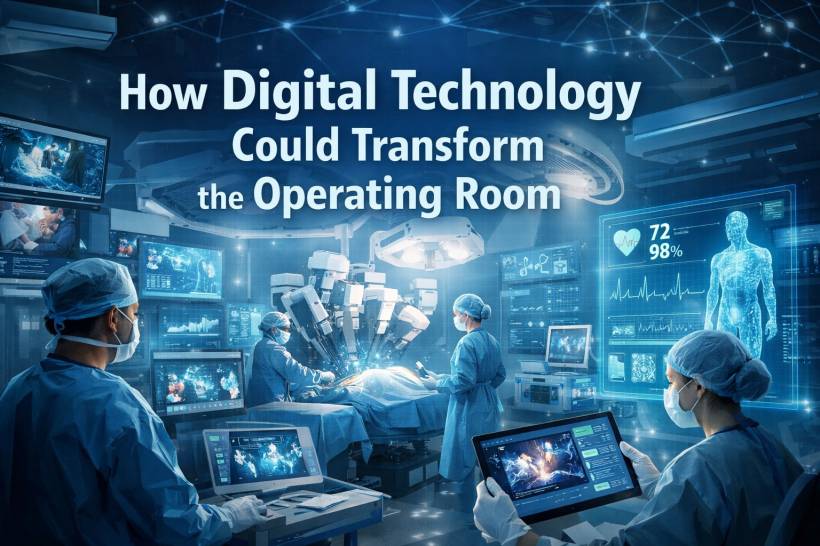
For years, hospitals have invested heavily in digital systems across many parts of healthcare. Electronic medical records, connected imaging platforms, remote monitoring, and data-driven inpatient care have all become part of the modern hospital environment. Yet one area has often remained surprisingly isolated from that progress: the operating room.
That is starting to change.
Hospitals are now taking a much closer look at how digital technology can reshape surgical care, not just by adding more devices into the room, but by making the entire operating environment more connected, more intelligent, and more useful as a source of clinical insight. At the heart of this shift is the idea of the "Smart OR," where surgical tools, imaging systems, patient monitors, and analytics platforms work together as part of one connected ecosystem.
The bigger goal is not just technological modernization for its own sake. It is about improving visibility during procedures, supporting better decisions in real time, reducing avoidable complications, and creating a stronger link between what happens inside the operating room and the rest of the patient's hospital journey.
Why the Operating Room Has Lagged Behind
Despite decades of digital transformation in healthcare, the operating room has often remained one of the least transparent parts of the hospital. It is one of the most important and data-rich clinical environments, yet much of that information has historically stayed trapped within individual devices, isolated systems, or unstructured workflows.
That has created a strange contradiction. Surgery is one of the most advanced areas of medicine in terms of skill, precision, and equipment, but from a digital integration perspective, it has often behaved like a silo.
This is why many healthcare leaders are now describing the operating room as the next major frontier for hospital digitalization. The thinking is simple: if hospitals can better connect surgical care to real-time intelligence and broader enterprise systems, they can unlock meaningful improvements in both clinical outcomes and operational performance.
The Rise of the Smart OR
The concept of the Smart OR goes far beyond installing new machines or upgrading screens. It is really about turning the operating room into a connected digital environment where information can move quickly, reliably, and meaningfully between systems.
In this model, surgical instruments, imaging equipment, patient monitoring tools, and procedural data sources are linked together rather than functioning as separate islands. That allows the hospital to build a fuller, more dynamic picture of what is happening during surgery.
A major part of this transformation depends on combining edge computing and cloud analytics. In practical terms, this means data can be processed instantly inside or near the operating room when low latency is critical, while also being sent to larger cloud-based systems for deeper analysis, long-term storage, and pattern recognition.
This "edge-to-cloud" approach is important because surgery demands speed. Insights must arrive at the right moment, without delays that could disrupt clinical care. At the same time, hospitals also want to capture large volumes of procedural data that can later be studied for quality improvement, education, and system-wide learning.
Real-Time Intelligence in Surgery
One of the most promising parts of digital surgery is the possibility of real-time intelligence. In the future, operating rooms may not just record data passively. They may actively help surgical teams by highlighting important changes, identifying early warning signs, and bringing useful information to the surface during a procedure.
This does not mean replacing the surgeon or turning surgery into an automated process. The aim is to support clinicians, not override them. Real-time analytics could act more like an extra layer of awareness, helping teams notice potential problems earlier or better understand what is unfolding in the moment.
That kind of support could become especially valuable in complex procedures, where even small changes in patient condition, timing, or technique may influence the final outcome. Early warning assistance, delivered without interfering with clinical judgment, has the potential to make surgery both safer and more consistent.
Why Surgical Video Matters More Than People Realize
One of the most overlooked digital assets in the operating room today is surgical video.
Hospitals capture large amounts of procedural footage, yet much of it is still underused. In many cases, videos are stored but not deeply analyzed. That means a valuable source of clinical insight is often sitting idle, even though it could help reveal patterns, support training, and improve decision-making.
This is where digital tools could make a major difference. When surgical video is paired with analytics, it can become much more than just a record of what happened. It can show how procedures unfold over time, where delays or inefficiencies occur, what common mistakes look like, and how techniques vary between surgeons or teams.
Used properly, this kind of analysis could support better performance review, more structured surgical education, and even real-time assistance in the future. Instead of relying only on memory, case notes, or anecdotal feedback, hospitals could learn directly from what actually happened inside the operating room.
A Powerful Tool for Surgical Training
The educational potential here is huge.
For medical students, surgical trainees, and even experienced clinicians refining their practice, analyzed procedural video could become one of the most effective learning tools available. It offers something textbooks and static diagrams cannot: the chance to observe real surgery, real patterns, and real decisions in context.
Trainees could study how procedures progress, where common variations occur, and how complications are handled. They could compare different techniques, understand workflow patterns, and learn from repeated examples rather than one-off exposure. Over time, this could help shorten learning curves and improve consistency in surgical training.
It also suggests that medical schools and teaching hospitals may need to evolve. As digital surgery tools become more common, future surgical education will likely need to include not just anatomy and technique, but also fluency in data interpretation, workflow analysis, and technology-assisted practice.
Reducing Variability Without Removing the Art of Surgery
One of the biggest challenges in surgery is variability. Across the world, hundreds of millions of procedures are performed every year, and outcomes can differ significantly depending on technique, timing, coordination, and workflow.
Some variability is natural. Surgery is still a highly skilled discipline that depends on experience, judgment, and the ability to adapt. But not all variability is beneficial. In many cases, inconsistent processes or preventable deviations can lead to complications, delays, longer hospital stays, extra procedures, and costly readmissions.
This is where digital technology becomes especially valuable. By making surgical workflows more visible and measurable, hospitals can identify where variation matters and where standardization can help.
The idea is not to turn surgery into a rigid template. Rather, it is to standardize the foundational elements that should be reliable every time, such as safety steps, workflow coordination, protocol adherence, and data capture, while still preserving the clinician's freedom to make nuanced decisions during the procedure itself.
That balance is important. Surgery will always involve judgment and human expertise. But there is still plenty of room to improve the consistency of the systems around it.
Financial and Operational Benefits for Hospitals
The benefits of connected surgical systems are not limited to clinical care. They also matter from an operational and financial perspective.
Avoidable complications are expensive. They can trigger longer admissions, more intensive follow-up care, additional interventions, and increased pressure on staff and resources. For hospitals already dealing with rising costs and capacity challenges, even modest improvements in surgical efficiency and safety can have a meaningful impact.
Digital tools can help hospitals understand which workflows are associated with better results and which patterns tend to lead to problems. That kind of visibility supports better planning, more targeted quality improvement, and smarter allocation of resources.
In other words, digital surgery is not only about futuristic operating rooms filled with connected equipment. It is also about giving hospitals better ways to measure performance, reduce waste, and build safer care pathways.
Connecting the OR to the Rest of the Hospital
Another important shift is the idea that surgery should not be treated as a completely separate world inside the hospital. The operating room is deeply connected to inpatient care, post-surgical recovery, diagnostics, pharmacy, nursing workflows, and long-term patient outcomes.
When digital systems link these areas together more effectively, the result is better continuity of care. Surgical data does not stay locked inside one room or one device. Instead, it can contribute to broader clinical understanding across the patient journey.
That opens the door to a more integrated model of care where surgical teams gain better visibility into patient history and real-time status, while health systems gain better visibility into procedural performance and recovery outcomes at scale.
This kind of connectivity is especially important as hospitals push for more coordinated, data-driven care delivery. The operating room should not be a blind spot in that effort. It should be one of the most connected parts of the system.
The Long-Term Vision for Digital Surgery
The long-term vision is clear: a connected surgical ecosystem where devices, insights, and patient data flow together through integrated platforms.
In that future, nearly every piece of equipment in the operating room could include built-in networking, computing, and storage capabilities. Data would be captured continuously, analyzed intelligently, and used in ways that help clinicians during procedures while also supporting post-case review, education, and enterprise-wide improvement.
Surgeons and care teams would not lose control. In fact, they would likely gain more visibility, more context, and better support. Hospitals, meanwhile, would gain a stronger ability to track outcomes, improve workflows, and learn from every procedure performed.
The operating room would no longer be treated as a black box. It would become a transparent, data-rich, connected part of the modern digital hospital.
Final Thoughts
Digital transformation in healthcare has already changed many corners of the hospital, but the operating room is now emerging as one of the most important areas for the next wave of innovation.
What makes this shift exciting is that it is not just about shiny new technology. It is about making surgery more connected, more measurable, and more informed. It is about using data more intelligently, unlocking the value of surgical video, supporting education, reducing avoidable variation, and helping clinicians make better decisions without undermining their expertise.
For hospitals, the Smart OR is not simply a future concept anymore. It is becoming a serious direction of travel. And if this transformation is handled well, the result could be a surgical environment that is not only more digital, but also safer, smarter, and better aligned with the wider goals of modern patient care.











Comments 0