

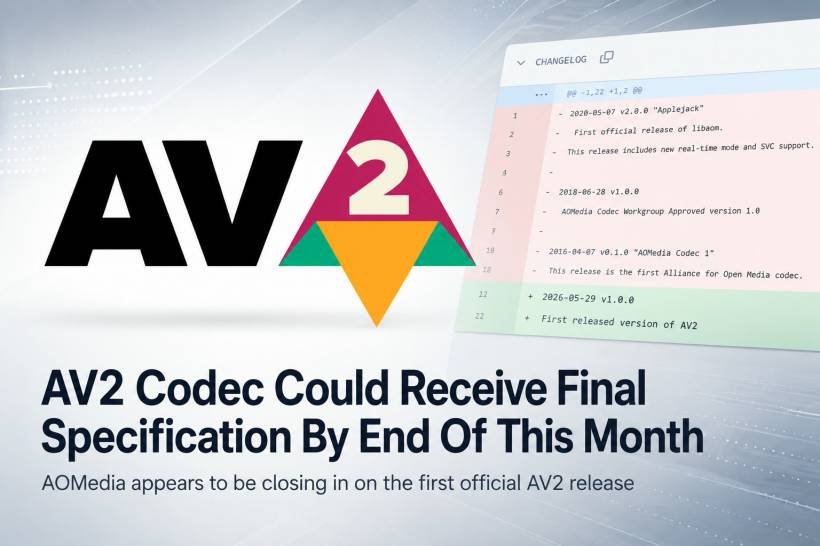
The next major step in video compression may be just around the corner. The Alliance for Open Media, better known as AOMedia, appears to be moving closer to finalising AV2, the next-generation video codec expected to succeed AV1.
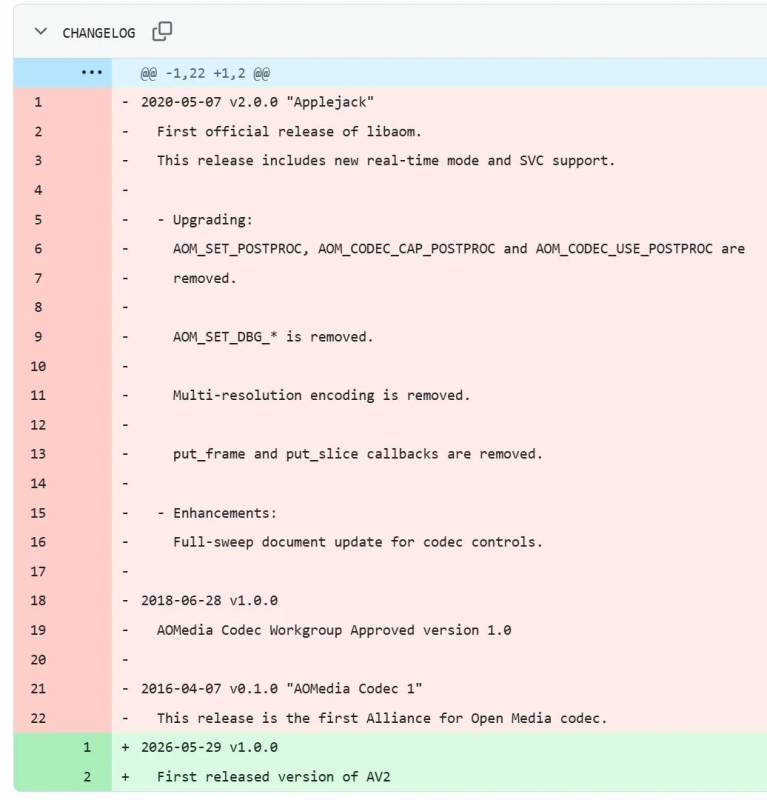
Based on recent repository updates, AV2 could receive its final 1.0.0 specification by 29 May 2026. While that does not automatically mean we will see AV2 appearing immediately in browsers, streaming platforms, video apps, or hardware devices, it is still an important milestone. A final specification usually means the technical foundation is being locked down, allowing developers, chipmakers, software vendors, and streaming services to begin planning proper implementation.
Why AV2 Matters
Video codecs may not sound exciting on the surface, but they quietly shape much of our daily internet experience. Every time we stream a movie, watch YouTube, join a video call, upload gameplay footage, or view a high-resolution clip online, a codec is working behind the scenes to compress and deliver that video efficiently.
AV2 is being developed as the successor to AV1, which itself was created as an open and royalty-free alternative to older video compression technologies. AV1 gained attention because it could deliver high-quality video at lower bitrates, making it very useful for streaming platforms, web video, and bandwidth-sensitive environments.
AV2 is expected to build on that foundation by offering even better compression efficiency. In simpler terms, the goal is to maintain or improve video quality while using less data. That matters a lot for 4K streaming, 8K content, cloud gaming, video conferencing, mobile data usage, and platforms that need to serve millions of video streams every day.
A Successor To AV1
AV1 was first released in 2018 as a successor to VP9. Over the years, it slowly gained support across browsers, graphics cards, streaming services, media players, and communication platforms. Its main appeal was clear: better compression without the same licensing complications attached to some older codecs.
AV2 is expected to continue that same direction. It is being designed by AOMedia as a next-generation video coding specification for high-quality video at lower bitrates. Like AV1, AV2 works by breaking video data into structured units. These units help handle different parts of the video stream, including timing, sequencing, frame information, tile data, and metadata.
That technical structure may not matter much to everyday viewers, but it matters greatly to developers and engineers. A well-designed codec allows video to be compressed more efficiently, decoded more reliably, and delivered more smoothly across different devices and networks.
Better Compression Could Make A Big Difference
The biggest promise of AV2 is improved compression efficiency. If AV2 performs as expected, streaming providers could deliver sharper video while using less bandwidth. For viewers, that could mean smoother playback, fewer buffering issues, and better quality on slower connections.
This is especially important as video continues to become heavier. 4K is already common, 8K content is slowly growing, HDR video is more widespread, and livestreaming has become part of gaming, education, business, and entertainment. At the same time, not everyone has unlimited high-speed internet. A more efficient codec can help bridge that gap.
For platforms, the benefit is also financial. Lower bitrate video can reduce bandwidth costs at scale. When a company serves millions of hours of video every day, even small efficiency improvements can make a major difference.
Final Specification Does Not Mean Instant Adoption
Even if AV2 receives its final specification by the end of May 2026, that does not mean it will suddenly appear everywhere overnight. Codec adoption is usually slow, especially when hardware support is involved.
AV1 is a good example. Although AV1 was released in 2018, it took years before support became common across major devices and services. Some platforms only started rolling it out much later, and hardware decoding support had to catch up through newer GPUs, mobile chips, TVs, and streaming devices.
The same will likely happen with AV2. Software encoders and decoders may appear first, followed by experimental support in browsers, media tools, and streaming platforms. Wider adoption will probably depend on hardware acceleration, because decoding advanced video codecs purely through software can be demanding, especially on lower-powered devices.
Why The Timeline Has Been Watched Closely
There had already been expectations that AV2 would reach final release earlier, possibly by the end of last year. That did not happen, which makes this latest sign of progress more notable. AOMedia has not yet publicly released the full final specification, and what is currently available appears to be draft material, including documentation related to the bitstream and decoding process.
That means the situation is still not fully complete from a public-facing perspective. However, the appearance of a possible 29 May 2026 finalisation date suggests that development is moving toward a more concrete stage.
For developers, this matters because final specifications are what allow proper implementation work to begin with more confidence. Nobody wants to build serious long-term support around a standard that is still changing too heavily.
What This Means For Everyday Users
For normal users, AV2 will probably not be something they actively choose or configure. Most people do not manually decide whether a video uses H.264, VP9, AV1, or AV2. The platform, browser, device, and network conditions usually handle that in the background.
But users may eventually feel the benefits indirectly. Videos may load faster, look cleaner at lower bitrates, or perform better on limited connections. Streaming platforms may be able to offer higher-quality video without requiring as much bandwidth. Video calls may also improve, especially in situations where network quality is not ideal.
In other words, AV2 may not be a feature people notice by name, but it could become part of the reason future video feels smoother and more efficient.
The Bigger Picture
The development of AV2 shows how important video compression has become. The internet is increasingly video-driven, from entertainment and education to gaming, communication, social media, and professional workflows. As video quality increases, compression technology has to improve as well.
AV1 helped push open video compression forward, and AV2 looks set to continue that progress. The key question is not only how good the codec will be on paper, but how quickly the ecosystem can support it in real-world use.
A final specification would be an important starting point, but the real test will come later: encoder maturity, browser support, hardware acceleration, platform adoption, and actual performance compared with AV1 and other modern codecs.
Final Thoughts
AV2 reaching its final specification would be a meaningful milestone for the future of online video. It signals that the next major open video codec is moving from development toward practical implementation, even if widespread adoption may still take years.
For now, AV1 remains the more relevant codec for current devices and platforms. But AV2 is worth watching closely, especially for anyone interested in streaming, web video, cloud gaming, video conferencing, or media technology. If it delivers the efficiency improvements expected from it, AV2 could eventually become a major part of how high-quality video is delivered across the internet.











Comments 0