

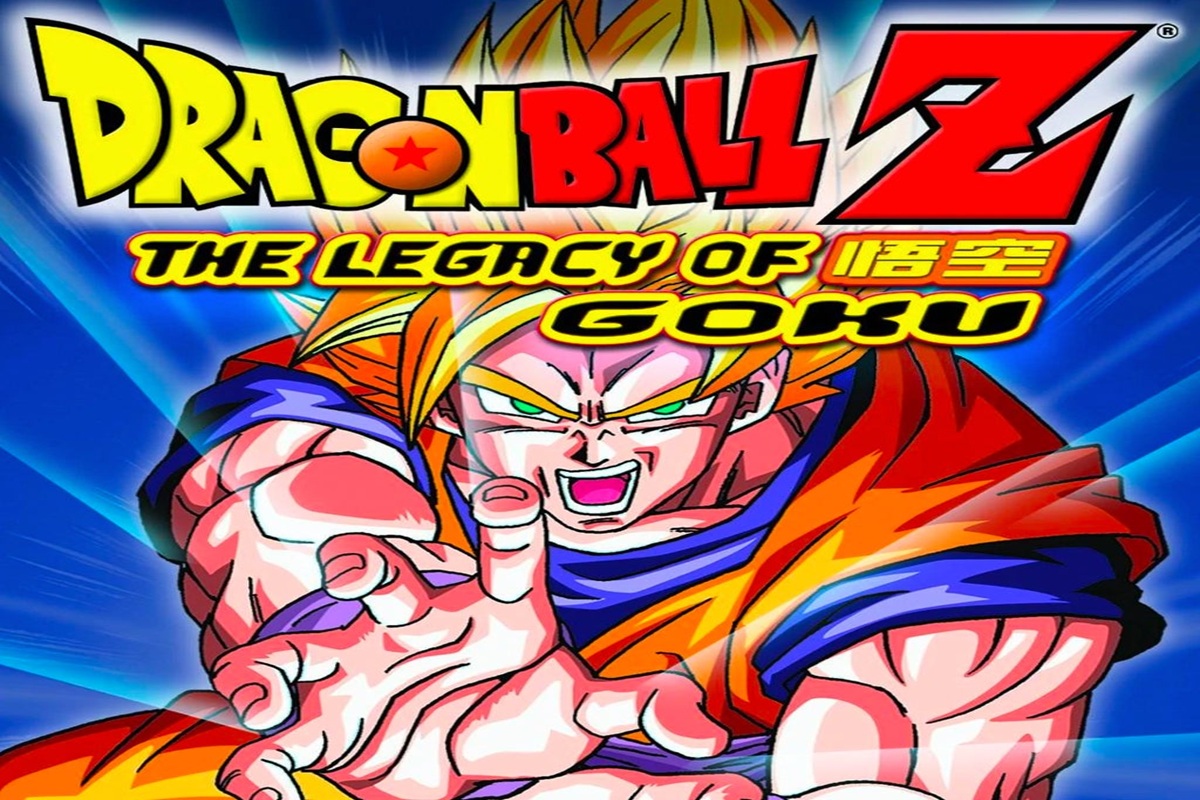
Dragon Ball Z: The Legacy of Goku takes the early years of Dragon Ball Z and transforms them into a compact action RPG built around exploration, character growth, and real-time combat. Released in 2002, the game follows Goku through some of the series' most important early battles, beginning with the arrival of Raditz and continuing through the confrontation with Frieza on Planet Namek. Instead of presenting these events as a sequence of isolated fights, the game allows players to travel through forests, towns, mountains, alien landscapes, and other recognizable locations while completing quests and gaining experience. For many players, it became one of the first opportunities to experience a sizable portion of the Dragon Ball Z storyline in handheld RPG form.
The game is much simpler than its sequels, but that simplicity gives it a distinctive place in Dragon Ball gaming history. Players control Goku almost exclusively, gradually increasing his level, improving his health and energy, and unlocking stronger techniques as the story progresses. Exploration is viewed from an overhead perspective, with combat taking place directly in the environment against wild creatures, soldiers, robots, and familiar villains. While some mechanics would later be refined considerably in The Legacy of Goku II and Buu's Fury, the original game established the basic action RPG formula that those later titles expanded.
Now playable online through Lemon Web Games, Dragon Ball Z: The Legacy of Goku can be experienced directly in a modern web browser without needing the original handheld console. Players can follow Goku from his first confrontation with Raditz through his training with King Kai and ultimately into the battle against Frieza on Namek. The browser-based version makes it easy to revisit the game's exploration, leveling, and real-time combat while preserving the straightforward design of the original release. Whether you remember playing it during the Game Boy Advance era or are discovering it for the first time, it remains an interesting starting point for the Legacy of Goku series.
The Beginning of the Legacy of Goku Series
The Legacy of Goku is the first entry in a trilogy of action RPGs that would eventually become some of the most recognizable Dragon Ball games on the Game Boy Advance. Its two sequels, The Legacy of Goku II and Buu's Fury, greatly expanded the formula with more playable characters, stronger combat systems, equipment, additional quests, and broader exploration. The original game is considerably more basic by comparison, but many of the ideas that defined the later games were already present. Experience points, character leveling, free-roaming environments, story objectives, and real-time energy attacks all appear here in early form.
The game was developed by Webfoot Technologies and approached Dragon Ball Z differently from the fighting games that dominated many earlier adaptations. Rather than focusing on tournament matches or one-on-one battles, it attempts to represent Goku's larger journey through the world. Players travel between locations, speak with characters, complete tasks, and fight ordinary enemies before reaching major story encounters. This RPG structure gives the game a slower pace than a traditional Dragon Ball fighting game.
Its importance becomes easier to appreciate when looking at how the series evolved afterward. Many of the weaknesses of the original game were directly addressed in The Legacy of Goku II, which improved movement, combat responsiveness, world design, and character variety. Buu's Fury then added even deeper RPG systems and equipment customization. The first Legacy of Goku therefore feels like a prototype for a formula that would eventually become much more ambitious.
Following Goku Through the Saiyan Saga
The adventure begins during one of the most important turning points in Dragon Ball Z. Raditz arrives on Earth and reveals that Goku is actually a Saiyan, immediately changing everything the hero believed about his origins. Players experience the confrontation with Raditz and the consequences that follow, including Goku's journey through the afterlife. This opening section establishes both the story and the game's basic movement and combat mechanics.
After Goku's death, the adventure continues along Snake Way as he travels toward King Kai's planet. Rather than simply skipping over this part of the story, the game turns the journey into an explorable sequence with enemies and obstacles. Once Goku reaches King Kai, his training becomes another part of the player's progression. These sections help connect the major battles rather than presenting the story only through dialogue screens.
Goku eventually returns to Earth as the Saiyan invasion reaches its most dangerous point. Vegeta and Nappa have already devastated the battlefield, forcing Goku into one of his most important early confrontations. The game recreates these events through a mixture of exploration and direct combat. Although the battles are mechanically simple, the story progression gives them added importance.
The Journey to Planet Namek
After the Saiyan conflict, the story shifts toward Planet Namek and the search for the Namekian Dragon Balls. This portion of the adventure introduces new environments and increasingly powerful enemies. Goku eventually travels to Namek, where Frieza's forces are already hunting the Dragon Balls for their own purposes. The change in setting gives the game a noticeably different atmosphere from its earlier Earth-based environments.
Namek is populated by Frieza's soldiers, unusual creatures, and several important enemies from the anime. Players encounter members of the Ginyu Force as the conflict escalates, eventually leading toward the confrontation with Frieza himself. These encounters represent some of the strongest opponents in the game and require players to have developed Goku sufficiently. The overall progression mirrors the increasing power scale of the anime.
The Frieza Saga also gives Goku access to some of his most recognizable abilities and transformations. By this stage of the game, the difference between the character's early and late-game strength becomes much more noticeable. This sense of growth is one of the main reasons the RPG format works well with Dragon Ball Z. Goku's increasing power is not only part of the story but something the player experiences through statistics, attacks, and survivability.
Overhead Exploration and Quest-Based Progression
The Legacy of Goku uses an overhead perspective that allows players to freely explore individual areas rather than moving through traditional side-scrolling stages. Locations are connected through paths and transitions, with objectives usually requiring Goku to speak with characters, collect items, defeat enemies, or reach a specific destination. The structure is relatively linear, but individual areas often provide room to explore. This creates a stronger sense of adventure than a purely stage-based action game.
Many quests involve simple tasks designed to encourage movement through the environment. Players may need to retrieve an object, help a civilian, locate a missing character, or clear dangerous enemies from an area. These objectives are rarely complicated, but they provide context for exploration and help break up the combat. They also contribute experience and allow the story to progress naturally.
The quest structure becomes especially noticeable during the Earth-based sections, where Goku interacts with ordinary characters between major battles. These quieter moments give the game a slightly different tone from the constant combat associated with many Dragon Ball adaptations. They also allow the world to feel inhabited rather than functioning purely as a collection of arenas. Even simple tasks contribute to the broader RPG identity.
Real-Time Melee Combat
Combat takes place directly within the exploration environment, with Goku able to strike nearby enemies using basic melee attacks. Unlike a traditional fighting game, there is no separate battle screen or complex combination system. Players simply approach an enemy, attack, reposition, and attempt to avoid incoming damage. The system is easy to understand but can be unforgiving.
One of the game's most noticeable characteristics is that enemies can deal significant damage if Goku remains too close for too long. Because the combat system is relatively simple, positioning becomes important even against ordinary opponents. Players often need to attack, move away, and then return rather than standing directly beside an enemy and repeatedly pressing the attack button. This gives even simple encounters a certain level of risk.
The combat is also one of the areas where the first Legacy of Goku shows its age most clearly. Movement and hit detection can feel less responsive than in the later sequels, and early enemies can sometimes be surprisingly dangerous. Players may need to gain additional levels before progressing comfortably through certain areas. This creates a stronger emphasis on grinding than many modern action RPGs.
Ki Attacks and Signature Techniques
In addition to normal melee attacks, Goku can use several energy-based techniques throughout the adventure. Ki blasts provide a basic ranged attack, allowing players to damage enemies without immediately entering close combat. More powerful abilities consume greater amounts of energy but can deal considerably more damage. Managing this energy becomes an important part of difficult encounters.
The Kamehameha is naturally one of Goku's most recognizable techniques and appears as a major offensive option. Players can use it to strike enemies from a distance, making it particularly useful against stronger opponents where close-range combat is risky. Solar Flare provides another useful technique by temporarily affecting enemies and creating opportunities to reposition. These abilities give the player alternatives to relying entirely on melee combat.
Energy regenerates gradually, encouraging players to alternate between physical and ranged attacks. Using powerful techniques continuously can quickly leave Goku without enough energy for another major attack. This makes resource management important during long battles. Even though the system is simple, it reflects the familiar Dragon Ball idea of balancing physical combat with powerful ki techniques.
Flight as a Limited Exploration Ability
Flight is another recognizable Dragon Ball ability incorporated into the game. Rather than allowing unlimited movement through the air, The Legacy of Goku uses a dedicated flight meter. Activating flight allows Goku to cross obstacles such as water, cliffs, or other terrain that would otherwise block his movement. The meter gradually decreases while airborne, limiting how long the ability can be used.
This approach turns flight into an exploration tool rather than simply a faster way to move through every area. Players must decide when it is actually necessary and ensure they have enough remaining flight energy to reach the other side of an obstacle. As the adventure progresses, Goku's flight capabilities improve. This gradually increases the number of areas he can access.
The system is considerably more restricted than flight in many later Dragon Ball games, but it fits the RPG structure well. Instead of removing environmental boundaries entirely, flight becomes another ability that supports progression. It also helps distinguish Goku from an ordinary action RPG protagonist. Even in this early handheld adaptation, the developers attempted to incorporate familiar Dragon Ball abilities into exploration.
Leveling Up and Becoming Stronger
Experience points play a central role in The Legacy of Goku. Defeating enemies increases Goku's experience, and gaining enough points raises his level. Each level improves important statistics such as health and combat effectiveness. This creates a constant sense of progression even during ordinary encounters.
Leveling is particularly important because enemy strength can increase quickly between areas. A player who avoids too many fights may eventually encounter opponents capable of defeating Goku with only a few attacks. Spending time fighting weaker creatures and soldiers can therefore make later sections considerably easier. This need for additional training reflects the Dragon Ball theme of becoming stronger before facing greater challenges.
The system is much simpler than the stat customization found in later entries. Players do not manually distribute points or equip large amounts of gear. Instead, character development occurs automatically as Goku gains levels. While this provides less flexibility, it keeps the progression easy to understand.
Enemies Beyond the Major Villains
The adventure contains far more enemies than the recognizable villains from the anime. Goku encounters wild animals, hostile creatures, soldiers, robots, and other threats throughout the game's environments. These ordinary enemies provide most of the experience needed for leveling. They also ensure that exploration rarely remains completely peaceful.
Some early enemies can be surprisingly dangerous, particularly before Goku has gained several levels. Wolves and other creatures may inflict heavy damage if players allow themselves to become surrounded. Later enemies become stronger and often require more careful use of energy attacks. This makes ordinary encounters an important part of the progression rather than simple background activity.
The balance can occasionally feel uneven because relatively minor enemies may cause more trouble than expected. However, this also gives players a reason to take character development seriously. A stronger Goku can move through previously dangerous areas much more comfortably. Returning to earlier locations after gaining several levels demonstrates how significantly the character has improved.
Major Battles Against Familiar Dragon Ball Z Villains
The main storyline naturally includes encounters against several of Dragon Ball Z's most famous villains. Raditz provides the first major conflict, followed by increasingly dangerous enemies connected to the Saiyan and Frieza Sagas. Nappa and Vegeta represent major milestones during the Earth portion of the story. The Ginyu Force and Frieza later provide increasingly powerful challenges on Namek.
These battles are mechanically similar to ordinary combat but carry greater significance because of their place in the story. Players must manage distance carefully and make effective use of Goku's strongest available techniques. Charging directly into a powerful enemy can result in a quick defeat. Ranged attacks and careful movement are often safer than attempting constant melee combat.
The final confrontation with Frieza represents the culmination of Goku's progression throughout the game. By this point, the character has developed significantly from the relatively vulnerable fighter seen near the beginning. The story also introduces the transformation that would become one of the most iconic moments in Dragon Ball Z. Reaching this point gives the adventure a clear sense of escalation.
A Compact Adaptation of a Huge Anime Story
One of the more impressive aspects of The Legacy of Goku is how much Dragon Ball Z story it attempts to fit into a relatively small handheld game. The Saiyan Saga and Frieza Saga contain a large number of characters, locations, training sequences, and battles. The game naturally simplifies many of these events, but the central storyline remains recognizable. Important moments are connected through dialogue and exploration rather than being reduced entirely to boss battles.
Some story sequences move quickly because of the hardware and storage limitations of the era. Characters who receive extensive development in the anime may appear only briefly, and certain conflicts are condensed substantially. The player also remains focused on Goku rather than frequently switching perspectives. These compromises help keep the adventure manageable.
Despite these limitations, the game succeeds in creating the feeling of travelling through a significant portion of Dragon Ball Z history. Players move from peaceful Earth locations to the afterlife, King Kai's planet, and eventually Planet Namek. Each transition reinforces the increasing scale of the story. For a handheld game from 2002, the ambition behind this structure remains notable.
Pixel Graphics and Early Game Boy Advance Presentation
The Legacy of Goku uses colorful two-dimensional sprites and an overhead viewpoint suited to the Game Boy Advance hardware. Goku is easily recognizable through his orange gi, while familiar characters retain enough visual detail to distinguish them despite the small screen. Environments use bright colors and straightforward tile-based designs. The presentation is simple but appropriate for an early handheld action RPG.
Character animations cover basic walking, flying, melee attacks, and energy techniques. Powerful attacks produce larger effects that stand out from ordinary combat. Although the animation is less fluid than in later games, it communicates the necessary action clearly. The visual style would become significantly more polished in the sequels.
The game's audio also reflects the technical limitations of the platform. Music accompanies exploration and important moments, while attacks and menu actions use simple sound effects. The presentation is functional rather than cinematic. Its charm comes primarily from translating recognizable Dragon Ball locations and characters into a compact pixel-art format.
The Difficulty and Grinding of the Original Game
The first Legacy of Goku is generally considered more difficult and less forgiving than its sequels. Early enemies can inflict significant damage, and Goku initially has limited health and offensive power. Players who attempt to move through the story without fighting enough ordinary enemies may quickly discover that they are underleveled. Additional training becomes almost unavoidable in certain sections.
This creates periods where players may need to remain in an area and repeatedly defeat enemies before continuing. Some retro RPG fans enjoy this because it reinforces the feeling of training and becoming stronger. Others may find the repetition slower than the more refined progression systems of later games. The experience depends heavily on how much the player enjoys gradual character development.
Healing resources and careful positioning can make difficult sections more manageable. Avoiding unnecessary damage is particularly important because enemies can quickly overwhelm an unprepared player. Learning when to use ki attacks instead of melee strikes also helps considerably. Once Goku reaches higher levels, previously dangerous enemies become much easier to defeat.
How the Sequels Improved the Formula
Playing the original Legacy of Goku today becomes especially interesting when compared with its sequels. The Legacy of Goku II introduced several playable characters, larger environments, improved combat, stronger visual presentation, and a more sophisticated progression system. It also reduced many of the frustrations associated with the first game's movement and enemy balance. These changes transformed the basic concept into a much stronger action RPG.
Buu's Fury expanded the formula even further with equipment, greater stat customization, additional quests, transformations, and a broader range of playable characters. By that point, the series had developed into one of the most feature-rich Dragon Ball experiences available on a handheld console. Many of those improvements can be traced back to ideas first introduced in the original game. The trilogy therefore provides an interesting example of a developer refining a concept across several releases.
The first Legacy of Goku may be the least polished entry, but it remains important because it established the direction that made the later games successful. Its basic combination of exploration, real-time combat, leveling, and story progression became the foundation of the series. Players familiar only with the sequels may find it especially interesting to see where those mechanics began. In that sense, the original is valuable both as a game and as a piece of Dragon Ball gaming history.
Why The Legacy of Goku Is Still Worth Revisiting
The game's strongest appeal today is its straightforward representation of the early Dragon Ball Z story. Players can follow Goku through major events without dealing with complicated menus or fighting-game command inputs. Exploration and leveling provide a steady rhythm between important battles. This makes the adventure approachable even for players who do not normally play traditional fighting games.
There is also a nostalgic quality to its simplicity. Modern Dragon Ball games often feature huge rosters, cinematic transformations, complex combat systems, and enormous arenas. The Legacy of Goku instead focuses on one hero, a relatively compact world, and gradual RPG progression. That smaller scale gives the game a very different personality.
For fans of the complete trilogy, revisiting the first entry also provides useful context for how dramatically the series improved. Mechanics that feel basic here would later become far more sophisticated. Seeing that evolution can make the sequels even more impressive. The original therefore remains worth experiencing despite its rougher design.
Playing Dragon Ball Z: The Legacy of Goku Online Today
Through Lemon Web Games, Dragon Ball Z: The Legacy of Goku can now be played directly in your web browser with no downloads or setup required. Features of the web-based version include:
Playing The Legacy of Goku through a browser provides a convenient way to revisit the beginning of one of Dragon Ball's most memorable handheld RPG series. The game's structure works particularly well for players who enjoy gradually developing a character while following a familiar story. Short exploration sessions can be spent gaining experience, completing objectives, and preparing for the next important battle. Those willing to accept the slower progression will find a straightforward but recognizable Dragon Ball adventure.
For newcomers, the game also provides an opportunity to experience how the Legacy of Goku formula began before the much larger sequels expanded it. Movement, combat, and progression are noticeably simpler, but the essential ideas are already present. Playing the original before moving into The Legacy of Goku II and Buu's Fury makes the improvements between each game especially clear. It is an interesting journey through the evolution of handheld Dragon Ball action RPGs.
Who Should Play Dragon Ball Z: The Legacy of Goku
The game is particularly suitable for players who enjoy straightforward RPG progression. There are no complicated equipment systems or extensive skill trees to manage, allowing the focus to remain on exploration, combat, and gaining levels. Watching Goku become stronger over the course of the adventure provides a simple but effective sense of achievement. The structure also suits Dragon Ball particularly well because training and increasing power are central themes of the series.
Players should also be prepared for some of the design limitations associated with an early entry in the trilogy. Combat can feel less responsive than in the sequels, ordinary enemies can be unexpectedly dangerous, and some additional grinding may be necessary. These elements may frustrate players expecting the smoother experience of The Legacy of Goku II. For retro gaming fans, however, they are part of experiencing the series in its original form.
Play Dragon Ball Z: The Legacy of Goku Online Now
Dragon Ball Z: The Legacy of Goku offers a compact action RPG interpretation of two of the most important story arcs in Dragon Ball Z. Players accompany Goku from the arrival of Raditz through King Kai's training, the Saiyan invasion, the journey to Namek, and the final confrontation with Frieza. Real-time combat, experience levels, ki techniques, and exploration provide a simple framework that keeps the story interactive. While the mechanics are more basic than those of the sequels, the game still succeeds in turning Goku's journey into a continuous playable adventure.
Through Lemon Web Games, this early handheld Dragon Ball RPG can be experienced directly in a modern browser without requiring the original cartridge or console. Returning players can revisit a title that helped define Dragon Ball action RPGs on handheld systems, while newcomers can discover the starting point of the Legacy of Goku trilogy. The game also provides an interesting contrast with its much more polished sequels. Experiencing all three entries in order reveals just how dramatically the formula developed.
Final Thoughts
Dragon Ball Z: The Legacy of Goku is a game whose historical importance is arguably greater than its mechanical sophistication. Its combat can be awkward, its progression sometimes demands additional grinding, and its world design is much simpler than what would appear in later entries. Nevertheless, the game established a compelling idea: instead of reducing Dragon Ball Z to isolated battles, allow players to explore its world, complete quests, gain experience, and gradually develop Goku through a substantial portion of the anime storyline. That concept would become the foundation for two much stronger sequels.
The RPG structure also fits Dragon Ball better than might initially be expected. Goku begins relatively limited and becomes noticeably stronger as he trains, travels, and defeats increasingly powerful enemies. Signature techniques, flight, and energy management help connect familiar abilities to interactive mechanics. Even when those systems are basic, they create a recognizable sense of progression that reflects the central themes of the series.
More than two decades after its original release, The Legacy of Goku remains an interesting piece of Dragon Ball gaming history and an important starting point for one of the franchise's most memorable handheld series. Its rough edges are easier to notice today, but so are the ideas that would later be refined into The Legacy of Goku II and Buu's Fury. Through Lemon Web Games, players can revisit Goku's early adventures, train through increasingly difficult encounters, and follow the journey from Raditz to Frieza directly in their browser. For Dragon Ball fans, retro RPG enthusiasts, and anyone interested in the evolution of the Legacy of Goku trilogy, the original adventure is still worth experiencing.











Comments 0