

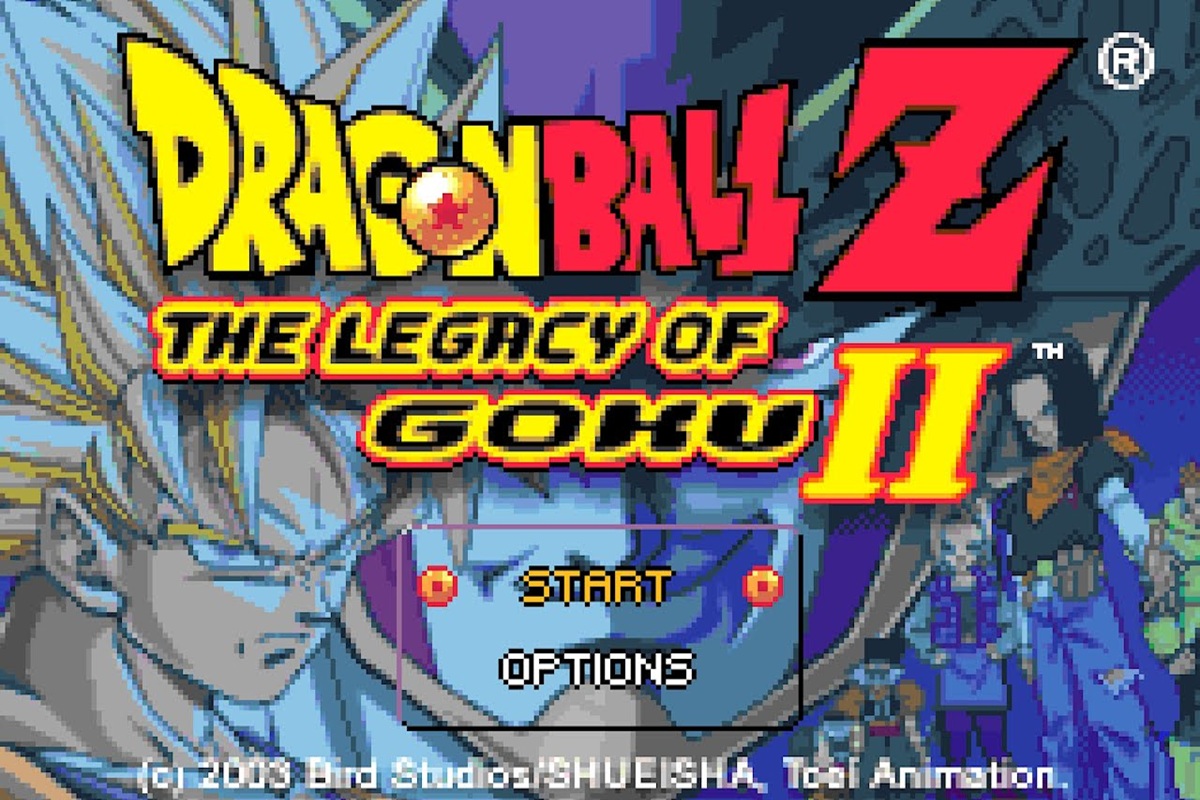
Dragon Ball Z: The Legacy of Goku II takes the action RPG concept of the original game and expands it into a much larger, smoother, and more ambitious Dragon Ball adventure. Released in 2003, the sequel follows the events surrounding Future Trunks, the Androids, Cell, and the Cell Games while giving players control of several of Dragon Ball Z's most recognizable heroes. Instead of simply moving from one famous battle to another, players explore towns, forests, mountains, laboratories, cities, and hidden areas while completing story objectives and optional quests. The result is an adventure that feels far closer to a full handheld RPG than the comparatively simple first Legacy of Goku.
One of the biggest improvements is the introduction of multiple playable characters, including Gohan, Goku, Vegeta, Piccolo, and Future Trunks. Each fighter develops independently through experience levels, stat progression, and signature energy attacks, creating a stronger sense of individuality throughout the story. Improved movement, more responsive combat, larger environments, side quests, character-specific barriers, and the Scouter system all help make exploration considerably more enjoyable. These improvements transformed the basic ideas of the original game into one of the most memorable Dragon Ball experiences released for the Game Boy Advance.
Now playable online through Lemon Web Games, Dragon Ball Z: The Legacy of Goku II can be experienced directly in a modern web browser without requiring the original handheld console. Players can explore the world of Dragon Ball Z, develop several powerful fighters, complete optional objectives, and experience the escalating conflict against the Androids and Cell. The browser-based version provides a convenient way to revisit the adventure while retaining the progression and exploration that made the original release so enjoyable. Whether you remember playing it during the Game Boy Advance era or are discovering it for the first time, The Legacy of Goku II remains an excellent example of how Dragon Ball can work as an action RPG.
A Major Improvement Over the Original Game
The original Legacy of Goku established the basic formula of exploring an overhead world, defeating enemies in real time, and gaining levels while progressing through the Dragon Ball Z story. However, its movement, combat, and world design could feel restrictive, particularly during the early stages of the adventure. The Legacy of Goku II addresses many of those limitations almost immediately. Movement is more responsive, environments are more interesting to explore, and battles provide a much stronger sense of control.
The sequel also greatly expands the amount of content available between major story events. Instead of following Goku alone, players regularly switch between several heroes as the storyline develops. Optional quests, hidden items, collectible objectives, and locked areas encourage players to investigate locations beyond the most direct route. These additions give the world a more substantial RPG structure and make progression feel less linear.
Visually, the improvement is equally noticeable. Character sprites are larger and more expressive, environments contain additional detail, and energy attacks provide brighter and more impressive effects. The overall presentation feels considerably closer to the Dragon Ball Z television series despite the limitations of the handheld hardware. Combined with stronger gameplay systems, these improvements explain why the sequel is often remembered much more fondly than the first game.
Future Trunks and the Warning from the Future
The story begins around the arrival of Future Trunks, one of the most memorable moments in the early Android Saga. After defeating Frieza and King Cold, Trunks warns Goku that powerful Androids will appear in three years and that Goku himself will suffer from a dangerous heart virus. This immediately establishes the central threat and gives the heroes time to prepare. The game uses this setup to introduce its broader cast and establish the world before the Android conflict fully begins.
As the storyline progresses, Androids 19 and 20 appear, followed by the awakening of Androids 17 and 18. Their arrival changes the direction of the conflict because they are considerably more powerful than expected. Vegeta, Piccolo, Gohan, Trunks, and the other heroes become increasingly involved as the situation grows more dangerous. The game recreates these events through a mixture of dialogue, exploration, and direct combat.
The introduction of Cell takes the story in an even darker direction. Unlike the Androids, Cell hunts ordinary people to increase his power while searching for Androids 17 and 18. Players gradually encounter the consequences of his actions while investigating locations connected to his appearance. This gives the middle portion of the adventure a stronger sense of mystery than many other Dragon Ball game adaptations.
Five Main Playable Heroes
One of the most significant changes from the original game is the ability to control multiple characters. Gohan, Goku, Vegeta, Piccolo, and Future Trunks all become playable at different points throughout the adventure. Each character has their own experience level, statistics, and techniques, so progress with one fighter does not automatically make the others equally powerful. This encourages players to spend time developing the entire roster.
Although all characters use a similar basic control scheme, their attacks and progression give them different strengths. Vegeta naturally emphasizes aggressive energy techniques, while Piccolo offers his own distinctive abilities and combat style. Gohan develops considerably over the course of the story, eventually becoming one of the most important characters during the Cell Games. Future Trunks brings another selection of powerful attacks while maintaining his central role in the Android storyline.
Goku is unavailable during some important sections because of events from the story, which gives the other heroes more opportunities to take center stage. This works particularly well because the Android and Cell Sagas involve many characters rather than focusing exclusively on Goku. Switching perspectives helps the game reflect that broader narrative. It also prevents the adventure from feeling like a repeat of the first Legacy of Goku.
Real-Time Combat with Improved Responsiveness
Combat still takes place directly within the exploration environment, but it feels considerably more responsive than in the original game. Players can approach enemies with melee attacks, retreat when necessary, and use powerful energy techniques from a distance. The stronger movement controls make it easier to avoid incoming attacks and reposition during difficult encounters. This alone makes ordinary battles far less frustrating.
Melee attacks are useful for conserving energy, particularly against weaker enemies encountered while exploring. Stronger opponents often require a mixture of physical attacks and ranged techniques. Because energy gradually regenerates, players must decide when a special move is worth using and when ordinary attacks are sufficient. This creates a simple but effective combat rhythm.
Enemies also vary more noticeably throughout the game. Players encounter wild creatures, robots, soldiers, martial artists, Android-related enemies, and other threats depending on the region. Stronger enemies can deal considerable damage if the player attacks carelessly. As character levels increase, previously dangerous opponents become easier to defeat, reinforcing the RPG progression.
Signature Energy Techniques
Each playable fighter has access to recognizable energy attacks inspired by Dragon Ball Z. These techniques provide ranged combat options and allow characters to deal significant damage without remaining close to an opponent. Stronger attacks consume more energy, preventing players from continuously relying on their most powerful techniques. Managing the energy meter is therefore an important part of tougher battles.
Goku naturally has access to the Kamehameha, while Vegeta and the other characters use attacks associated with their own fighting styles. Some techniques are suited to direct damage, while others provide different tactical advantages. Unlocking stronger abilities as the game progresses gives players another sense of character development beyond simple statistic increases. Familiar attacks also help distinguish the playable heroes from one another.
The visual presentation of these techniques is noticeably stronger than in the first Legacy of Goku. Energy beams and projectiles use brighter effects and larger animations, making powerful attacks feel more dramatic. Although the hardware cannot reproduce the enormous battles of the anime, the game captures their basic energy and spectacle surprisingly well. These attacks remain some of the most satisfying tools available during combat.
Character Levels and Stat Development
Each fighter gains experience individually by defeating enemies and completing parts of the adventure. Reaching a new level improves the character's capabilities and provides stat points that can be assigned to different attributes. Players can therefore influence how a particular fighter develops rather than relying completely on automatic growth. This represents a significant improvement over the simpler progression system of the original game.
Strength influences physical attack effectiveness, while power improves energy-based abilities. Endurance helps characters withstand greater amounts of damage, making it particularly valuable during difficult encounters. Players can distribute points according to their preferred combat style, creating fighters who emphasize melee damage, energy techniques, or survivability. The system is straightforward enough to understand quickly while still giving players meaningful choices.
Because characters level independently, it is possible for one hero to become significantly stronger than another. This becomes important when the storyline requires control of a fighter that has not been used recently. Spending some time training each character prevents later sections from becoming unnecessarily difficult. The game therefore encourages balanced development across the roster.
Character-Specific Barriers Encourage Progression
Throughout the world, players encounter colored barriers marked with the symbol of a particular character. These barriers can only be opened by the correct hero after reaching the required level. A Vegeta barrier, for example, requires Vegeta to be sufficiently developed before he can pass through it. This mechanic connects exploration directly to character progression.
Behind these barriers are often useful items, optional areas, or routes connected to additional objectives. Some can be encountered long before the required character reaches the necessary level, encouraging players to remember their locations and return later. This creates a modest form of backtracking similar to exploration-focused RPGs. It also gives players a practical reason to keep each hero properly leveled.
The most demanding barriers require considerable character development and are generally aimed at players who want to explore beyond the minimum necessary to complete the story. Reaching these areas can reward dedicated players with useful discoveries and completion-related content. The system is simple, but it helps connect leveling with exploration more effectively than the original game managed.
Exploring a Much Larger Dragon Ball World
The Legacy of Goku II provides a noticeably larger world containing cities, wilderness areas, mountains, forests, caves, laboratories, and other locations inspired by Dragon Ball Z. West City becomes an important hub, giving players access to Capsule Corporation and numerous characters who provide quests or information. From there, the adventure expands across multiple regions as the Android and Cell storylines develop. Travelling between these environments gives the game a stronger sense of scale.
The world map allows players to move between major locations while individual regions contain interconnected pathways and hidden areas. Some locations are tied directly to the main storyline, while others contain optional objectives or collectible items. Players who simply follow the central quest can progress relatively quickly, but those who explore thoroughly will discover considerably more content. This balance makes the game approachable while rewarding curiosity.
Familiar places from the anime appear throughout the adventure, helping the world feel recognizably connected to Dragon Ball Z. Capsule Corporation, Gingertown, the mountains, Android-related facilities, and other important locations become explorable environments rather than simple backgrounds for fights. The game may not reproduce the entire Dragon Ball world, but it creates a convincing handheld interpretation of it. For fans of the series, simply travelling between recognizable locations is part of the appeal.
The Scouter Adds Information and Exploration Tools
The Scouter is one of the more distinctive features introduced in The Legacy of Goku II. Players can use it to scan characters and enemies, revealing useful information about whatever they are examining. This transforms a familiar piece of Dragon Ball technology into an actual gameplay system rather than leaving it as a purely visual reference. It also gives players another way to interact with the world.
Scanning enemies can provide information about their identity and strength, helping players determine what they are facing before attacking. The Scouter can also be used on friendly characters and important figures encountered throughout the adventure. This encourages players to scan unfamiliar characters rather than simply rushing past them. For Dragon Ball fans, it adds an enjoyable layer of background information.
The interface also assists with navigation and environmental awareness. Combined with the game's maps and quest structure, it makes exploring the larger world easier than in the original game. The Scouter is not an enormously complicated mechanic, but it contributes significantly to the game's Dragon Ball identity. Small systems like this help make the adventure feel designed specifically around the series.
Side Quests and Optional Objectives
The Legacy of Goku II contains far more optional content than its predecessor. Characters throughout the world may request assistance with missing objects, dangerous enemies, or other problems unrelated to the immediate Cell storyline. Completing these tasks rewards exploration and provides a break from the main conflict. They also make towns and populated locations feel more purposeful.
Some optional quests continue across multiple areas, requiring players to investigate locations they might otherwise ignore. Others involve collectible items scattered throughout the world. These objectives provide useful experience and additional reasons to revisit earlier regions. Players interested in fully completing the game can spend considerably more time exploring than those focused only on the main storyline.
The optional content also adds humor and everyday situations that contrast with the increasingly serious Cell Saga. Dragon Ball has always mixed enormous battles with lighter character interactions, and the side quests reflect that balance. Not every activity involves saving the world or defeating a major villain. Sometimes helping an ordinary character can be just as useful for giving the world personality.
Finding the Golden Capsules
One of the game's better-known optional quests involves recovering Golden Capsules scattered throughout the world. Dr. Brief tasks the player with locating these special capsules, encouraging exploration across numerous regions. They are hidden in different locations rather than appearing directly along the main story path. Finding all of them requires players to investigate environments carefully.
The quest provides a strong incentive to revisit locations as the adventure progresses. Areas that initially seem fully explored may contain a capsule hidden behind an alternate route or character-specific barrier. Because the world gradually opens as characters become stronger, some collectibles may not be immediately obtainable. This helps keep earlier environments relevant later in the game.
Collecting the Golden Capsules is not necessary for simply reaching the end of the main storyline, making it ideal for players who enjoy optional completion goals. It also demonstrates how much more exploration-focused the sequel is compared with the first Legacy of Goku. Instead of travelling through locations once and forgetting them, players have reasons to return. This contributes significantly to the adventure's replay value.
Searching for the Missing Namekians
Another major optional objective involves locating Namekians who have become separated throughout the world. Players can discover them while exploring different regions and help reunite them. Like the Golden Capsules, these characters are placed in locations that reward careful exploration. Some are easy to find, while others require players to travel away from obvious story routes.
The quest provides another reason to inspect every corner of the map. Because Namekians are visually distinctive, discovering one after entering an overlooked area creates a satisfying sense of progress. Finding them all also contributes toward the game's broader completion goals. It is a relatively simple collection quest, but it fits naturally within the Dragon Ball setting.
These optional tasks work particularly well because they overlap with character training. Searching for a missing Namekian or capsule usually means encountering additional enemies along the way. Those battles provide experience for whichever character is currently being developed. Exploration and progression therefore support one another rather than feeling like completely separate activities.
Transformation and Character Power
The Android and Cell Sagas are heavily focused on characters reaching new levels of power, and the game reflects this through progression and transformations. Vegeta's development into a Super Saiyan plays a major role, while Future Trunks and Goku also demonstrate increasingly powerful forms as the storyline advances. Gohan's growth eventually becomes central to the entire final portion of the adventure. These changes provide both narrative and gameplay milestones.
Transformations are generally connected to story progression rather than functioning as freely selectable forms at every moment. The game gradually adjusts characters as important events occur, allowing their abilities to reflect their development in the anime. This keeps transformations tied closely to the storyline. It also prevents powerful forms from appearing before they make narrative sense.
Gohan receives perhaps the most dramatic progression of the playable cast. He begins as a younger fighter who spends much of the adventure alongside stronger adults but eventually becomes crucial during the Cell Games. His development into Super Saiyan 2 is one of the most iconic moments of the saga. The game uses that progression to create a satisfying payoff after players have spent significant time developing him.
Androids, Cell, and Major Boss Encounters
The sequel benefits enormously from the number of major villains available during the Android and Cell Sagas. Players face Androids 19 and 20 before encountering Androids 17 and 18, followed by the increasingly dangerous forms of Cell. Each stage of the story raises the threat level and forces the heroes to continue developing their strength. This naturally complements the RPG progression.
Boss encounters require more careful movement than ordinary battles. Powerful enemies can quickly reduce a character's health, particularly if the player remains at close range for too long. Energy attacks provide safer offensive options, while healing items and improved statistics become increasingly important. Players who have neglected leveling may find later encounters considerably more difficult.
Cell's transformations create a particularly effective sense of escalation. He begins as a dangerous but incomplete threat before absorbing the Androids and becoming increasingly powerful. By the time Perfect Cell appears, the heroes must rely on training and transformations simply to compete. This progression mirrors the anime while giving the player a clear sense of how much stronger both sides have become.
The Cell Games and Gohan's Defining Moment
The final portion of the adventure centers around the Cell Games, bringing together many of the storylines developed throughout the game. Cell challenges Earth's strongest fighters while the heroes prepare for what appears to be an almost impossible confrontation. Goku naturally plays an important role, but the eventual focus shifts toward Gohan. This change makes the ending particularly effective because players have developed Gohan throughout much of the adventure.
The confrontation recreates several important moments from the anime, including Gohan's transformation and his battle against Perfect Cell. The game cannot reproduce the cinematic scale of the television series, but the RPG progression gives the moment additional weight. Gohan's increased strength feels like the result of an adventure that players have actively participated in rather than simply watched. That makes the final battle especially satisfying.
The climax also reinforces why multiple playable characters work so well in this sequel. Goku may be the most famous hero, but the Cell Saga ultimately belongs to Gohan. Allowing players to control him throughout earlier sections makes his eventual rise feel more meaningful. It is one of the strongest examples of gameplay progression supporting the story.
Unlocking Hercule as an Optional Character
Dedicated players can also unlock Hercule as an additional playable character after completing a series of demanding objectives. Unlike the main heroes, Hercule is primarily associated with optional post-story content and completion goals. Unlocking him requires significantly more effort than simply finishing the Cell storyline. This makes him a reward aimed at players who want to explore everything the game offers.
Hercule provides a humorous contrast to the overwhelmingly powerful Saiyans and other fighters. Within the Dragon Ball universe, he is famous for presenting himself as Earth's greatest martial artist despite being completely outmatched by the supernatural threats around him. Making him playable therefore adds some lighthearted replay value. His inclusion reflects the game's willingness to reward completionists with unusual extras.
Unlocking optional content like this also gives players reasons to continue training characters after the main storyline is complete. Reaching higher levels, discovering hidden areas, and finishing collection objectives can become goals of their own. The game therefore offers more longevity than its central story alone might suggest. For a handheld RPG from 2003, the amount of additional content is surprisingly generous.
Improved Pixel Graphics and Presentation
Visually, The Legacy of Goku II represents a substantial improvement over its predecessor. Character sprites are larger, more detailed, and more recognizable, while movement and attack animations appear smoother. Super Saiyan forms, energy attacks, and enemy designs are communicated clearly despite the limited resolution of the original hardware. The result is a much more polished representation of Dragon Ball Z.
Environmental design has also improved significantly. Cities contain roads, buildings, civilians, and recognizable landmarks, while wilderness areas use forests, mountains, caves, and rivers to create more natural layouts. Different regions feel more distinct from one another than in the first game. This makes exploration considerably more enjoyable over longer sessions.
The audio presentation follows the same general direction, with energetic music and sound effects accompanying exploration and battles. Energy attacks produce recognizable effects, while combat impacts help give melee encounters greater weight. The handheld hardware naturally limits the amount of voice work and cinematic presentation available. Even so, the overall package captures the atmosphere of Dragon Ball Z effectively.
Why The Legacy of Goku II Became a Fan Favorite
The Legacy of Goku II remains memorable because it dramatically improves almost every important aspect of its predecessor without abandoning the core action RPG concept. Combat is more responsive, exploration is broader, character progression has greater depth, and multiple playable heroes provide much more variety. Side quests and collectibles give players reasons to explore beyond the main storyline. Together, these improvements create an experience that feels considerably more complete.
The game also benefits from adapting the Android and Cell Sagas, which naturally suit an RPG structure. Characters spend years preparing for the Androids, discover increasingly dangerous enemies, train to reach new levels of power, and eventually face Cell in a tournament-like confrontation. That progression translates well into experience levels and character development. The story and gameplay therefore reinforce one another.
For many players, the sequel represents the point where the Legacy of Goku concept truly found its identity. The original established the foundation, but the second game demonstrated how enjoyable a Dragon Ball action RPG could become with stronger mechanics and a larger world. Buu's Fury would later expand the formula further, but many of its ideas were already present here. That makes The Legacy of Goku II an important middle chapter in one of Dragon Ball's best handheld trilogies.
Playing Dragon Ball Z: The Legacy of Goku II Online Today
Through Lemon Web Games, Dragon Ball Z: The Legacy of Goku II can now be played directly in your web browser with no downloads or setup required. Features of the web-based version include:
Playing The Legacy of Goku II through a browser offers a convenient way to revisit one of the most highly regarded Dragon Ball adventures from the Game Boy Advance era. The mixture of story missions and optional exploration works particularly well for both short and extended sessions. Players can spend time progressing through the Cell storyline or simply explore earlier regions to level a character and search for collectibles. The stronger controls make returning to the game considerably easier than revisiting the original entry.
For newcomers, this is also an excellent introduction to the Legacy of Goku series. The story is easy to follow for anyone familiar with Dragon Ball Z, while the RPG systems remain approachable even for players who do not regularly play role-playing games. There is enough character progression and optional content to provide depth without overwhelming the straightforward combat. The game therefore remains accessible while still offering plenty for completion-focused players to discover.
Who Should Play Dragon Ball Z: The Legacy of Goku II
The Legacy of Goku II is particularly suitable for players who enjoy seeing characters gradually become stronger throughout a substantial adventure. Experience levels, stat allocation, character-specific barriers, and new techniques all contribute to a steady sense of progress. Because several heroes develop independently, players are encouraged to experiment with the entire roster rather than relying on one favorite character. This makes progression feel more varied than in the original game.
The game is also an excellent choice for Dragon Ball fans who want more than a series of isolated fights. Exploring West City, investigating Cell's activities, searching for optional collectibles, and interacting with familiar characters helps create a broader sense of being inside the Dragon Ball world. Major battles remain important, but they are surrounded by exploration and quieter story moments. This balance is one of the reasons the game continues to stand out among classic Dragon Ball adaptations.
Play Dragon Ball Z: The Legacy of Goku II Online Now
Dragon Ball Z: The Legacy of Goku II offers one of the strongest combinations of exploration, character development, and real-time combat found in a classic handheld Dragon Ball game. Its multiple playable heroes, improved controls, broader environments, side quests, and customizable statistics give the adventure considerably more depth than its predecessor. The Android and Cell Sagas also provide an excellent storyline for RPG progression, allowing characters to grow alongside the increasingly dangerous enemies they must confront. From Future Trunks' warning to Gohan's final battle against Cell, the game maintains a strong sense of escalation.
Through Lemon Web Games, players can experience this classic action RPG directly through a modern browser without requiring the original cartridge or handheld hardware. Returning players can revisit familiar locations and optional quests, while newcomers can discover why The Legacy of Goku II became such a popular entry in Dragon Ball's handheld gaming history. Its combination of straightforward combat and meaningful progression remains enjoyable even years after its original release. For anyone interested in classic Dragon Ball games, it remains one of the easiest recommendations from the Game Boy Advance era.
Final Thoughts
Dragon Ball Z: The Legacy of Goku II represents the moment when the Legacy of Goku series truly evolved into a polished action RPG experience. The original game introduced the concept, but the sequel improves movement, combat, exploration, character variety, progression, and optional content in almost every meaningful way. Allowing players to control Gohan, Goku, Vegeta, Piccolo, and Future Trunks creates far more variety, while individual leveling and stat development give every fighter a sense of progression. The expanded world also gives players plenty of reasons to explore beyond the immediate story objective.
Its adaptation of the Android and Cell Sagas works particularly well because the storyline itself revolves around training, increasing power, and confronting threats that continually surpass the heroes' expectations. Character-specific barriers and optional quests turn that progression into something players can directly interact with. Side objectives such as collecting Golden Capsules and searching for missing Namekians provide additional reasons to explore, while the Scouter helps connect familiar Dragon Ball technology to useful gameplay systems. These elements give the world more personality than a straightforward sequence of combat stages could provide.
More than two decades after its original release, The Legacy of Goku II remains one of the standout Dragon Ball action RPGs from the handheld era. Its pixel graphics and relatively simple combat reflect the technology of its time, but its underlying progression, exploration, and multiple-character structure remain highly enjoyable. Through Lemon Web Games, players can once again explore the Dragon Ball world, develop their favorite heroes, battle the Androids, and experience Gohan's defining confrontation with Cell directly in their browsers. For Dragon Ball fans and retro RPG enthusiasts alike, The Legacy of Goku II remains a classic adventure that still deserves to be experienced.











Comments 0