

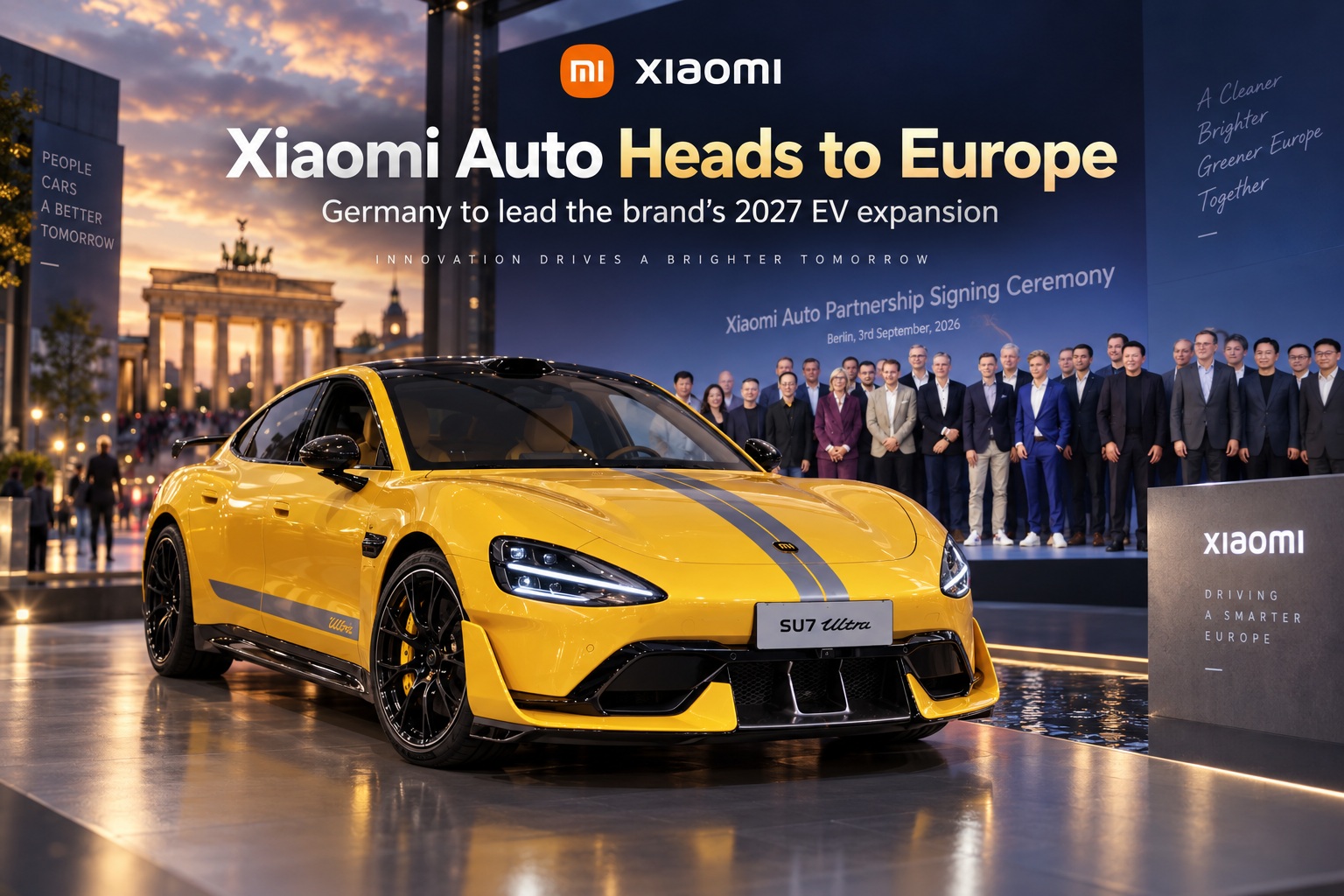
Xiaomi is preparing to take its electric vehicle business beyond China for the first time, with Europe confirmed as its first international automotive market. At IFA Berlin 2026, Xiaomi Auto announced that Germany will be one of the first countries to receive its EVs in 2027, followed by expansion into additional European markets.
The move marks an important new phase for Xiaomi, which has spent the past few years proving that its automotive ambitions are much more than a side project. The company has already built a significant customer base in China, and its next challenge will be showing that its cars can compete in one of the world's most demanding and mature automotive markets.
Germany Will Be the Starting Point
Germany is a logical place for Xiaomi to begin. It has one of Europe's largest automotive markets, an established EV ecosystem and a strong network of dealer groups capable of handling sales, servicing and after-sales support.
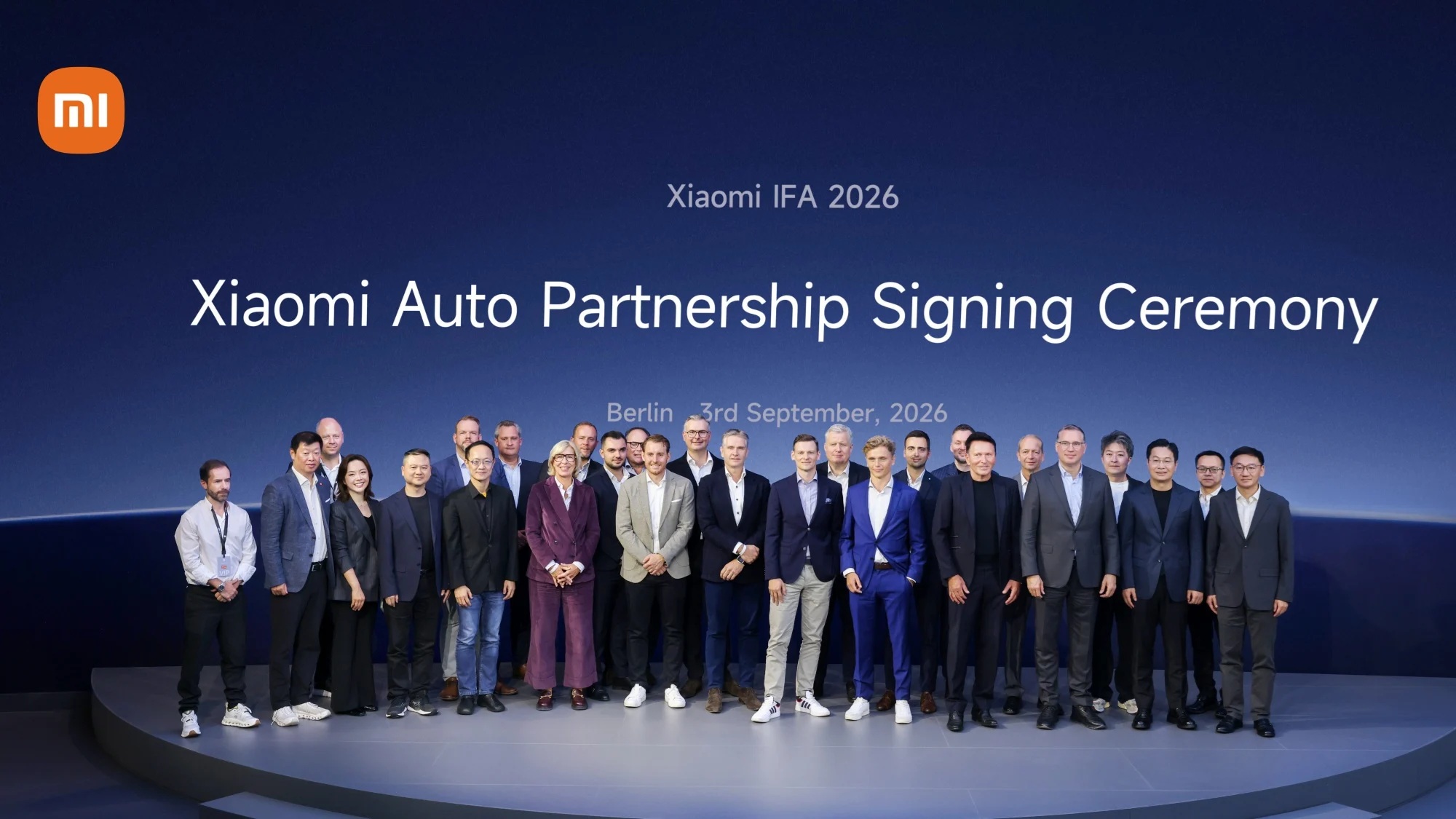
To prepare for the launch, Xiaomi Auto has signed Memoranda of Understanding with eight German automotive dealer groups. These are:
Several of these groups already operate across large regional networks, while Emil Frey is one of the biggest automotive retail organisations in Europe. That gives Xiaomi a potential foundation for building its local customer-facing operations without having to establish every dealership from scratch.
The Dealer Agreements Are Still Preliminary
It is important to note that the agreements are currently non-binding. Xiaomi has not yet disclosed how many dealerships will ultimately be involved, which territories each group might cover or how responsibilities will be divided between sales and servicing.
Pricing also remains unknown, and Xiaomi has not confirmed which models will be sold in Europe first. This means the 2027 launch plan is still at an early stage, with the company primarily focused on establishing the infrastructure it will need before cars officially go on sale.
Even so, signing agreements with established dealer groups shows that Xiaomi is moving beyond simple market exploration. It is beginning to put the practical pieces of a European automotive business in place.
The SU7 and YU7 Are the Most Likely Launch Models
Although Xiaomi has not confirmed its European line-up, the most obvious candidates are the SU7 sedan and YU7 SUV. These are currently the most recognisable products in Xiaomi Auto's portfolio and would give the company a straightforward way to enter two of Europe's most important EV segments.
The SU7 gives Xiaomi a performance-oriented electric sedan with strong technology credentials, while the YU7 opens the door to the larger SUV market that continues to attract significant consumer demand. Together, they would give Xiaomi a fairly balanced starting line-up rather than relying on a single body style.
There is also the possibility that Xiaomi could introduce the higher-performance Ultra variants, but nothing has been confirmed at this stage. Those models could help the company build a stronger performance image, especially among European buyers who already pay close attention to brands such as Porsche, BMW M and Mercedes-AMG.
Xiaomi Has Already Built Strong Momentum in China
The European expansion would have looked far more speculative a few years ago, but Xiaomi has now established a much stronger automotive track record. Since launching the SU7 in 2024, the company says it has delivered more than 700,000 vehicles in China.
That figure gives Xiaomi something many new automotive entrants lack: scale. The company is no longer trying to prove that it can simply design an EV. It has already demonstrated that it can manufacture, sell and support hundreds of thousands of vehicles in its home market.
This domestic success is especially important because international expansion adds another layer of difficulty. Xiaomi will now need to adapt to different regulations, customer expectations, servicing standards and competitive environments while maintaining the momentum it has built in China.
Performance Is Part of Xiaomi's Global Branding Strategy
Xiaomi has also been using performance to raise the profile of its automotive business. Its high-performance models have received attention through Nürburgring record attempts and lap achievements, helping the company position itself as more than just a technology brand that happens to make EVs.
That strategy could be particularly useful in Europe. The continent has a strong performance-car culture, and proving capability on a circuit such as the Nürburgring gives Xiaomi a form of credibility that specifications alone may not provide.
It also helps differentiate the brand. A company entering Europe from China faces the challenge of standing out among a growing number of EV manufacturers, so performance achievements can give potential buyers another reason to pay attention.
Xiaomi's Vehicle Portfolio Is Still Expanding
Beyond the SU7 and YU7, Xiaomi has been building a broader range of electric vehicles in China. The company recently introduced the SkyNomad N70 and N90 extended-range electric SUVs, showing that it intends to compete across more than one type of powertrain and vehicle segment.
There is currently no indication that those models will be part of the European launch. Xiaomi may decide to keep its first international line-up relatively simple before expanding into more specialised products later.
That would make sense from an operational perspective. Launching too many models at once could complicate homologation, parts supply, technician training and inventory management during the early stages of the European rollout.
A European R&D Centre in Munich Gives Xiaomi a Local Base
Xiaomi's automotive expansion into Europe is also being supported by a research and development centre in Munich. This is significant because the company is not approaching Europe purely as an export market.
A local R&D presence gives Xiaomi the ability to work more closely with European suppliers, engineers, regulators and technology partners. It can also help the company adapt vehicles to local driving conditions, safety expectations and software requirements.
Munich is a particularly strategic location because it sits in one of Europe's most important automotive regions. The city is home to major industry players and a large ecosystem of engineering and mobility talent, making it a strong base for Xiaomi's longer-term ambitions.
Sales Are Only One Part of the Challenge
Entering a new automotive market requires much more than bringing cars into showrooms. Xiaomi will need a reliable after-sales and service network, access to spare parts, trained technicians and systems capable of handling warranty claims and software support.
This is where partnerships with established dealer groups become especially important. Consumers may be willing to take a chance on a newer EV brand, but they still expect basic automotive support to be reliable.
A strong service network can make the difference between an interesting new entrant and a brand buyers are actually willing to trust. Xiaomi's success in Europe will depend just as much on what happens after the sale as on the technology inside the car.
Europe Will Be a Much Tougher Market Than China
Xiaomi will also be entering a highly competitive environment. European buyers already have access to EVs from Tesla, Volkswagen, BMW, Mercedes-Benz, Hyundai, Kia, Renault, Volvo and a growing number of Chinese brands.
Price alone may not be enough. Xiaomi will need to compete on software quality, range, charging performance, build quality, after-sales support, brand perception and long-term reliability.
European regulations also add complexity. Safety requirements, cybersecurity rules, software update regulations and vehicle certification standards can all affect how quickly a new model reaches the market.
This means Xiaomi's 2027 European launch will be a much bigger test than simply selling cars outside China for the first time.
Xiaomi's Technology Ecosystem Could Become an Advantage
One area where Xiaomi may have an advantage is its broader technology ecosystem. The company already has a large global presence in smartphones, smart-home products, wearables and connected devices.
That gives Xiaomi an opportunity to integrate the car more deeply with the rest of its ecosystem. Features such as phone integration, smart-home connectivity, cloud services and cross-device automation could help differentiate Xiaomi vehicles from more traditional automotive brands.
For existing Xiaomi users, that kind of integration could make the car feel like another connected device within the same ecosystem rather than a completely separate product.
The Company Has Been Preparing for Global Expansion for Some Time
The European announcement is not unexpected. Xiaomi CEO Lei Jun had already said that the company planned to begin entering international automotive markets from 2027.
Until now, Xiaomi has remained focused on satisfying strong domestic demand. That strategy allowed the company to scale manufacturing, refine its vehicle software and build service capabilities before taking on the added complexity of overseas expansion.
The timing suggests Xiaomi believes its automotive business is now mature enough to move beyond China. Europe will effectively become the first major test of whether that confidence is justified.
Malaysia May Eventually Be Part of the Bigger Plan
Closer to home, Xiaomi has also shown signs that Malaysia could eventually become part of its international automotive strategy. A recent job listing for a Country Manager in Malaysia called for someone to develop Xiaomi Auto's local business strategy and work with agencies including MITI, MIDA, MARii and Customs.
The role also included responsibilities related to building sales, retail and after-sales networks. That is the kind of groundwork normally required before an automotive brand enters a new market.
Xiaomi has not officially announced plans to sell its EVs in Malaysia, so the job listing should not be treated as confirmation. However, it strongly suggests that the company is evaluating what would be required to establish a local operation.
Malaysia Could Be an Interesting Market for Xiaomi Auto
Malaysia would make sense as a future expansion market for several reasons. Xiaomi already has strong consumer brand recognition here through smartphones, smart-home devices and other electronics, which gives it an awareness advantage compared with completely unfamiliar automotive entrants.
The local EV market is also becoming increasingly competitive, with more Chinese brands entering and consumers becoming more comfortable with electric vehicles. If Xiaomi can price its cars aggressively while offering strong specifications and a familiar technology ecosystem, it could attract considerable interest.
The challenge would be building enough service and charging confidence to convince buyers that Xiaomi Auto is a long-term automotive brand rather than simply another temporary EV entrant.
The SU7 Could Generate Significant Interest in Malaysia
If Xiaomi eventually launches in Malaysia, the SU7 would likely attract attention because of its performance, design and connection to the broader Xiaomi brand. It could appeal particularly to younger technology-focused buyers who already know Xiaomi through its consumer electronics products.
The YU7 may ultimately be even more commercially important because SUVs remain highly popular in Malaysia. A competitively priced electric SUV carrying Xiaomi branding could potentially address a much wider customer base than a performance-oriented sedan alone.
Of course, local pricing would determine everything. Import duties, incentives, battery specifications and assembly strategy could significantly change where Xiaomi's cars sit within the Malaysian market.
Dealer Partnerships Will Matter Just as Much Outside Europe
The approach Xiaomi is taking in Germany offers a clue to how it may expand into other countries. Instead of attempting to build every dealership independently, the company appears willing to work with established automotive retail partners.
That could also be relevant in Southeast Asia. Local partners already understand regulations, service operations, customer financing and regional market behaviour, allowing Xiaomi to enter more quickly.
At the same time, Xiaomi will need to protect its technology-focused customer experience. The challenge will be balancing traditional dealership infrastructure with the more digital, ecosystem-oriented experience consumers associate with the Xiaomi brand.
Xiaomi Auto Is Becoming a Serious Automotive Player
When Xiaomi first announced plans to build cars, there was understandable scepticism. The automotive industry is capital-intensive, highly regulated and far more complicated than consumer electronics.
A few years later, Xiaomi has moved well beyond the experimental stage. Hundreds of thousands of vehicles have been delivered, additional models are being introduced, performance achievements are being promoted and international expansion is now moving forward.
That does not guarantee success in Europe, but it does show that Xiaomi Auto has evolved into a serious part of the company's long-term strategy.
The European Launch Could Redefine Xiaomi's Global Image
Xiaomi is still primarily known internationally as a smartphone and consumer electronics company. A successful European automotive launch could significantly change that perception.
If its vehicles perform well in Germany and other European markets, Xiaomi could begin to establish itself as a broader technology and mobility company. That would place it in a very different category from most consumer electronics manufacturers.
Conversely, Europe will also expose weaknesses much more quickly. Poor service coverage, software problems or reliability concerns could damage confidence in the brand before it has a chance to expand further.
Final Thoughts
Xiaomi Auto's planned move into Germany and wider Europe in 2027 represents the company's biggest automotive step outside China so far. The agreements with eight German dealer groups show that Xiaomi is already working on the less glamorous but essential parts of international expansion: sales networks, servicing, after-sales support and local partnerships.
The SU7 and YU7 appear to be the most likely starting points, although Xiaomi has not yet confirmed its European line-up, pricing or dealership footprint. With more than 700,000 vehicles already delivered in China and a European R&D presence in Munich, the company is entering this next phase with considerably more experience than when the SU7 first launched.
The bigger question is how quickly Europe will be followed by other markets. Malaysia is not officially confirmed, but the appearance of a Country Manager role focused on local automotive strategy suggests Xiaomi is already thinking beyond Europe.
If the European launch succeeds, 2027 could mark the year Xiaomi Auto changes from being primarily a Chinese EV success story into a genuinely global automotive brand.











Comments 0