

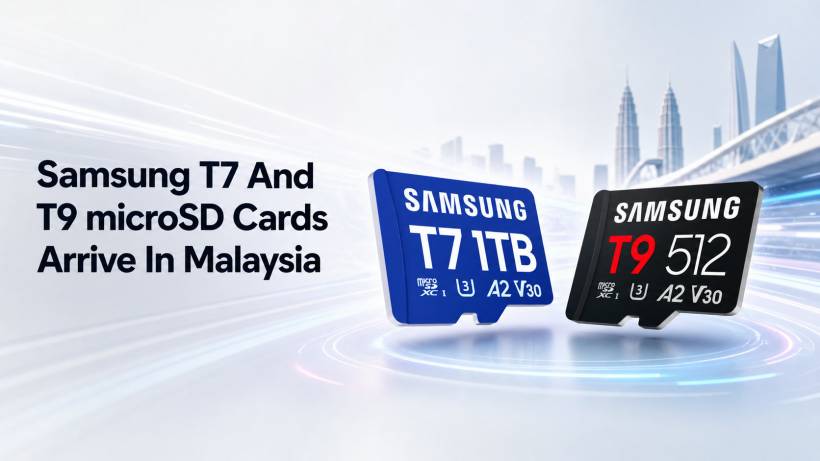
Samsung has added two new microSD cards to its removable storage lineup, giving users more choices depending on whether they need more capacity, better speed, or a balance of both. The new cards are called the Samsung T7 and Samsung T9, and while the names sound quite close, they are clearly aimed at slightly different types of users.
The T7 is positioned as the more capacity-focused option, especially for everyday users, casual gamers, and creators who need dependable storage without necessarily chasing the highest possible performance. The T9, on the other hand, is being marketed as the more performance-oriented model, aimed at professional creators, action camera users, and gaming enthusiasts who want faster read speeds and stronger durability.
More Storage Choices For Today's Devices
microSD cards may not feel as exciting as smartphones, tablets, or gaming handhelds, but they still play an important role for many users. They are especially useful for devices that still support expandable storage, such as Android smartphones, tablets, dashcams, action cameras, drones, laptops, and handheld consoles.
As file sizes continue to grow, storage becomes more important. Mobile games are larger than before, 4K video clips can quickly eat up space, and creators often need to move files between devices without relying fully on cloud storage. This is where larger-capacity microSD cards still make practical sense.
Samsung's new T7 and T9 cards appear to be designed around that reality. One focuses more on how much data you can store, while the other leans more toward speed and durability.
Samsung T7: Built For Capacity And Everyday Use
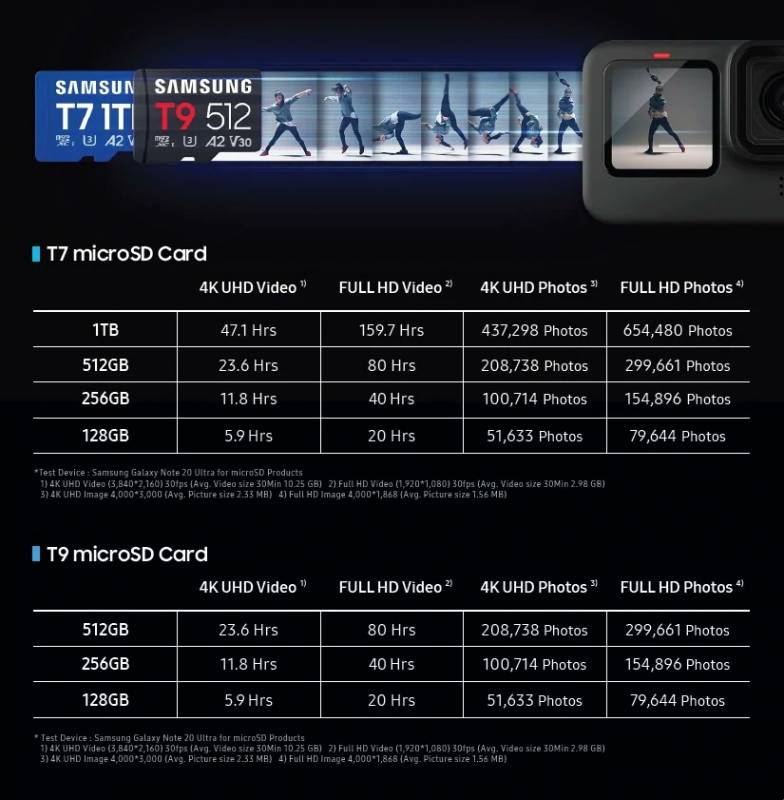
The Samsung T7 microSD card is the model to look at if storage capacity is the main priority. It is available in several capacities, going all the way up to 1TB. That makes it useful for users who want to store a large number of photos, videos, documents, games, or media files without constantly clearing space.
Samsung says the T7 offers read speeds of up to 170MB/s. That should be more than enough for many everyday tasks, including transferring files, storing media, expanding device storage, and keeping game data or creative assets on hand.
The company is positioning the T7 for "light gamers" and "intermediate creators", which makes sense. Not every user needs the fastest card available. Some simply need a reliable card with enough room to handle daily content, mobile gaming, travel videos, or general device storage.
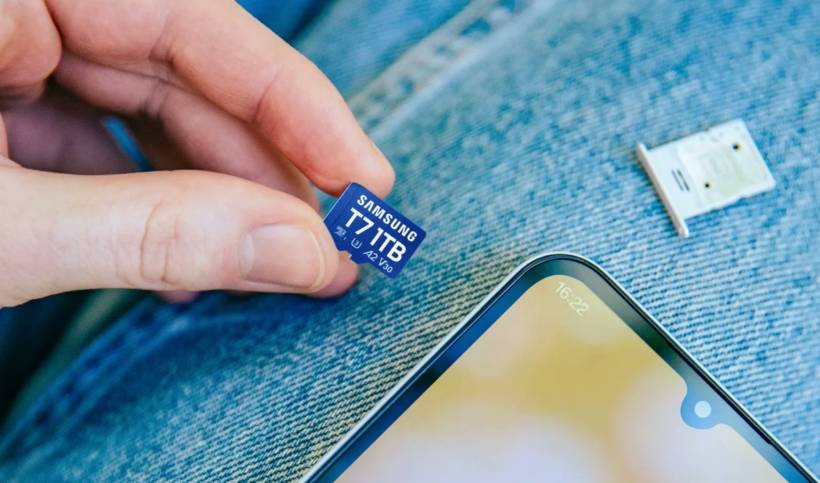
The T7 is also said to support a wide range of devices, including smartphones, laptops, tablets, and handheld consoles. That kind of compatibility is important because many users buy one microSD card and expect it to work across different devices over time.
Samsung T9: Faster Speeds For More Demanding Users
The Samsung T9 takes a different approach. Instead of pushing capacity as high as 1TB, the T9 tops out at 512GB. However, it makes up for that with faster claimed read speeds of up to 200MB/s.
That higher speed makes the T9 more suitable for users who regularly move large files or work with heavier media. For example, action camera users, vloggers, drone hobbyists, and content creators may benefit from faster transfers when moving footage to a laptop or editing workflow.
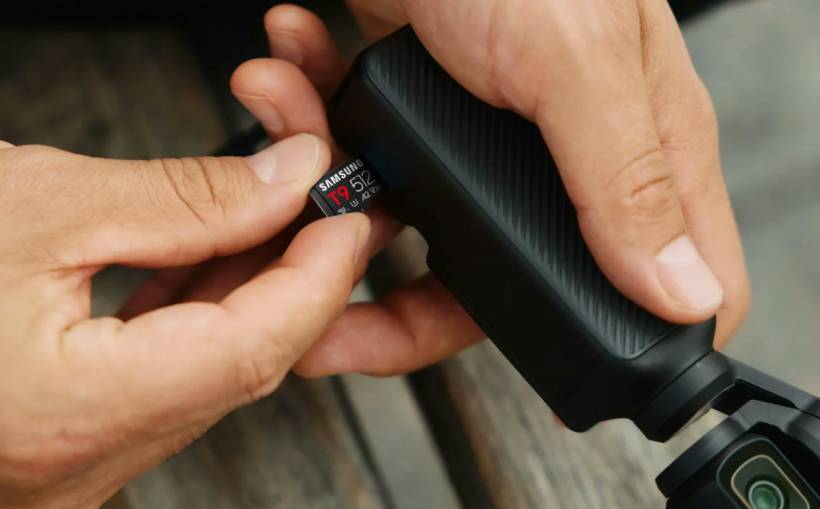
Samsung also highlights 6-proof protection for the T9, which suggests stronger durability against common risks such as water, extreme temperatures, shock, magnets, X-rays, and wear. For users who take their storage cards outdoors or use them in cameras and portable devices, this added protection can be reassuring.
In simple terms, the T9 is the better fit for users who care more about performance and reliability than maximum storage size. It is the more premium choice between the two.
T7 Versus T9: Which One Makes More Sense?
The choice between the T7 and T9 depends on what you actually need.
If your priority is maximum capacity, the T7 is the obvious choice because it goes up to 1TB. That makes it better for users who want to store more games, videos, photos, and files without worrying too much about running out of space.
If your priority is speed, durability, and heavier creative use, the T9 is the more suitable option. It may not offer a 1TB variant, but its faster read speed and stronger protection make it better for users who work with large media files or use their microSD card in more demanding environments.
For casual users, the T7 should already be more than enough. For creators and power users, the T9 is easier to justify.
Malaysian Pricing For The Samsung T7
In Malaysia, the Samsung T7 microSD card is available in four capacity options. The 128GB version is priced at RM209, while the 256GB model costs RM335. Moving up, the 512GB version is listed at RM663, and the largest 1TB model is priced at RM1,325.
That pricing shows that the T7 is not exactly a budget card, especially at the higher capacities. However, users who genuinely need 1TB of removable storage may find it useful for devices where internal storage is limited or expensive to upgrade.
Malaysian Pricing For The Samsung T9
The Samsung T9 is priced slightly higher than the T7 at equivalent capacities. The 128GB model is listed at RM263, the 256GB version is priced at RM413, and the 512GB model costs RM833.
That price difference reflects the T9's positioning as the faster and more durable option. It is not aimed at users who only want the cheapest storage card possible. Instead, it is for users who want better performance and are willing to pay more for it.
A Small Bonus During The 5.5 Promotion
Samsung is also offering a free Juno Blind Box with purchases made during its 5.5 promotion, while stocks last. This kind of promotional freebie may not be the main reason to buy a microSD card, but it could make the purchase slightly more attractive for those who were already planning to upgrade their storage.
As usual, availability may vary depending on the retailer and market. Users interested in a specific capacity should check local Samsung channels or authorised sellers before deciding.
Final Thoughts
Samsung's T7 and T9 microSD cards give Malaysian users two clearly different storage options. The T7 is the more capacity-focused card, going up to 1TB and targeting everyday users, light gamers, and intermediate creators. The T9 is the more performance-focused choice, with faster read speeds of up to 200MB/s and added durability features for heavier use.
For most users, the T7 will likely be the more practical option, especially if storage size matters more than raw speed. But for creators, action camera users, and gaming enthusiasts who need faster transfers and better protection, the T9 is the stronger choice.
Either way, the arrival of both cards shows that microSD storage is still very much alive, especially as more devices continue to demand larger, faster, and more reliable removable storage.











Comments 0