

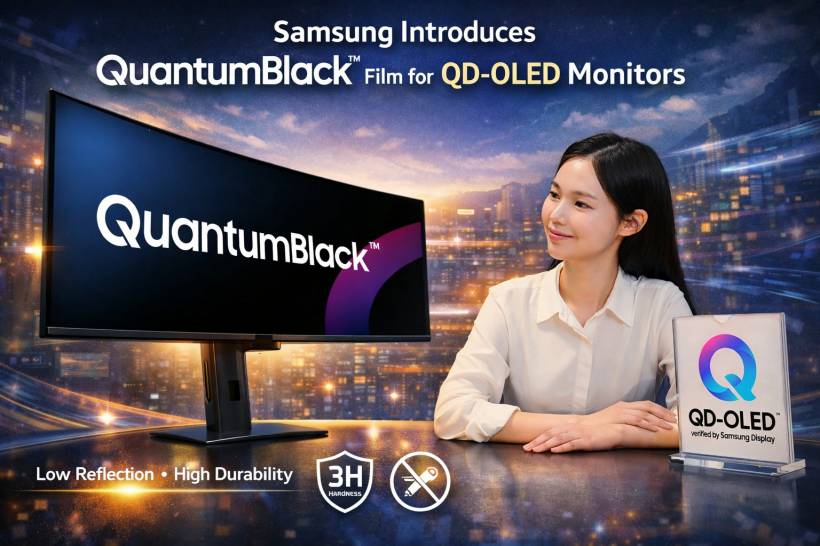
Samsung Display has introduced a new screen film for QD-OLED monitors called QuantumBlack, and while the name sounds dramatic, the idea behind it is actually very straightforward. It is a new low-reflection, high-durability layer designed to tackle two of the most common complaints about OLED-style displays in everyday use: glare and surface fragility. Samsung Display says the film reduces light reflectance by 20% compared with its previous film, raises panel surface hardness from 2H to 3H, and plans to apply it across all new 2026 QD-OLED monitor products.
Why This Matters for QD-OLED
QD-OLED panels are known for strong contrast, rich color, and deep blacks, but bright-room use has always been one of the trickier areas. Ambient light reflecting off the panel can make dark scenes look less convincing, sometimes even giving blacks a slightly washed-out or purplish appearance. QuantumBlack is meant to reduce that problem, helping the display hold onto its black depth more effectively in real-world lighting rather than only in a dark room.
In other words, this is less about chasing flashy new specs and more about improving the daily experience. A monitor can have excellent panel technology on paper, but if reflections constantly get in the way, the image quality advantage becomes harder to appreciate. That is the gap Samsung seems to be addressing here.
Not Just About Reflections
Samsung is also emphasizing durability. The company says QuantumBlack improves panel hardness from 2H to 3H on the pencil hardness scale, which is not the same kind of test used for smartphone glass, but it still gives a rough indication of improved scratch resistance. Samsung's own messaging specifically points to better protection against minor damage such as fingernail contact, which makes sense for monitors that are frequently adjusted, cleaned, or handled closely.
That may sound like a small detail, but it is actually a meaningful one. OLED monitor buyers tend to be quite particular about screen condition, and even light surface marks can be frustrating on a premium display. If this new film helps reduce that risk, it adds practical value beyond picture quality alone.

You May Already Be Seeing It Under Other Names
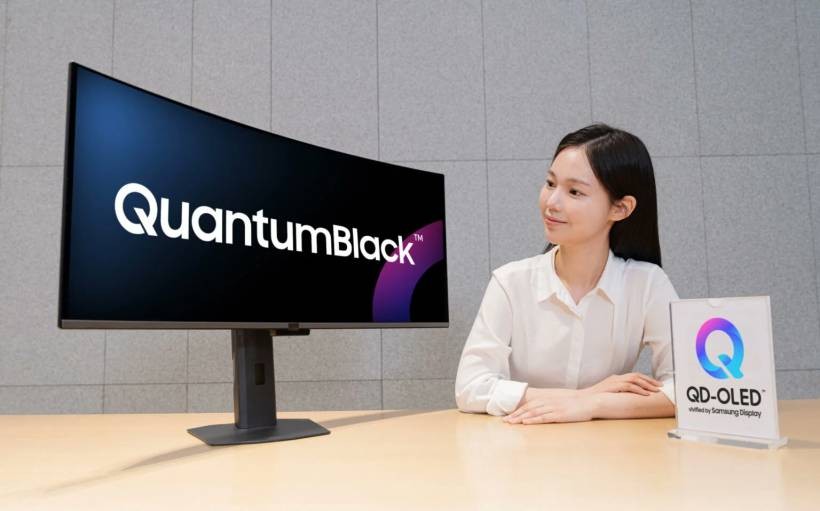
Interestingly, even though Samsung Display has only just formally announced QuantumBlack, monitor brands using Samsung's QD-OLED panels have already started launching products with the same underlying technology under their own branding. ASUS is calling it BlackShield, Gigabyte uses Obsidian Shield, and MSI refers to it as DarkArmor. Samsung says these brands are among the companies bringing monitors with the new film to market.
That is an important detail because it shows this is not just a lab announcement or a future concept. The technology is already making its way into shipping products, which means buyers shopping for premium QD-OLED gaming monitors may encounter the benefits even if the Samsung QuantumBlack name is not front and center on the box.
A Small Upgrade That Could Have a Big Real-World Effect
On paper, QuantumBlack might not sound as exciting as a new panel generation or a massive jump in refresh rate. But in practice, upgrades like this often matter more than they first appear. Better reflection handling and stronger surface durability directly affect how a monitor feels to live with every day, especially in normal home or office lighting conditions where displays are rarely used in perfect darkness.
If Samsung's claims hold up in real-world testing, QuantumBlack could end up being one of those quiet improvements that makes QD-OLED monitors feel more mature as products. Instead of only looking impressive in ideal demo conditions, they may become easier to recommend for broader everyday use as well.
Final Thoughts
At first glance, QuantumBlack might sound like just another branding exercise, but it actually addresses two very real pain points with QD-OLED monitors—reflections and durability. These aren't flashy headline features, but they directly impact how a monitor performs in everyday environments, especially outside of ideal lighting conditions.
What makes this more interesting is that the technology is already finding its way into real products, even if it's being marketed under different names by brands like ASUS, Gigabyte, and MSI. That suggests this isn't experimental—it's a practical refinement that manufacturers see real value in.
If Samsung's claims hold up in real-world use, QuantumBlack could quietly make QD-OLED monitors far more usable for a wider audience. Instead of being displays that shine only in controlled setups, they may start to feel more balanced and reliable for both work and play.
Sometimes, it's these incremental improvements—not the big spec jumps—that end up making the biggest difference.











Comments 0