


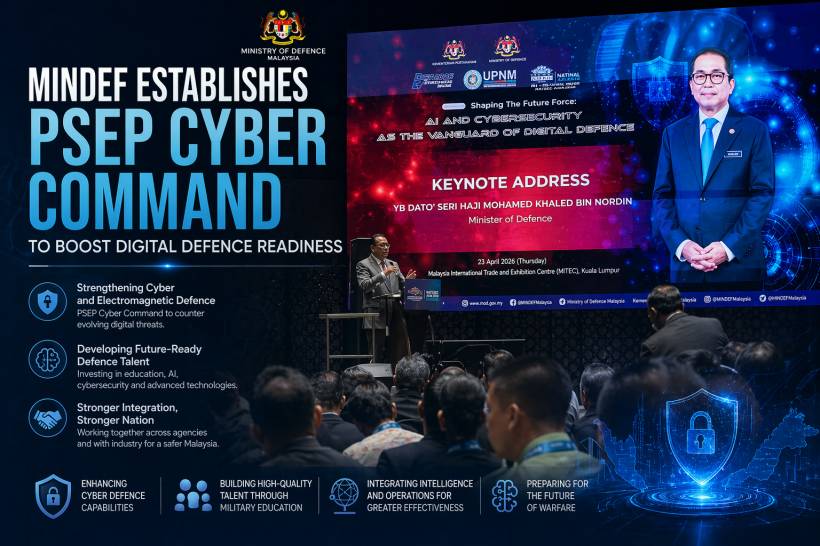
Malaysia is taking a more serious stance on cybersecurity, especially as threats in today's world are no longer limited to physical battlefields. In a move that reflects how warfare is evolving, the Ministry of Defence (MINDEF) has announced the formation of a new Cyber and Electromagnetic Command, known as PSEP.
The announcement came from Defence Minister Mohamed Khaled Nordin, who highlighted that strengthening digital defence is now a national priority—not just an option.
Preparing For A New Kind Of Warfare
Modern conflicts are changing fast. It's no longer just about tanks, aircraft, or boots on the ground. Today, attacks can happen through networks, data systems, and even misinformation campaigns.
This is where PSEP comes in.
The new command is designed to enhance Malaysia's ability to defend against cyber threats, electronic warfare, and other non-traditional attack methods. It represents a shift towards preparing the nation for "asymmetric threats"—situations where the battlefield is unpredictable and often invisible.
Building Talent From The Ground Up
One of the key focuses of this initiative is developing the right talent.
Speaking at National Defence University of Malaysia, the minister emphasised the importance of professional military education in building a capable cyber defence force. The goal is simple: equip personnel with the skills needed to respond to increasingly complex digital threats.
This announcement was made during the Defence Services Asia 2026 forum, which focuses heavily on future defence strategies and technologies.
Working Alongside Intelligence Units
PSEP won't operate in isolation. It will work closely with the Malaysian Defence Intelligence Organisation to strengthen intelligence gathering and operational coordination.
By integrating cyber capabilities with intelligence operations, Malaysia aims to respond more effectively to threats—whether they come from cyberattacks, espionage, or hybrid warfare tactics.
Part Of A Bigger Transformation Plan
The creation of PSEP is not a standalone move. It ties directly into Malaysia's broader defence strategy outlined in the Defence White Paper.
The long-term vision is to transform the Malaysian Armed Forces into what is referred to as the "Future Force" (Angkatan Masa Hadapan). This means:
• Seamless coordination across all military branches
• A unified and agile defence structure by 2030
In other words, every component of the military is expected to work as one cohesive unit—digitally and operationally.
Expanding Research And Innovation
Beyond military structure, MINDEF is also looking at strengthening research and development.
The ministry is considering partnerships with selected universities to establish a Defence Ministry Centre of Excellence. This centre is expected to focus on areas such as:
• Drone and UAV development
• Advanced defence systems
At the same time, UPNM is being positioned to specialise in artificial intelligence and cybersecurity—two areas that are becoming increasingly critical in modern defence.
Opening The Door To Civilian Expertise
Interestingly, this push isn't limited to full-time military personnel.
MINDEF is also planning to introduce a Cyber Security and Geospatial Specialist Regiment under the Territorial Army. This initiative is aimed at bringing in skilled civilians—especially youths and professionals—who can contribute their expertise to national defence.
It's a recognition that cybersecurity isn't just a military issue anymore. It's a national effort that benefits from a wider pool of talent.
Strengthening Malaysia's Defence Industry
On the policy side, the government is also looking to boost local capabilities through the National Defence Industry Policy.
The aim here is to:
• Support local defence tech development
• Position Malaysia as a competitive player in the regional defence landscape
This aligns with the broader goal of not just defending against threats, but also building a sustainable defence ecosystem within the country.
The Reality Of Modern Threats
Perhaps the most important takeaway from this announcement is the changing nature of threats.
As highlighted by the minister, modern warfare doesn't always begin with visible attacks. It can start with:
• Information manipulation
• AI-driven threats
These are borderless, often silent attacks that can destabilise systems and societies without warning.
Final Thoughts
The establishment of PSEP shows that Malaysia is recognising a critical reality: the battlefield has expanded far beyond physical borders.
Cybersecurity, intelligence, and digital resilience are now just as important as traditional defence capabilities. By investing in talent, technology, and integration, the country is taking meaningful steps towards preparing for the future.
It's not just about responding to threats anymore—it's about staying ahead of them.











Comments 0