

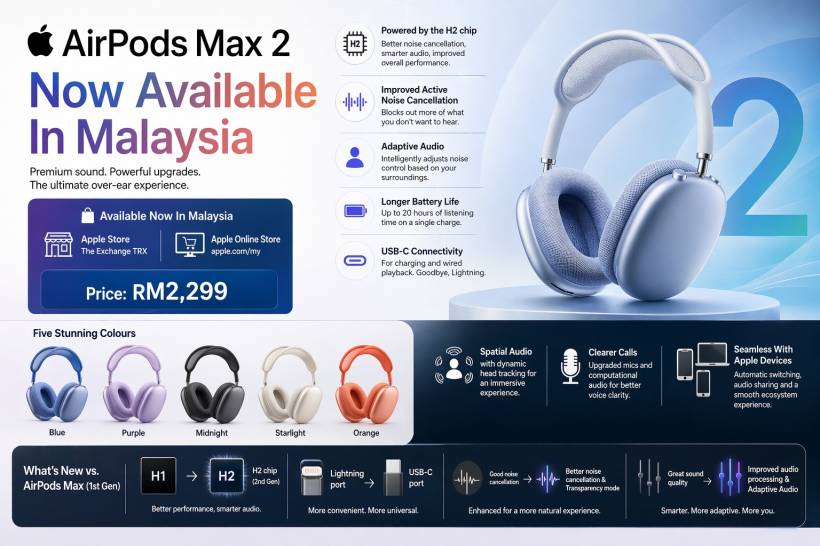
Apple has quietly rolled out its latest over-ear headphones, and yes — they've officially made their way to Malaysia. The new Apple AirPods Max 2 is now available locally, following its somewhat low-key global announcement just a month ago.
If you've been eyeing Apple's premium headphones, you can now get them directly from the brand's retail presence at The Exchange TRX or through its official online store. Pricing starts at RM2,299, placing it firmly in the high-end audio category — exactly where you'd expect Apple to compete.
Same Premium Design, Now With Fresh Colours
At first glance, you might struggle to tell the difference between the new model and its predecessor — and that's intentional.
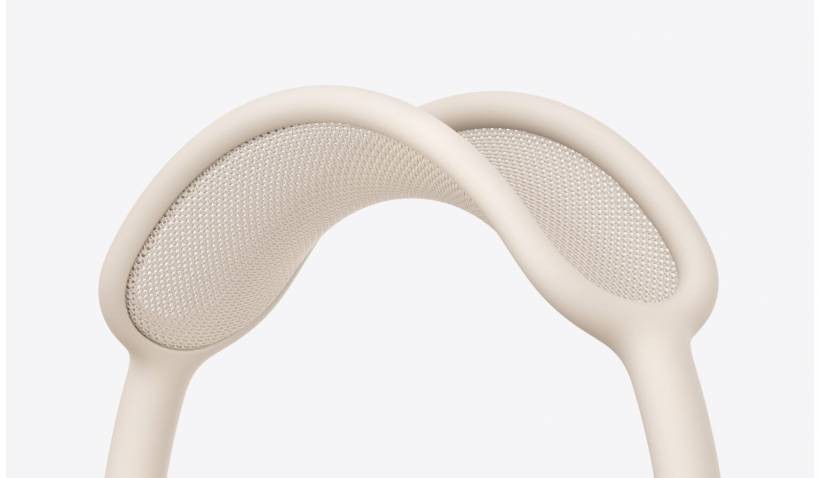
Apple has kept the signature design that made the original AirPods Max stand out:
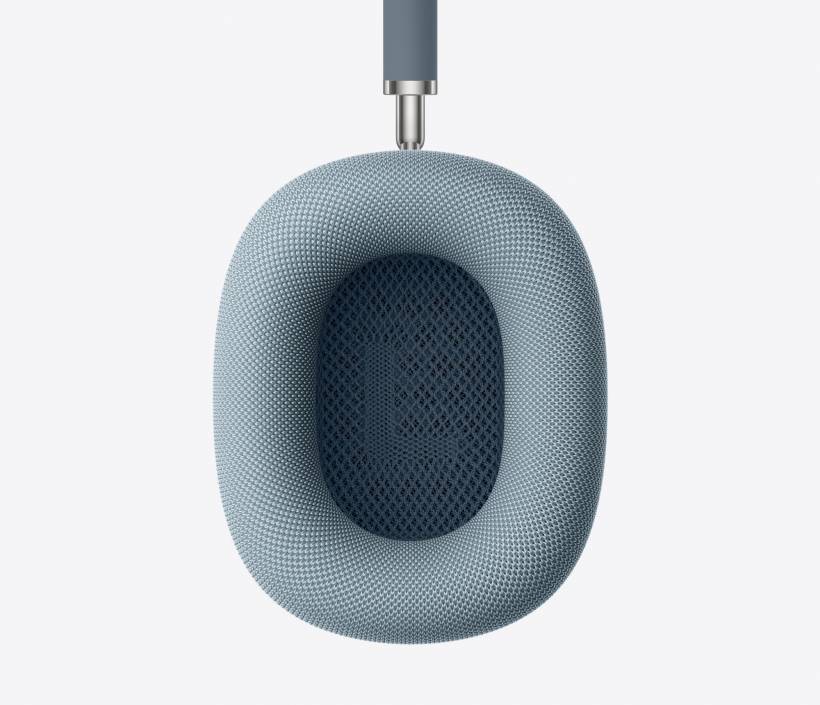
• Breathable knit mesh canopy for comfort
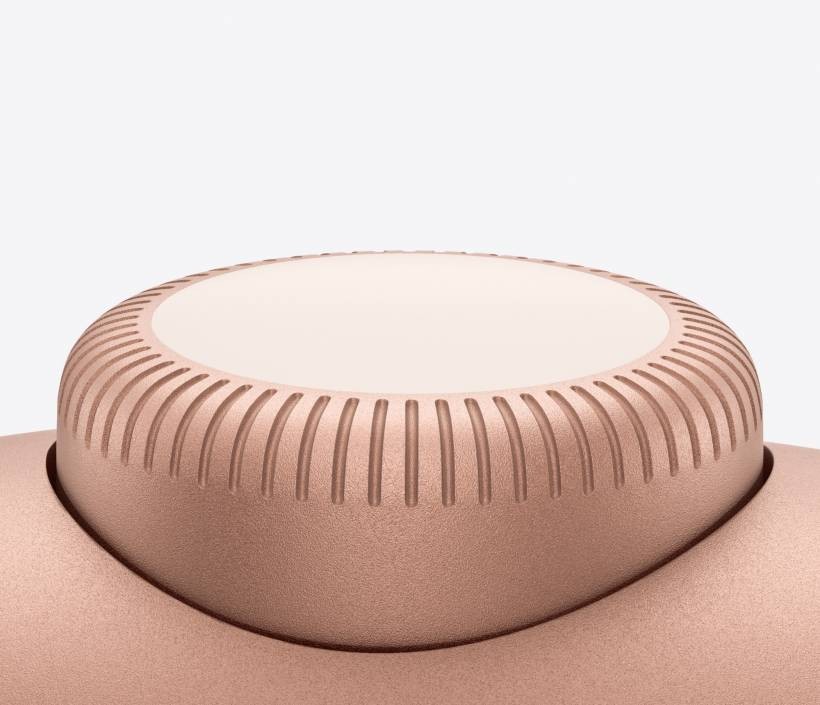
• Aluminium ear cups with a premium finish
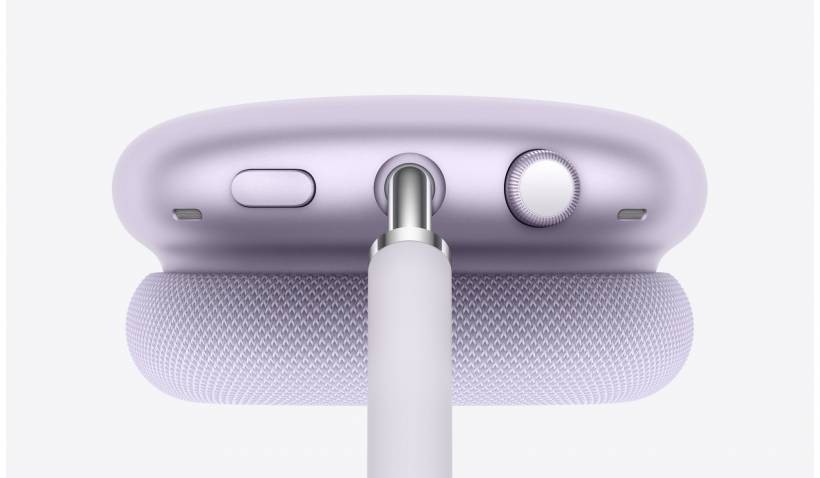
The familiar Digital Crown and noise control button are still here too, so if you've used the first-generation model, everything will feel instantly natural.
Weight-wise, nothing has changed either — it still comes in at 386 grams.
What has changed, though, is the colour lineup. Apple is refreshing the visual appeal with new options:
• Purple
• Midnight
• Starlight
• Orange
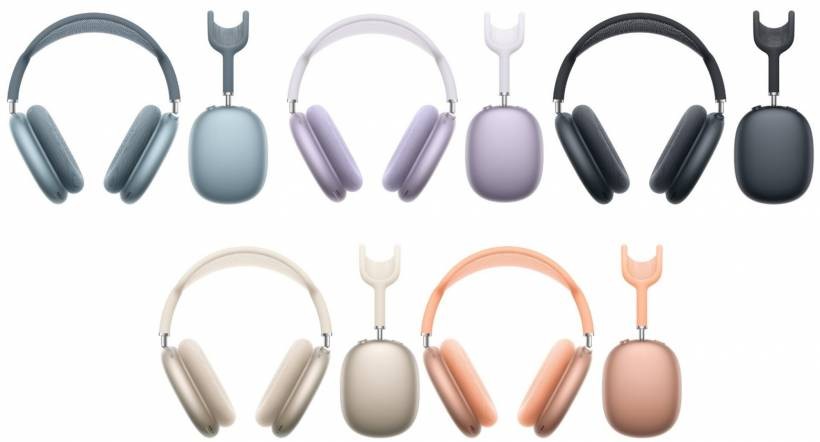
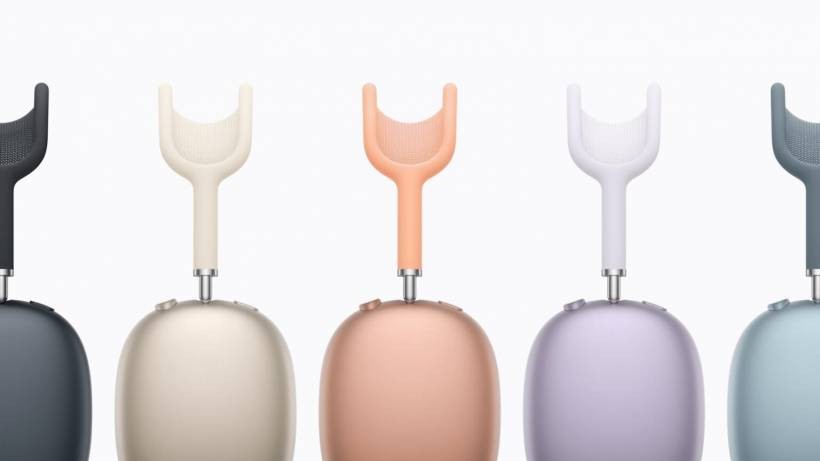
It's a subtle way of making the second-gen model feel new without redesigning the entire product.
The Real Upgrade Is Inside: Meet the H2 Chip
The biggest change isn't something you'll see — it's what's powering the headphones.
The AirPods Max 2 now runs on Apple's newer H2 chip, replacing the older H1 chip found in the original version. This upgrade brings a few noticeable improvements:
• More natural and responsive Transparency mode
• Improved overall audio processing
Apple is also introducing Adaptive Audio, which intelligently adjusts noise control depending on your environment. So whether you're walking through a busy KL street or sitting in a quiet office, the headphones adapt without you needing to fiddle with settings.
USB-C Finally Replaces Lightning
One of the more practical updates is the move to USB-C.
Apple has officially ditched the Lightning port here, aligning the AirPods Max 2 with its newer ecosystem direction. This means:
• More convenient wired playback options
• Less cable clutter if you're already using USB-C devices
It's a small change, but one that makes a big difference in day-to-day usability.
Audio Experience Still Front and Centre
Despite the iterative nature of the update, Apple hasn't compromised on what matters most — sound quality.
The AirPods Max 2 continues to support Spatial Audio with dynamic head tracking, delivering that immersive, almost cinematic listening experience across compatible content.
On top of that:
• Computational audio enhancements help refine sound output
• Seamless integration with Apple devices remains a strong selling point
Features like automatic device switching and audio sharing are still part of the experience, making it especially appealing if you're already deep into Apple's ecosystem.
Should You Upgrade?
Here's the honest take — this isn't a radical redesign.
Compared to the first-generation AirPods Max, the changes are more evolutionary than revolutionary:
• Lightning → USB-C
• Incremental improvements in noise control and adaptive features
If you already own the original, the upgrade might feel a bit incremental unless those specific improvements matter to you.
But if you're new to Apple's over-ear lineup, the AirPods Max 2 is essentially a more refined version of an already strong product — and probably the better entry point.
Final Thoughts
The AirPods Max 2 doesn't try to reinvent the wheel — and that's actually the point. Apple is doubling down on a design that already works, while quietly improving the areas that matter most.
For Malaysian buyers, the RM2,299 price tag puts it in premium territory, but for those who value seamless integration, polished design, and consistently strong audio performance, it still ticks all the right boxes.
It may not be a dramatic upgrade, but it's definitely a smarter, more polished one.











Comments 0