

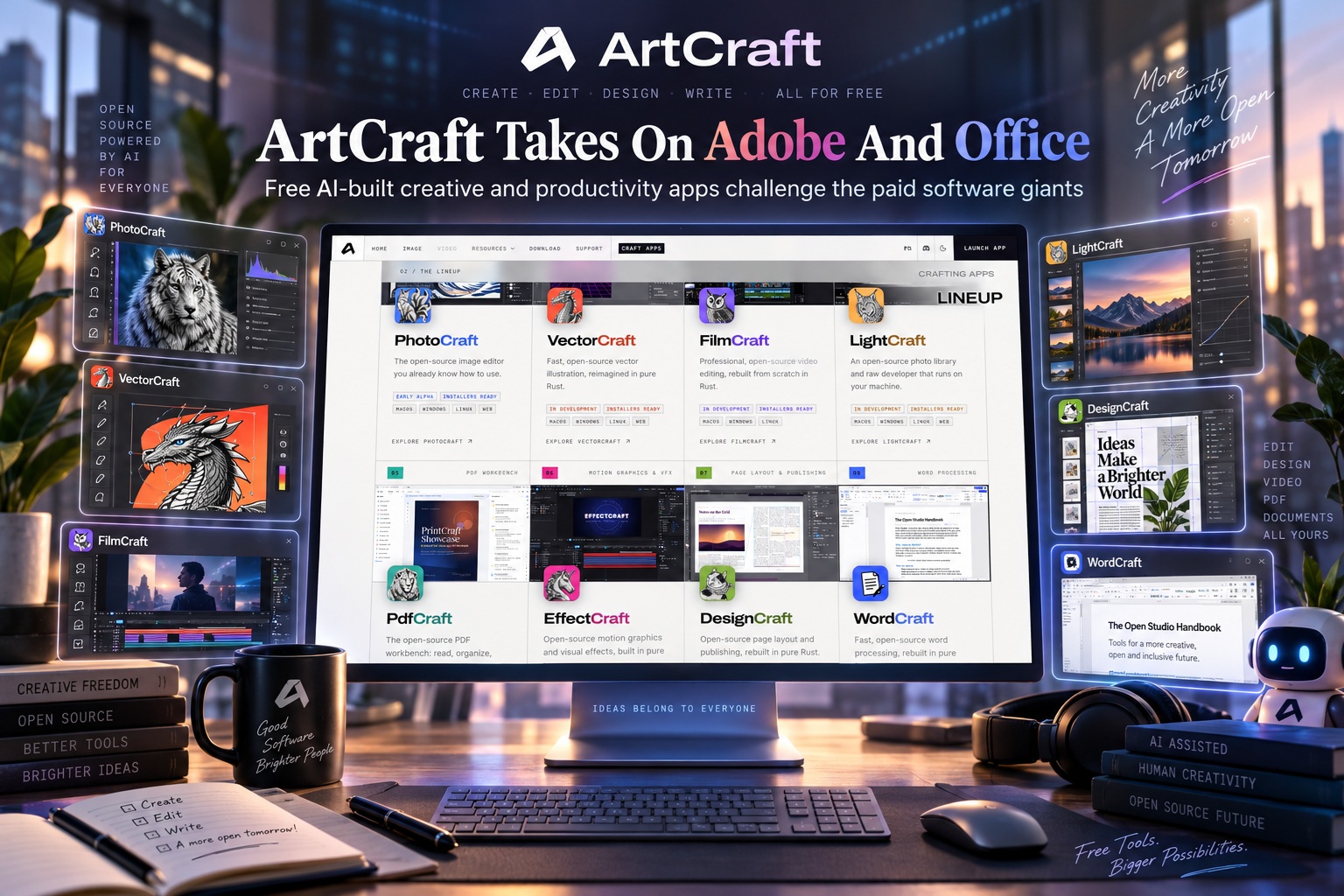
Could AI-assisted software development eventually challenge established paid applications such as Adobe Photoshop or Microsoft Word? A new project called ArtCraft is putting that idea to the test by recreating familiar creative tools with help from artificial intelligence and offering them as free alternatives.
The project comes from software engineer Brandon Thomas, who first shared his work on Reddit under the username u/ai_art_is_art. Rather than building a single lightweight image editor, Thomas has taken on something much more ambitious: recreating much of the functionality associated with Adobe's Creative Suite.
Rebuilding Adobe's Creative Suite With AI Assistance
ArtCraft is essentially a collection of applications designed to resemble familiar Adobe creative tools without requiring users to pay for an Adobe subscription. Thomas developed the software with significant assistance from AI while using Rust as the underlying programming language.
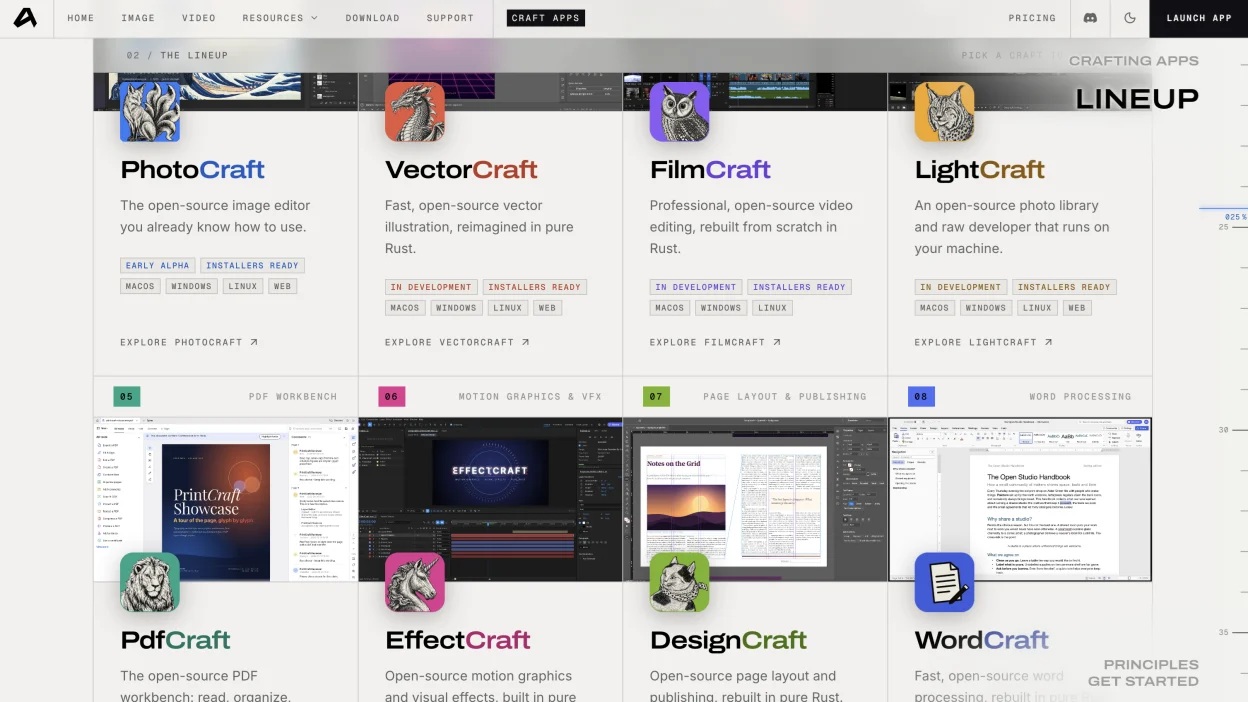
The project covers several different creative workloads rather than focusing on one application. Each ArtCraft program corresponds broadly with a well-known Adobe product, giving users separate tools for photography, video, graphics, effects, PDFs and vector work.
The applications introduced so far include:
The most obvious difference is the business model. Adobe's professional creative software requires payment, while ArtCraft is being positioned around free access.
AI Is Changing How Quickly Software Can Be Built
The project also raises a broader question about AI-assisted development. Generative AI coding tools are making it considerably easier for individual developers to prototype and build applications that would traditionally require larger teams and much longer development cycles.
ArtCraft demonstrates how one developer can use AI as a development accelerator across multiple complex applications. Rather than simply generating small utilities or experimental demos, AI-assisted coding is increasingly being applied to software categories historically dominated by large technology companies.
Whether these projects can match the polish, reliability and depth of decades-old professional applications is another question entirely. Building something that looks similar to an established product is very different from reproducing years of optimisation, compatibility work and specialised workflows.
Free Alternatives Could Put Pressure On Subscription Software
The appeal of projects such as ArtCraft is easy to understand. Professional software subscriptions can become expensive, particularly for students, hobbyists, freelancers and users who only need a relatively small portion of the available functionality.
A free application that handles the most commonly used features could therefore be attractive even if it does not completely replace the original software. Not every user requires the full professional ecosystem, cloud integration or advanced capabilities offered by established vendors.
If AI helps independent developers produce capable alternatives faster, major software companies may eventually face more competition from smaller teams offering specialised or free tools.
But Established Software Still Has A Major Advantage
The rise of AI-assisted development does not automatically mean long-established applications will disappear. Products such as Photoshop and other professional creative tools have been refined over many years and are deeply integrated into commercial workflows.
Professional users often depend on compatibility, performance, colour management, plugin ecosystems, collaboration tools and predictable behaviour. These capabilities are much harder to recreate than a familiar-looking interface.
The real test for AI-built alternatives will therefore be whether they can remain stable and useful beyond the initial excitement of launch.
Can AI "Vibecoded" Apps Compete With Mature Software?
ArtCraft also feeds into the growing debate around so-called vibecoding, where developers rely heavily on AI models to help generate, modify and troubleshoot software. The approach can dramatically accelerate development, but questions remain around maintainability, security and code quality when projects become more complex.
There are two possible outcomes. AI-assisted developers could create increasingly capable alternatives that disrupt expensive legacy software. Alternatively, the flood of quickly generated applications could remind users why mature commercial products remain valuable.
The answer will probably depend less on whether AI was involved in development and more on whether the finished software actually works reliably for its intended users.
What About Microsoft Office Alternatives?
The broader project is also being positioned as moving beyond creative software and into productivity applications, including alternatives to Microsoft Office. However, the material provided here primarily details the ArtCraft recreation of Adobe-style applications and does not include specific information about the Office-style tools, their names or capabilities.
That expansion would nevertheless represent an even bigger test of AI-assisted software development. Word processing, spreadsheets and presentation software may appear simpler than professional creative tools, but they contain decades of compatibility features and complex document behaviour that users often take for granted.
Final Thoughts
ArtCraft is an interesting example of how AI is lowering the barrier to building increasingly ambitious software. Brandon Thomas has used AI-assisted development and Rust to recreate a collection of applications inspired by Adobe's creative software, while offering them as free alternatives.
The bigger question is not whether AI can help someone build a Photoshop-like or Word-like application. It clearly can. The real challenge is whether independently developed alternatives can become reliable enough to replace mature commercial tools for everyday and professional use.
If projects like ArtCraft continue improving, established software companies may eventually face a new kind of competition: not just from other large corporations, but from individual developers and small teams using AI to build surprisingly capable alternatives at a fraction of the traditional development cost.











Comments 0