

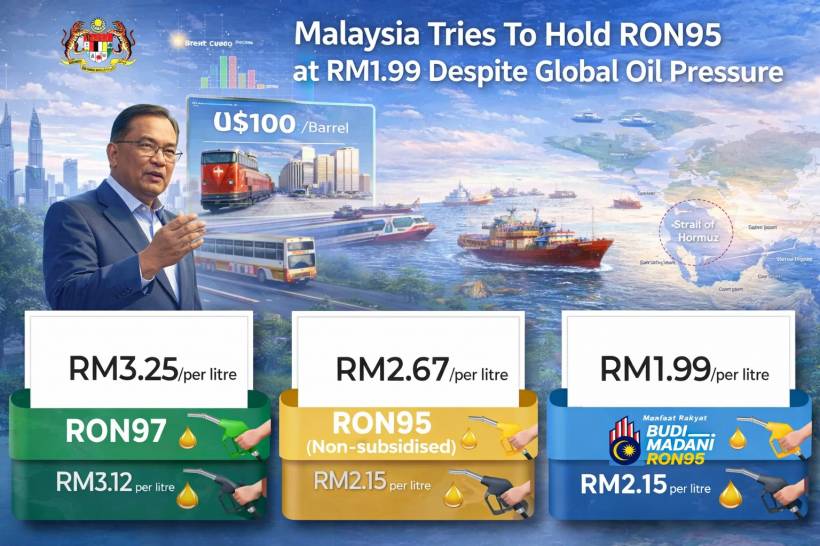
Fuel prices are once again becoming a major concern, especially as global oil markets react to growing geopolitical instability. In Malaysia, the government says it is still working hard to keep the subsidised RON95 petrol price at RM1.99 per litre for eligible Malaysians under the BUDI95 mechanism, even as international crude prices continue climbing.
That commitment matters because fuel prices do not just affect motorists at the pump. They ripple across the wider economy, influencing transportation costs, food prices, logistics, and the general cost of living. At a time when many households are already watching their monthly expenses carefully, any increase in petrol prices would be felt almost immediately.
Why the Government Is Holding the Line
Prime Minister Datuk Seri Anwar Ibrahim has indicated that the government wants to avoid adding extra financial pressure on the rakyat. Even though global oil prices are rising, the administration is trying to keep the RON95 retail price stable for Malaysians who qualify for the subsidy.
This is significant because the actual market-linked price of RON95 is already higher than the subsidised rate. In other words, the government is continuing to absorb part of the cost rather than passing the full burden directly to consumers. That may help ease public anxiety in the short term, especially for middle- and lower-income groups who depend heavily on private transport for daily commuting.
In practical terms, keeping RON95 at RM1.99 is not only an economic decision but also a social one. Fuel remains one of the most sensitive cost-of-living issues in Malaysia, and even a relatively small increase can quickly become a nationwide concern.
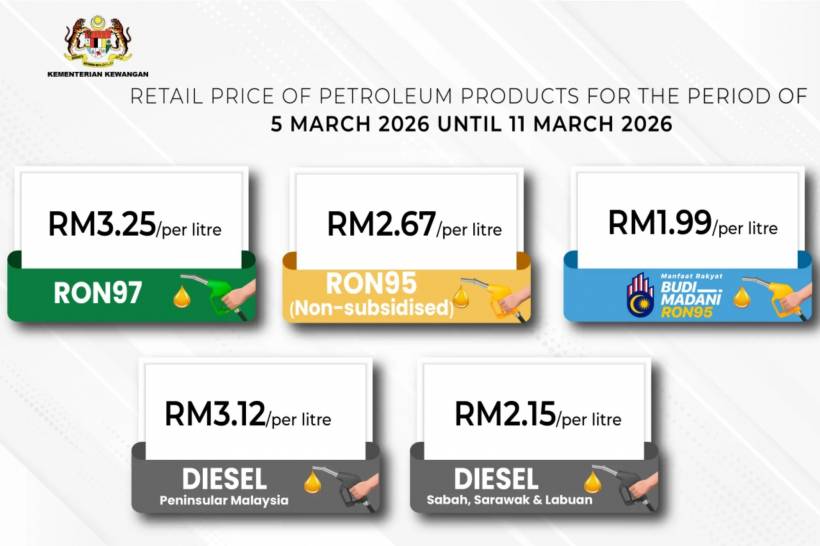
The Global Oil Situation Is Getting More Difficult
The challenge, however, is that Malaysia is making this effort at a time when the global energy market is becoming more volatile. Brent crude prices have moved sharply higher, reportedly hovering around the US$100 per barrel mark. When crude oil reaches that level, governments that maintain fuel subsidies face increasing pressure because the gap between subsidised and actual prices becomes more expensive to sustain.
This is where the balancing act becomes harder. On one side, there is the need to protect consumers and manage inflation. On the other, there is the fiscal burden of continuing subsidies when global energy prices are no longer favourable.
The government's message so far suggests that it is prepared to continue supporting consumers, but only as far as circumstances allow.
A Temporary Cushion, Not a Guaranteed Long-Term Fix
Anwar has also indicated that Malaysia may be able to sustain the current subsidised RON95 price for around two months under present conditions. That provides some reassurance, but it also hints at the limits of how long such support can realistically be maintained if global tensions persist or worsen.
This is an important point. While RM1.99 per litre remains a politically and economically important benchmark, subsidy protection is not immune to prolonged external shocks. If disruptions in the global oil trade continue beyond a short window, the cost of holding domestic fuel prices down could rise sharply.
So while the current stance offers short-term relief, it does not necessarily mean Malaysians are fully insulated from what happens internationally.
Why the Strait of Hormuz Matters So Much
One of the biggest concerns right now is the Strait of Hormuz, a narrow but extremely important shipping route located between Iran and Oman. It is one of the world's most crucial corridors for oil and gas transportation, and any disruption there can quickly affect global supply chains.
That matters because oil pricing is not based only on current supply, but also on fear, uncertainty, and risk to future shipments. Even the possibility of delays, restrictions, or military escalation in the area can drive prices upward.
If the route is significantly affected, the consequences would likely go far beyond crude prices alone. Shipping costs could rise, delivery times could lengthen, and the knock-on effect could be felt across industries that depend on imported fuel, raw materials, and essential goods.
For a trading nation like Malaysia, such disruption would not be an isolated issue. It could feed directly into broader inflationary pressure.
Middle East Tensions Are Adding To Market Anxiety
The recent climb in global crude prices has been linked to escalating tensions in the Middle East. As conflict and retaliatory actions intensify in the region, markets have become more nervous about the stability of oil supply routes and the potential for wider disruption.
Whenever major energy-producing or energy-transit regions become unstable, global markets react quickly. Traders price in the risk of shortages, delayed shipments, and rising insurance and freight costs. That is why countries far from the conflict zone, including Malaysia, can still feel the impact.
This is also why government leaders are watching the situation closely. The concern is not only about the price of oil itself, but also the broader economic effects if the crisis drags on and global transport networks become more strained.
What It Means for Malaysians
For the average Malaysian, the most immediate takeaway is that the government is trying to prevent a sudden spike in RON95 prices at the pump. That offers a measure of breathing room for households, especially those already managing tight budgets.
But the bigger picture is that Malaysia is not operating in isolation. Global energy shocks can still affect inflation, supply chains, and public spending. Even if petrol prices remain temporarily controlled, the wider economic pressure may still show up in other ways over time.
This is why fuel policy often becomes one of the clearest examples of how global events can directly shape local daily life. A conflict thousands of kilometres away can still influence how much Malaysians pay for transport, food, and household essentials.
Final Thoughts
Malaysia's effort to keep RON95 at RM1.99 under the BUDI95 subsidy reflects a clear attempt to shield the public from worsening global oil conditions. It is a move aimed at preserving affordability and preventing another blow to the cost of living during an already uncertain period.
At the same time, the situation remains fragile. Rising crude prices, ongoing Middle East tensions, and the risk of disruption at the Strait of Hormuz all point to a larger challenge that may not be easily controlled from within Malaysia alone. For now, the government is trying to hold the line, but how long that can continue will depend heavily on what happens in the global energy market next.











Comments 0