

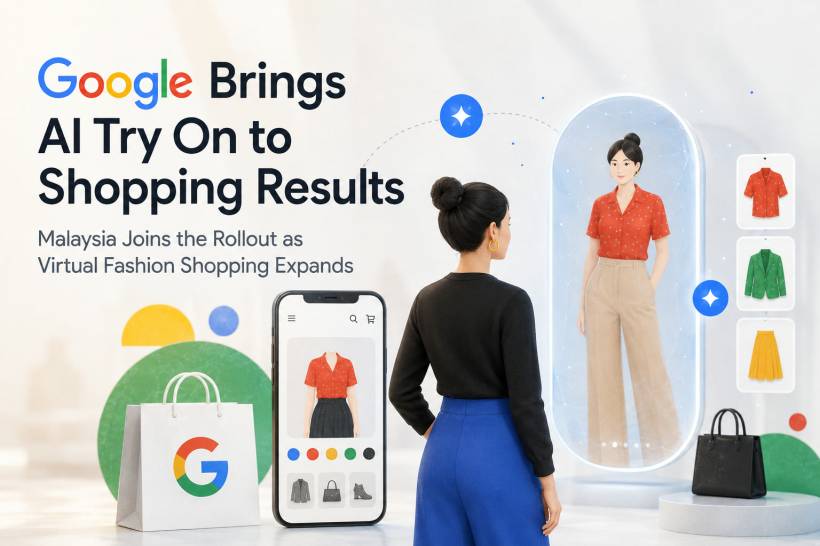
Online shopping has always had one major weakness: you can see the product, but you still have to imagine how it will look on you. That gap is especially obvious with clothes and shoes. A shirt may look good in a product photo, but the real question is whether it suits your body shape, style, and overall look.
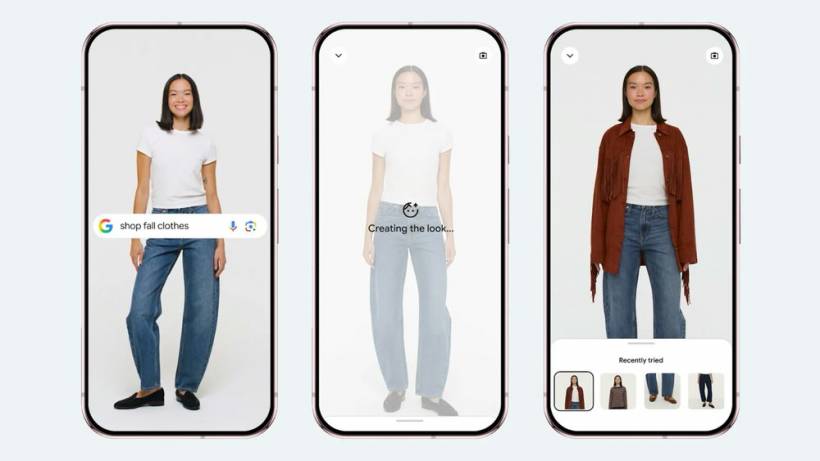
Google is now trying to reduce that uncertainty with its AI-powered "Try On" feature. The tool allows shoppers to upload a full-length photo and generate a preview of how selected apparel or shoes may look on them before they click through to a retailer's website.
The feature has been rolling out across Google's shopping surfaces, including Search, Shopping, and Images. Singapore was recently highlighted as one of the markets receiving the feature, but the bigger news for local readers is that Malaysia is also already included in the rollout.
What Google's AI Try On Feature Actually Does
Google's Try On feature is designed to make online fashion shopping feel more visual and more personal. Instead of relying only on product photos, model images, or size charts, users can see a generated preview of the item on their own body.
The process is simple from the shopper's side. A user uploads a full-length photo, chooses an eligible item, and Google generates a visualization showing how that clothing or footwear item may look when worn.
The feature is meant to support different fashion categories, including tops, bottoms, dresses, and shoes. For shoppers, this can make the browsing process more confident because they are no longer judging the item purely from a product image.
Of course, this does not replace a real fitting room. The generated image is still an AI preview, not a guarantee of exact fit, comfort, fabric feel, or sizing accuracy. But it does help answer one important question earlier: "Can I imagine myself wearing this?"
Why This Changes the Shopping Journey
The interesting part is not only the technology itself. It is where the feature appears.
Traditionally, shoppers would search on Google, click a product listing, land on a retailer's website, and then evaluate the item from there. With AI Try On, part of that evaluation now happens before the click.
That changes the customer journey.
A shopper may decide whether an item is worth exploring while still inside Google's shopping experience. If the preview looks appealing, they may be more likely to click through. If it does not, they may skip the listing even if the product ranking remains unchanged.
For retailers, this creates a new pre-click decision layer. Product visibility is no longer only about appearing in search results. It is also about how well the product performs visually when users interact with Google's AI shopping tools.
Why Retailers Should Care About Product Listings
For online retailers, this feature makes clean product data even more important. If Google's shopping experience depends on product listings, then weak or incomplete product information may limit how often an item appears with richer features.
Retailers should pay closer attention to product feeds, images, titles, categories, variants, and availability data. The better the product information, the better the chance that Google can understand and present the item properly.
This matters because fashion shopping is highly visual. A poor product image, unclear category, or inconsistent listing may reduce the item's appeal even before a user reaches the retailer's website.
Retail teams may need to work more closely with marketing teams to make sure their listings are ready for this new type of shopping experience. It is no longer just about having products online. It is about making those products machine-readable, visually usable, and suitable for AI-assisted discovery.
Malaysia Context: Is Google Try On Available Here?
For Malaysia, the situation is better than "coming soon." Google Malaysia has already announced that the Try On tool is available locally.
That means Malaysian shoppers should begin seeing the feature where eligible products and supported shopping surfaces are available. However, like many Google feature rollouts, visibility can still vary depending on account, device, language, region settings, product category, and whether the specific listing is eligible.
So, if you are in Malaysia and do not see the Try On button immediately, it does not necessarily mean the feature is unavailable. It may simply not be showing for that item yet, or the rollout may still be expanding gradually across users and listings.
For practical purposes, Malaysian users can treat this as an active rollout rather than a distant future feature.
What This Means for Malaysian Retailers
For Malaysian online sellers, fashion brands, marketplaces, and performance marketers, Google's AI Try On rollout is worth watching closely.
Malaysia has a very active online shopping culture, with users already comfortable buying fashion through marketplaces, brand websites, and social commerce channels. But returns, sizing uncertainty, and hesitation around fit remain common challenges.
AI Try On will not solve every problem, but it can influence how shoppers shortlist products. If a customer can visualize an item before visiting the retailer's site, the quality of the product listing becomes even more important.
Malaysian retailers should start reviewing:
• Product image quality
• Product titles and descriptions
• Apparel and shoe categorization
• Size and variant information
• Availability and pricing accuracy
• Landing page consistency after click-through
• Mobile shopping experience
The goal is to make sure the product looks trustworthy both inside Google's shopping surface and after the customer lands on the retailer's page.
Will It Affect Ads and Product Visibility?
Google has positioned Try On as an experience layer rather than a paid advertising feature. In other words, it is not meant to directly change ad pricing, rankings, or product visibility.
However, marketers should still pay attention to the indirect impact.
If shoppers use Try On before clicking, then click-through rates may change. Some products may attract more clicks because they look better in the generated preview. Others may receive fewer clicks because users decide earlier that the item is not for them.
That means performance changes may appear in reporting even if bids, budgets, and rankings remain the same.
For example, a retailer may notice that certain dresses, sneakers, or tops suddenly perform better after Try On becomes more visible. Another retailer may see lower clicks but higher conversion quality because shoppers are more confident before reaching the product page.
That is why marketers should not only look at total traffic. They should also review product-level performance, conversion rates, and engagement patterns after the rollout.
Why Virtual Try On Is Becoming Important
Virtual try-on is becoming more important because online shopping is moving beyond simple search results. AI is making the discovery process more interactive, visual, and personalized.
Instead of only showing product links, platforms are trying to help users make decisions earlier. This includes visual previews, AI-generated recommendations, personalized shopping assistants, and more direct purchase flows.
The broader direction is clear: shopping journeys are becoming shorter and more compressed. More evaluation happens before the user reaches the retailer's website. More decisions happen inside the platform where discovery begins.
That creates both opportunity and risk.
For shoppers, it can mean more confidence and less guesswork. For retailers, it means product presentation must be strong before the click, not only after it.
The Bigger Shift Toward AI Shopping
Google's Try On feature fits into a wider shift in AI commerce. Shopping is no longer just about typing a keyword and choosing from a list of links. It is becoming more conversational, visual, and assisted.
This is also why other AI commerce ideas, such as shopping agents and faster checkout flows, are gaining attention. The common theme is convenience. Platforms want to reduce the number of steps between discovery and purchase.
For retailers, the challenge is to remain visible and valuable in that compressed journey. If AI tools help shoppers decide faster, brands need to make sure their product data, visuals, pricing, and landing pages are ready.
The winners will likely be the retailers that treat AI shopping surfaces as part of the customer experience, not just another traffic source.
Final Thoughts
Google's AI Try On feature is more than a fun shopping gimmick. It changes where product evaluation happens. Shoppers can now preview apparel and shoes before visiting a retailer's website, which means the decision to click may become more visual and more selective.
For Singapore, the rollout shows how quickly AI shopping tools are expanding across the region. For Malaysia, the important point is that the feature has already been announced locally, so retailers and shoppers should start paying attention now.
For shoppers, this could make fashion discovery more confident and enjoyable. For retailers, it raises the importance of clean product listings, strong images, accurate catalog data, and mobile-friendly landing pages.
Online shopping has always struggled to recreate the confidence of trying something on in person. Google's AI Try On does not fully replace that experience, but it brings the digital version one step closer.











Comments 0