

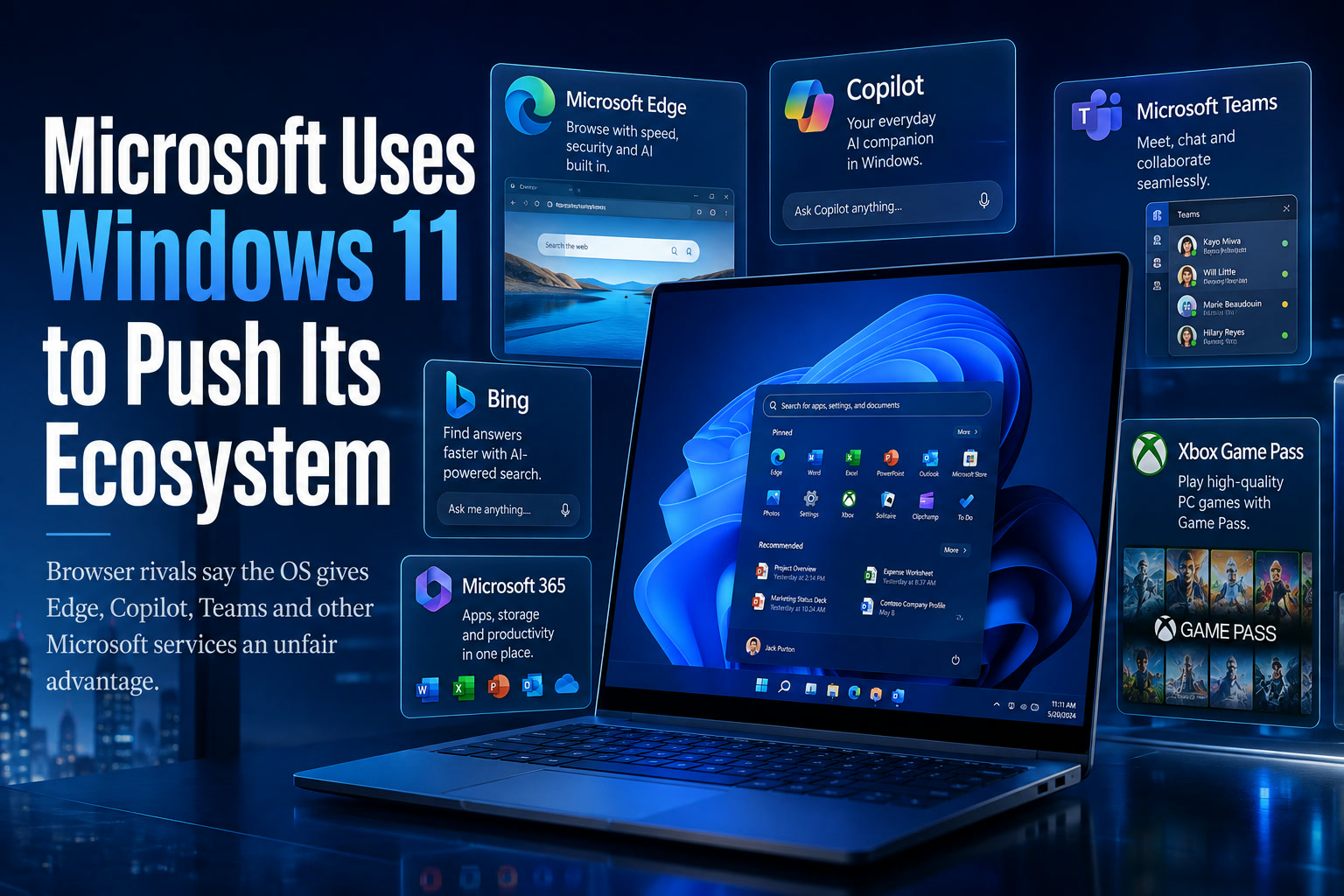
Microsoft has never exactly hidden the fact that Windows plays an important role in promoting its wider ecosystem. Edge ships with the operating system, Copilot is deeply integrated into Windows 11, Microsoft 365 receives prominent placement, and services such as Bing, Teams and Xbox Game Pass are regularly surfaced across different parts of the experience.
What is different now is that Microsoft has effectively acknowledged this strategy in its own corporate reporting.
In its latest annual filing with the US Securities and Exchange Commission, Microsoft explicitly described Windows as a platform it can use to strengthen other areas of the business. That includes increasing engagement with Microsoft Edge, Bing, Copilot, Teams, Microsoft 365 Consumer and Xbox Game Pass, while also supporting the company's broader cloud ambitions.
For Microsoft, this is simply ecosystem strategy. For some of its competitors, however, it is further evidence that the company is using control of the world's dominant desktop operating system to give its own products an advantage.
Microsoft Says Windows Helps Grow More Than Windows
The relevant wording in Microsoft's annual filing is unusually direct.
The company says one of its priorities is:
"Leveraging Windows to fuel our cloud business, grow our share of the PC market, and drive increased engagement with our services…"
by Author
It then specifically identifies Edge, Bing, Copilot, Microsoft Teams, Microsoft 365 Consumer and Xbox Game Pass among the services benefiting from that approach.
There is nothing particularly shocking about a technology company attempting to connect its products together. Microsoft operates Windows, Azure, Microsoft 365, Xbox, Bing and a rapidly expanding AI business, so encouraging customers of one product to use another is commercially logical.
The more difficult question is how aggressively Windows should be allowed to steer users toward Microsoft-owned services when Windows itself controls so much of the desktop PC market.
That is where browser companies are pushing back.
Browser Choice Alliance Calls Microsoft's Strategy Unfair
The Browser Choice Alliance, which includes companies behind browsers such as Google Chrome, Opera and Vivaldi, argues that Microsoft's own filing validates concerns it has raised for years.
According to the group, Microsoft uses its operating-system position to direct Windows users toward Edge and other Microsoft products.
Its argument is not simply that Edge comes preinstalled. Virtually every operating system includes a default browser.
The concern is how Windows presents alternatives after a user has already chosen another browser.
Over the years, Windows users have encountered prompts recommending Edge, Bing suggestions inside the operating system, notifications encouraging users to reconsider their browser choice and Microsoft services that occasionally open in Edge even when another browser has been selected as default.
Critics argue that each individual prompt may appear relatively harmless, but together they create persistent pressure to remain inside Microsoft's ecosystem.
The Browser Choice Alliance says this undermines genuine choice and makes it more difficult for rival browsers to compete on equal terms.
Preinstalling Edge Is Only Part of the Argument
There is an important distinction between including a product and actively promoting it after the customer has chosen something else.
Apple includes Safari on macOS and iOS. Google includes Chrome on many Android devices. Microsoft including Edge with Windows is therefore hardly unusual.
The controversy begins when operating-system integration goes further.
Imagine a user installs Chrome, Firefox, Opera or Vivaldi and deliberately makes it the default browser. If Windows subsequently displays messages encouraging that person to switch back to Edge, prioritises Bing-powered experiences or opens certain Microsoft links using Edge-specific mechanisms, competitors argue that the default-browser choice is being weakened.
The issue becomes even more complicated because Microsoft controls both the operating system and the competing browser.
A third-party browser developer must convince users to download, install and keep its software. Microsoft can place Edge directly in Windows and decide how browser-related settings and system prompts behave.
That difference is at the heart of the competition argument.
Microsoft Isn't the Only Tech Giant Playing the Ecosystem Game
It would be misleading to portray Microsoft as the only major technology company attempting to keep users within its own services.
Apple closely integrates Safari, iCloud, Apple Music, Apple TV+, iMessage and other services across iPhone, iPad and Mac.
Google combines Android, Chrome, Google Search, Gmail, YouTube, Google Drive and its advertising ecosystem.
Samsung promotes Samsung Internet, Samsung Wallet, Galaxy AI and its own account services across Galaxy devices.
Once a company controls an operating system, ecosystem integration becomes extremely valuable.
The difference often comes down to market position, historical regulation and how difficult the platform makes it for users to select competing products.
Microsoft receives particularly intense scrutiny because Windows remains fundamental to the desktop PC market and because the company has a long history of competition disputes involving browser bundling.
For anyone who remembers the Internet Explorer era, arguments surrounding Windows and browser choice are hardly new.
Windows 11 Has Sometimes Crossed the Line From Promotion Into Irritation
Microsoft's problem is that many Windows users have already experienced enough promotional behaviour to make them suspicious of further ecosystem integration.
Windows 11 has periodically displayed suggestions for Microsoft services in areas that users might reasonably expect to remain neutral.
Examples over the years have included recommendations inside Settings, notifications encouraging Microsoft account adoption, OneDrive prompts, Edge recommendations and Bing-related messaging.
Some users have also criticised promotional cards appearing in the Start menu or elsewhere in the Windows interface.
None of these features individually transform Windows into an advertising platform, but repeated prompts can make the operating system feel less like software the customer owns and more like another surface Microsoft can use to acquire users for its services.
That perception has arguably damaged Windows 11 more than Microsoft initially expected.
Bing Promotions Became Particularly Controversial
One of the more notorious examples involved Microsoft attempting to persuade users of competing browsers to try Bing or Edge.
At various points, users reported promotional pop-ups appearing even while using Google Chrome.
This generated strong backlash because the behaviour went beyond simply displaying Edge inside the Windows Start menu. Windows itself appeared to be monitoring an opportunity to promote Microsoft's services while the user was actively using competing software.
The original report also references claims from an anonymous person who said they previously worked inside Microsoft and alleged that internal pressure to increase advertising revenue contributed to some of these decisions.
Because those claims are anonymous and cannot independently establish internal decision-making, they should be treated as allegations rather than confirmed fact.
What is undeniable is that Microsoft experimented aggressively with Bing, MSN and Edge promotion across Windows during this period—and users noticed.
Microsoft Now Appears to Be Reconsidering Some of That Aggressiveness
Interestingly, Microsoft's current direction appears somewhat different.
CEO Satya Nadella has recently placed greater emphasis on improving Windows itself, particularly after years of complaints surrounding quality, inconsistency and unwanted features.
Microsoft has increasingly talked about getting the fundamentals right.
That includes issues such as:
That shift matters because Microsoft cannot indefinitely treat Windows primarily as a distribution mechanism for other products.
If users become frustrated with the operating system itself, the strategy eventually becomes counterproductive.
A Cleaner Windows 11 Is Beginning to Emerge
There are already signs Microsoft has heard at least some of the criticism.
The company has said it intends to remove certain promotional experiences from Windows 11 setup, and recent changes have reduced Bing-related clutter in some parts of the operating system.
Windows Search has become cleaner in some configurations, while Widgets has also been moving away from the heavily news-driven experience that frustrated users who simply wanted widgets.
That does not mean Microsoft is abandoning ecosystem integration.
Copilot remains central to the company's Windows strategy, particularly as Microsoft pushes the concept of AI PCs and Copilot+ PCs.
Microsoft 365 is also unlikely to disappear from the operating system, and Edge remains deeply integrated into Windows.
Instead, the company appears to be searching for a better balance between integration and intrusion.
Copilot Makes the Debate Even More Important
The browser argument becomes more significant when Copilot enters the picture.
Edge and Bing were relatively straightforward services: browser and search.
Copilot is potentially much broader.
Microsoft wants AI to become a fundamental layer across Windows, Office, Edge and its cloud services. That means the operating system could become an extremely powerful distribution platform for Microsoft's AI products.
If Copilot is built directly into Windows while rival AI assistants must be downloaded separately or operate within browsers, competitors could eventually raise the same concerns currently surrounding Edge.
The question will then become whether Windows is simply providing a useful built-in AI assistant or whether Microsoft is using operating-system control to make competing assistants unnecessarily difficult to use.
That debate is likely to become much larger as AI assistants evolve into agents capable of controlling applications, searching files and performing tasks across the desktop.
Why Microsoft Wants This Strategy
From Microsoft's perspective, the logic is easy to understand.
Windows itself is not necessarily the company's largest growth business anymore.
Azure, Microsoft 365 and AI services are strategically more important to Microsoft's future revenue.
However, Windows remains an enormous distribution channel.
Hundreds of millions of people interact with it every day. Every Windows installation represents a potential Microsoft 365 subscriber, Edge user, Bing searcher, Copilot customer or Game Pass subscriber.
Very few companies possess that kind of built-in audience.
Using Windows to introduce customers to those services therefore makes considerable commercial sense.
The challenge is determining where useful integration ends and anti-competitive steering begins.
User Choice Should Ultimately Be the Test
There is nothing inherently wrong with Windows recommending Microsoft products.
A newly configured PC needs a browser. It needs cloud-storage options. It increasingly benefits from AI integration. Providing Microsoft's own solutions by default is understandable.
The more important principle is whether users can meaningfully choose something else without being repeatedly pushed back toward Microsoft's services.
If someone chooses Chrome, Windows should respect Chrome.
If someone chooses Google Search, DuckDuckGo or another search engine, the operating system should not create artificial obstacles.
If a user disables Copilot, that preference should remain respected.
And if someone prefers local storage rather than OneDrive, Windows should not make the desktop experience unnecessarily confusing in an attempt to reverse that decision.
Providing defaults is one thing. Fighting against a user's deliberate choice is another.
Microsoft's Biggest Problem May Be Trust
The irony is that Microsoft currently has some genuinely strong products.
Edge is technically an excellent browser. It performs well, supports Chrome extensions through Chromium and includes useful features such as vertical tabs, sleeping tabs and workspace tools.
Microsoft 365 remains one of the strongest productivity platforms available.
Game Pass has built a strong position in gaming.
And Microsoft has invested enormously in AI through Copilot and its partnership with OpenAI.
Microsoft therefore does not necessarily need aggressive Windows prompts to convince people to try these products.
In fact, excessive promotion may achieve the opposite.
When Windows repeatedly encourages users to switch browsers or sign into another Microsoft service, people may reject the product simply because they dislike being pushed.
Microsoft would arguably benefit more from making Edge attractive enough that users voluntarily choose it.
The Browser Choice Debate Isn't Going Away
The Browser Choice Alliance is unlikely to stop challenging Microsoft simply because Windows becomes slightly less promotional.
For browser companies, the underlying structural issue remains unchanged: Microsoft controls Windows and also operates one of the browsers competing on that platform.
Every change to default-app settings, browser selection, protocol handling or search integration therefore receives scrutiny.
Regulators may also take an interest, particularly in markets where digital competition rules increasingly target companies that operate both major platforms and services competing within those platforms.
Microsoft will have to demonstrate that Windows remains open enough for rivals to compete fairly while still allowing the company to integrate its own products.
That balance will not be easy.
Final Thoughts
Microsoft's annual filing does not reveal some hidden strategy. Most Windows users already knew that the company uses its operating system to promote Edge, Bing, Copilot, Microsoft 365 and other services.
What makes the filing noteworthy is how clearly Microsoft now acknowledges Windows as a mechanism for increasing engagement across the rest of its business.
From a business perspective, that strategy is completely understandable.
From a competition perspective, however, it raises legitimate questions.
Windows is more than another Microsoft application. It is the platform on which competing browsers, productivity suites, cloud services and increasingly AI assistants need to operate.
Microsoft should absolutely be allowed to integrate its products into Windows, just as Apple and Google integrate their services into their respective ecosystems. But the operating system also needs to respect deliberate user choices once they have been made.
The encouraging part is that Microsoft appears to recognise that Windows itself needs more attention. Cleaner interfaces, fewer promotional interruptions, better performance and stronger consistency would do far more for Microsoft's reputation than another notification asking Chrome users to try Edge.
If Microsoft can make Windows genuinely better while allowing Edge, Copilot and its other services to compete primarily on their own merits, both the company and Windows users may ultimately benefit.











Comments 0