

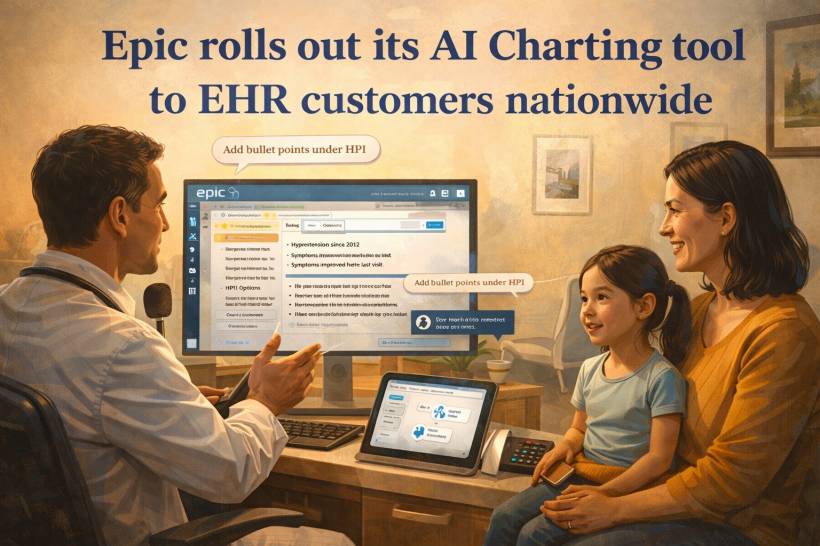
Epic is taking the next step in its clinical AI roadmap by making its integrated AI Charting tool available to its entire electronic health record customer base. After running an early pilot in Wisconsin, the company has now widened access so organizations across the country can use the ambient "scribe-like" experience and the built-in AI features that support documentation during patient visits.
This release builds on Epic's broader push into clinical AI workflows, especially the Art for Clinicians suite the company introduced at its summer users group meeting. The overall direction is clear: reduce the time clinicians spend wrestling with notes and administrative tasks, while improving the quality of the clinical encounter itself.
From "AI that writes" to "AI that adapts to the doctor"
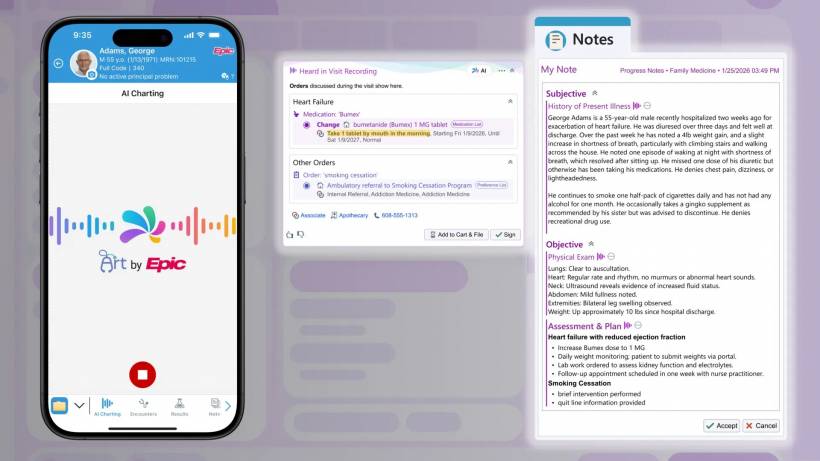
One of the most practical shifts in this rollout is the focus on personalization. Art for Clinicians has already been positioned as a tool that helps with pre-visit summaries, real-time clinical note generation, and a range of support tasks (including things like checking prior authorization requirements). Now, AI Charting expands the experience by letting clinicians tailor how the AI captures and formats documentation to match their style.
In other words, it's not just "here's what the AI wrote." It's "here's what the AI wrote, and here's how you can shape it quickly so it fits how you actually practice."
Voice commands and real-time note formatting
The initial version of AI Charting emphasizes speed and control. Epic says clinicians can use voice commands to adjust formatting on the fly, including asking the system to structure certain sections in specific ways. A simple example is telling the system to format a portion of the note in a bulleted style for clarity, such as documenting the history of a present illness in a cleaner, more scannable layout.
That may sound small, but in day-to-day clinical documentation, these "small" efficiencies add up. When you multiply a few saved minutes across multiple patients, multiple clinicians, and multiple departments, the productivity impact can become meaningful.
Early adopter feedback: "more connection, less screen time"
Epic points to Group Health Cooperative of South Central Wisconsin as the first organization to adopt the new features. The theme of the feedback is familiar to anyone watching ambient documentation trends: clinicians say it helps them stay present with patients rather than being pulled toward the keyboard and the screen.
Epic framed the benefit as a change in the patient visit experience itself, with leadership at the organization describing the tool as something that supports providers quietly in the background so they can focus on listening, building trust, and making decisions with patients rather than spending the visit "documenting the visit."
Adoption numbers suggest clinicians are actually using it
A common worry with new EHR features is that they sound impressive in announcements but fade in real usage. Epic is trying to counter that by highlighting usage growth for parts of the Art ecosystem. The company says Art Insights, which generates patient summaries from medical records, has been used at very large volumes each month since November.
The bigger point Epic is making is that clinicians are increasingly willing to rely on AI assistance when the tool is embedded inside their workflow and reduces friction rather than creating more steps.
Under the hood: partner tech plus clinician-driven tuning
Epic says it is integrating Microsoft's Dragon ambient AI capability into Art while also working directly with physicians to refine how it behaves inside the EHR. That combination matters. Ambient AI is powerful, but healthcare documentation is full of nuance, specialty-specific language, and strict expectations for accuracy. If the output feels generic or doesn't match clinical reality, clinicians abandon it quickly.
Epic's message here is that it's iterating fast based on clinician feedback, adjusting what works and smoothing out what doesn't. In practical terms, that typically means improving note structure, reducing "fluff," and making it easier to correct or steer the AI without creating more cognitive load.
AI isn't only for clinicians: billing and patient messaging get agents too
Epic also used the announcement to spotlight AI agents aimed at administrative pressure points, especially revenue cycle operations and patient inquiries.
It highlighted "Penny," an automated billing and coding agent that Epic says is helping reduce coding-related denials and speed up parts of the denial-appeal process. It also pointed to "Emmie," a conversational assistant in the MyChart patient portal designed to absorb routine billing questions before they become staff workload. Epic claims at least one provider organization saw a sizable drop in billing-related messages shortly after deployment, which is exactly the kind of operational relief many systems are chasing.
Final thoughts
Epic's AI Charting rollout is less about flashy demos and more about something healthcare actually needs: practical documentation help that feels integrated, controllable, and clinician-friendly. If these tools continue to improve accuracy, reduce after-hours charting, and cut the administrative message flood, they won't just change how notes are written. They'll reshape how time and attention are spent during the visit, which is the real prize in modern clinical care.











Comments 0