

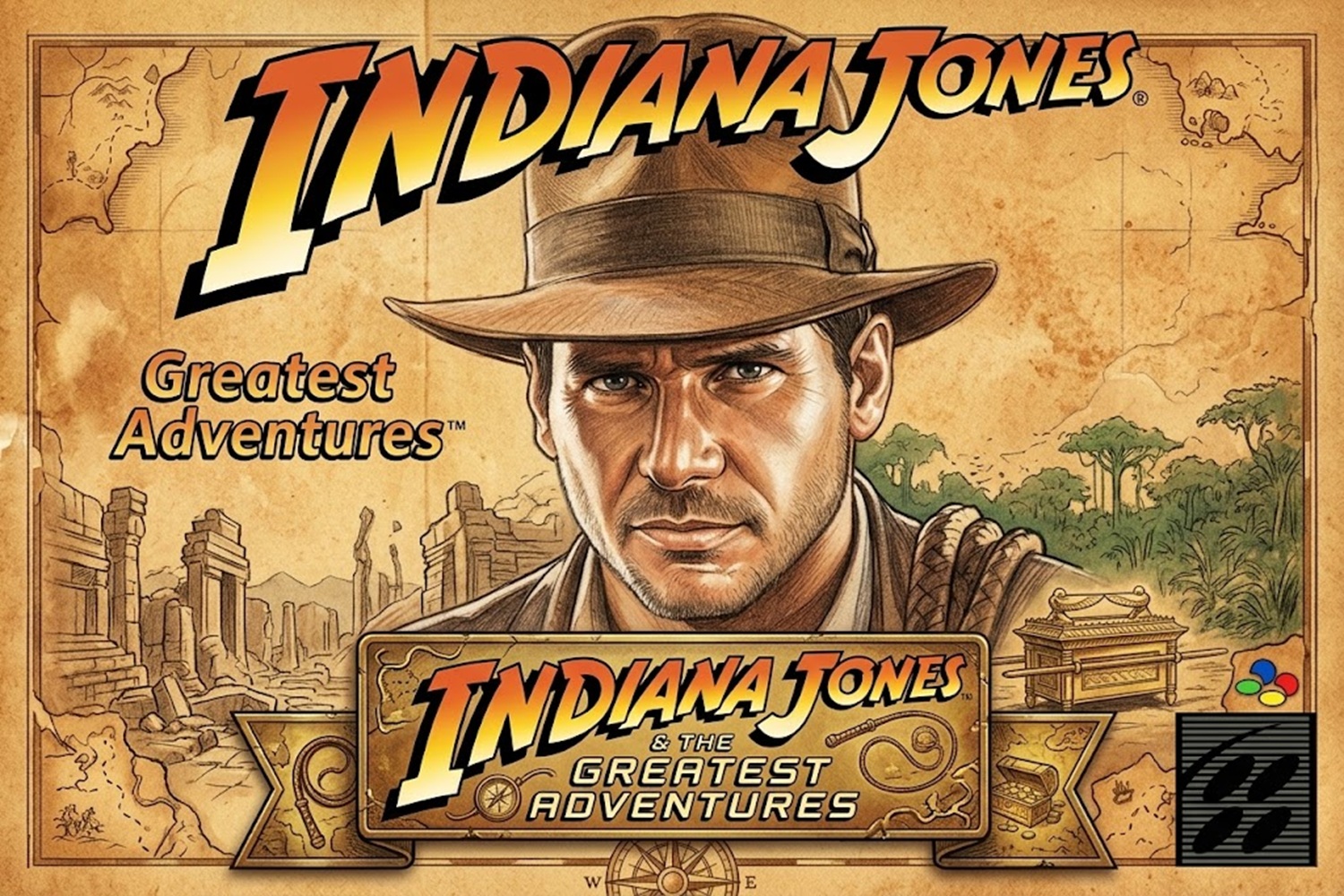
Indiana Jones' Greatest Adventures brings together some of the most recognizable moments from the original Indiana Jones film trilogy and transforms them into one continuous action-platforming adventure. Instead of focusing on a single movie, the game moves through Raiders of the Lost Ark, Indiana Jones and the Temple of Doom, and Indiana Jones and the Last Crusade, allowing players to experience locations and set pieces inspired by all three films. Indiana Jones explores ancient ruins, fights soldiers and cultists, survives traps, crosses dangerous terrain, and searches for legendary artifacts while relying heavily on his famous whip. The result is an ambitious movie adaptation that tries to recreate the feeling of an entire cinematic trilogy rather than one isolated chapter.
Now playable online through Lemon Web Games, Indiana Jones' Greatest Adventures brings this classic cinematic action-platformer directly into the web browser without requiring the original console hardware. Players can swing the whip, fight enemies, jump across dangerous gaps, survive traps, collect weapons, and revisit famous sequences inspired by three Indiana Jones movies in a single game. The browser-based experience provides a convenient way to rediscover one of the more ambitious licensed action games of the 16-bit era. With recognizable movie scenes, challenging platforming, varied environments, and a strong adventure atmosphere, Indiana Jones' Greatest Adventures remains an entertaining way to experience Dr. Jones' original trilogy in game form.
Three Indiana Jones Movies Combined Into One Adventure
One of the game's biggest strengths is its scope. Rather than adapting only Raiders of the Lost Ark or Temple of Doom, Greatest Adventures attempts to cover the entire original trilogy that existed at the time. The campaign begins with events inspired by Raiders, moves into the darker world of Temple of Doom, and eventually reaches the Holy Grail storyline from Last Crusade. Each portion introduces new environments and set pieces while preserving the same fundamental controls.
This structure gives the game a natural sense of progression. The player is not simply moving through increasingly difficult levels with no narrative connection. Instead, the campaign advances through several years of Indiana Jones' fictional adventures, recreating different enemies, artifacts, and locations along the way. Even players who know the films well can enjoy seeing how familiar scenes were transformed into interactive stages.
The trilogy format also prevents the experience from becoming overly dependent on one visual theme. Jungle temples, deserts, cities, caves, palaces, mine shafts, castles, and ancient ruins all appear during the journey. Each movie brings a noticeably different atmosphere. The game continually feels as though Indiana is travelling somewhere new.
The Adventure Begins With Raiders of the Lost Ark
The opening portion draws heavily from Raiders of the Lost Ark, the movie that introduced audiences to Indiana Jones. Players encounter situations inspired by the famous South American temple sequence, including collapsing environments, traps, and the unforgettable escape from the enormous rolling boulder. This immediately establishes the game's emphasis on movement and environmental danger. Indiana needs to do far more than simply defeat enemies.
Later Raiders-inspired stages move through locations connected to Indy's search for the Ark of the Covenant. Cairo, excavation sites, ancient chambers, and enemy-controlled areas all contribute to the adventure. Familiar imagery from the film appears throughout, giving fans recognizable landmarks even when the level layouts are substantially expanded for gameplay.
The Raiders portion works particularly well because the movie already contains many sequences that naturally translate into an action game. Chases, traps, gunfights, fistfights, and archaeological exploration require relatively little reinterpretation. The game simply turns those cinematic moments into challenges the player must survive personally.
The Rolling Boulder Remains an Iconic Opening Challenge
Few Indiana Jones scenes are as recognizable as the giant rolling boulder from Raiders of the Lost Ark. Greatest Adventures naturally recreates this moment, turning what was originally a short cinematic escape into an interactive sequence. The player needs to keep moving while avoiding obstacles and maintaining enough speed to stay ahead of the approaching danger. Hesitation quickly becomes costly.
The sequence is memorable because it immediately communicates what kind of game this will be. Indiana is not an unstoppable superhero. Environmental hazards can be just as dangerous as armed enemies, and survival often depends on movement rather than combat. The player needs to react quickly instead of relying entirely on the whip.
It also serves as an effective tribute to the movie. Even someone unfamiliar with the rest of the game can immediately recognize the scene being recreated. Greatest Adventures repeatedly uses this technique, selecting moments from the films that translate naturally into interactive set pieces.
The Whip Is Indiana Jones' Most Important Tool
Indiana's whip defines much of the gameplay. It functions as his primary close-to-medium-range weapon, allowing him to strike enemies without standing directly beside them. This makes it useful against soldiers, animals, cultists, and other threats encountered throughout the campaign. Learning the effective range of the whip is one of the most important skills in the game.
The whip is also used for traversal. Certain gaps can be crossed by attaching it to overhead points and swinging forward, recreating one of Indiana's most recognizable cinematic techniques. These sections require careful positioning and timing because missing the swing can send Indy falling into hazards below. Combat and movement therefore share the same signature tool.
This dual purpose gives the whip more personality than a conventional attack button. It is not simply present because the character is famous for carrying one. Level design repeatedly makes it necessary. Indiana genuinely feels different from a standard platforming protagonist because the whip affects both how he fights and how he moves.
Whip Swinging Adds a Different Kind of Platforming
Traditional jumps handle many of the game's obstacles, but larger gaps frequently require whip swinging. The player needs to reach the correct position, connect with an appropriate point, and release at the right moment. A successful swing carries Indiana safely across areas that would otherwise be impossible to cross. The mechanic captures the adventurous movement associated with the films.
These sections become more difficult when enemies or environmental hazards are nearby. Players may need to clear the surrounding area before attempting a swing, or move quickly before something dangerous reaches them. Timing becomes increasingly important during later stages. A mechanic that initially feels straightforward gradually becomes more demanding.
Whip traversal also helps break up ordinary running and jumping. The player is constantly switching between combat, conventional platforming, and swinging movement. This variety keeps stages more active. The game wants Indiana to feel like an adventurer navigating dangerous terrain rather than merely a character moving from left to right.
Indiana Can Fight Without the Whip
Although the whip is central to the experience, Indiana also has access to close-range physical attacks and firearms during certain situations. Punches provide an option when enemies get too close for comfortable whip use. Weapons can offer additional range or damage when available. The mixture reflects the improvisational fighting style associated with the films.
Indy is often portrayed as someone who survives by using whatever is available rather than following one disciplined combat system. Greatest Adventures captures some of that attitude through its different offensive options. The whip may be iconic, but it is not always the only solution. Players need to adapt according to the situation.
This becomes especially important when several enemies appear at once. Keeping distance with the whip can prevent Indiana from being surrounded, while firearms provide another way to control dangerous encounters. Understanding when to use each option makes later stages significantly more manageable.
Temple of Doom Brings a Darker Atmosphere
The Temple of Doom portion shifts the tone considerably. The adventure moves into darker underground environments, dangerous caverns, ritualistic locations, and areas controlled by the Thuggee cult. The bright exterior locations associated with earlier sections give way to more oppressive interiors. The change reflects the darker atmosphere of the film.
Enemies also become more closely tied to the cult and underground complex. Indiana fights through hostile areas while navigating traps and environmental hazards that fit the setting. Flames, pits, machinery, and moving platforms make navigation increasingly dangerous. The environment itself often feels like another enemy.
This middle section helps keep the campaign fresh because it looks and feels different from the Raiders stages. The player is still using familiar controls, but the surroundings and pacing have changed. Greatest Adventures benefits greatly from being able to draw on three different movies.
The Mine Cart Sequence Changes the Pace
The mine cart chase is one of the most memorable action scenes from Temple of Doom, making it a natural choice for a game adaptation. Instead of standard side-scrolling movement, Indiana travels through underground tracks while hazards appear at high speed. The sequence emphasizes reaction and timing rather than ordinary combat. Players need to survive the ride rather than stop and explore.
This provides a welcome break from conventional platforming. After spending many stages walking, jumping, and fighting, suddenly travelling through a dangerous rail system makes the game feel faster and more cinematic. The player needs to respond immediately to obstacles rather than carefully studying them. The entire rhythm changes.
Vehicle and chase sequences like this are important because they recreate the blockbuster nature of the films. Indiana Jones movies frequently move from exploration into sudden large-scale action. Greatest Adventures tries to reproduce that pacing by interrupting conventional stages with more specialized sequences.
The Rope Bridge Creates Another Famous Set Piece
The rope bridge scene from Temple of Doom is another sequence strongly associated with Indiana Jones. A narrow suspended bridge creates immediate danger because movement options are limited and a fall would be fatal. Enemies become more threatening simply because the environment leaves little room to maneuver. Positioning matters enormously.
The sequence demonstrates how Greatest Adventures frequently uses familiar movie environments to create gameplay rather than treating them as decorative backgrounds. The bridge itself becomes the challenge. Combat techniques that work comfortably in an open room may become risky when standing above a massive drop.
Fans of the film can immediately understand why the scene was included. It represents exactly the kind of danger that defines Indiana Jones. Victory comes from surviving an impossible situation rather than dominating the environment.
The Last Crusade Brings the Search for the Holy Grail
The final major portion follows Indiana Jones and the Last Crusade, shifting the adventure toward the search for the Holy Grail. The movie's mixture of archaeology, military opposition, ancient puzzles, and family history translates naturally into the game's structure. Indiana travels through another selection of dangerous locations while approaching the Grail's resting place. The campaign gains a sense of approaching a final legendary discovery.
Stages inspired by Last Crusade include locations associated with enemy strongholds and ancient ruins. Soldiers return as major threats, while the environment becomes increasingly important as Indiana approaches the Grail trials. The final chapters feel appropriately climactic after the long journey through three films.
This portion also benefits from players already being familiar with the controls. By the time the Last Crusade section begins, the game can assume the player understands combat, jumping, whip swinging, and hazard avoidance. Challenges can therefore become more demanding without constantly reintroducing basic mechanics.
The Grail Trials Fit Naturally Into Game Design
The Grail trials from Last Crusade are already structured almost like video-game challenges in the film. Indiana needs to survive deadly tests by understanding clues and making precise choices. Greatest Adventures adapts that idea into platforming and environmental obstacles. The player must prove skill rather than simply defeat another group of enemies.
These sections create an appropriate shift near the end of the campaign. Indiana has spent much of the game fighting soldiers and surviving chases, but reaching the Grail requires something different. Observation and careful movement become increasingly important. The legendary artifact should not be accessible through brute force alone.
The Grail sequence also reinforces Indiana's identity as an archaeologist and adventurer. He may fight frequently, but combat is not the only reason he survives. Knowledge, awareness, and problem solving remain essential parts of the character.
Large Character Sprites Give Indiana Plenty of Personality
One of the most immediately noticeable visual features is the size of Indiana's sprite. He occupies a substantial portion of the screen, allowing animations to communicate more character than a tiny platforming figure could. His hat, jacket, whip, punches, jumps, and other actions remain clearly recognizable. The design helps connect the game visually to the movies.
Enemies also use relatively large sprites, making fights feel more physical. Soldiers and other opponents are easy to distinguish even during crowded encounters. Bosses can appear even more imposing. The large scale contributes to the cinematic presentation.
The trade-off is that players have slightly less visible space around the character than in games using smaller sprites. This can make sudden hazards more difficult to anticipate. Learning how quickly the environment scrolls becomes important. The presentation looks impressive, but it also influences difficulty.
Detailed Backgrounds Recreate the Adventure-Movie Feeling
The game makes strong use of 16-bit artwork to represent ruins, jungles, caves, cities, temples, deserts, and mechanical environments. Backgrounds are frequently filled with architectural details that help connect stages to the films. Stone carvings, machinery, excavation areas, military structures, and ancient chambers give each location a recognizable identity. The game rarely feels visually empty.
Lighting and color also change substantially between movie sections. Outdoor locations may use brighter colors, while Temple of Doom-inspired stages become darker and more oppressive. Last Crusade stages introduce another combination of military and archaeological imagery. The visual progression mirrors the narrative progression.
These backgrounds contribute significantly to the game's cinematic appeal. The player is not simply controlling Indiana against generic platforming scenery. Each location tries to suggest a specific scene or environment from the trilogy.
John Williams-Inspired Music Strengthens the Atmosphere
Indiana Jones would be difficult to separate from its iconic musical identity, and Greatest Adventures makes extensive use of recognizable themes and cinematic-style arrangements. The familiar adventure music immediately gives ordinary movement more excitement. Even simple platforming can feel more dramatic when accompanied by music associated with the films. The soundtrack helps overcome the technical limitations of the hardware.
Different sections use music suited to their respective atmosphere. Tense areas receive more threatening arrangements, while major action sequences increase the energy. The soundtrack continually reminds players that they are experiencing a movie-inspired adventure rather than a generic platformer. Audio plays a major role in maintaining that illusion.
For fans of the films, hearing familiar musical ideas while controlling Indiana adds considerable nostalgic value. The visuals may recreate locations, but the music often completes the connection. It remains one of the strongest elements of the presentation.
Environmental Hazards Are Often More Dangerous Than Enemies
Indiana spends much of the game fighting human and animal opponents, but environmental hazards can be even more threatening. Pits, spikes, collapsing platforms, fire, rolling objects, and moving machinery frequently appear during stages. The player needs to watch the environment constantly. Defeating every enemy does not guarantee safe progress.
This fits the films extremely well. Indiana Jones is famous for surviving collapsing temples, unstable bridges, traps, vehicles, and machinery just as much as gunfights. Greatest Adventures captures that balance by making navigation dangerous in its own right. Platforming is not simply transportation between battles.
Later stages frequently combine enemies and hazards. A soldier positioned beside a dangerous gap can be far more difficult than the same opponent standing on open ground. Players need to think about where they are fighting, not only who they are fighting. Positioning becomes increasingly important.
Boss Encounters Break Up the Platforming
Major enemies and set-piece encounters provide clear milestones throughout the adventure. Some confrontations are inspired directly by characters or situations from the films, while others are expanded into larger game-like battles. These fights generally require players to observe attack patterns and identify safe opportunities. Charging forward blindly can quickly drain Indiana's health.
The whip remains useful during many encounters because it provides range without requiring Indy to stand directly beside the enemy. Other weapons can also become valuable depending on what is available. Movement is often just as important as attacking. Avoiding damage creates the opening needed for a counterattack.
Bosses also help communicate progression through the trilogy. Each major victory represents another chapter completed in Indiana's journey. By the final sections, the player has survived a broad range of threats drawn from three films.
The Game Can Be Surprisingly Difficult
Indiana Jones' Greatest Adventures is not an especially forgiving action-platformer. Enemies can appear in dangerous positions, platforming sections require precision, and environmental hazards can quickly punish mistakes. Limited health means repeated damage can end a stage before the player fully understands what is ahead. Memorization becomes increasingly valuable.
The large character sprites can contribute to this challenge because there is less room to see upcoming hazards. Players may need to learn difficult sections through repeated attempts. What initially feels unpredictable gradually becomes manageable once enemy positions and platform timings are understood. Persistence is rewarded.
The challenge is especially noticeable during sequences that combine several mechanics at once. Fighting enemies while jumping between dangerous platforms or preparing a whip swing requires quick decisions. The game frequently expects players to move confidently rather than cautiously inching forward. Practice makes a major difference.
Learning Enemy Placement Makes Progress Easier
Repeated attempts gradually reveal how carefully enemy encounters are positioned. A soldier waiting beside a platform edge may be intended to catch players who rush forward without looking. Another enemy may appear immediately after a jump, punishing anyone who lands carelessly. Recognizing these patterns turns frustrating encounters into manageable situations.
This means progress often comes through knowledge as much as reflexes. Once the player remembers what is ahead, they can prepare the correct attack before entering danger. The whip's range becomes particularly useful when an enemy's position is known in advance. Preparation reduces unnecessary damage.
The same principle applies to environmental hazards. A difficult jump becomes easier once the player understands exactly where the safe landing point is. Greatest Adventures rewards familiarity. Each failure can provide information for the next attempt.
The Game Captures Indiana's Improvised Survival Style
Indiana Jones rarely survives because everything goes according to plan. His adventures are filled with mistakes, collapsing environments, unexpected enemies, broken vehicles, and improvised solutions. Greatest Adventures captures some of that feeling through constant shifts between fighting and environmental survival. Players frequently need to react rather than follow one perfect combat routine.
The whip helps reinforce this personality because it functions differently depending on the situation. One moment it is a weapon, and the next it becomes a traversal tool. Guns provide another temporary option, while punches become necessary when enemies move too close. Indiana adapts continually.
This prevents him from feeling like a conventional superhero character. He can defeat enemies, but he is vulnerable to ordinary hazards and mistakes. Success comes from surviving difficult situations rather than simply overpowering everything. That feels appropriately Indiana Jones.
Movie Fans Will Recognize Constant References
The game is filled with characters, environments, and situations designed to remind players of the films. Famous artifacts such as the Ark and Holy Grail naturally play major roles, while sequences involving the boulder, Cairo, mine carts, rope bridges, castles, and ancient temples create immediate recognition. Even players who have not watched the films recently may remember many of these scenes. The trilogy provides exceptionally strong source material.
These references are generally integrated into gameplay rather than appearing only as short visual cameos. A mine cart becomes an actual moving sequence, and the boulder becomes something the player needs to outrun. This makes the adaptation feel more interactive. Players are performing recognizable moments rather than simply watching them.
The condensed structure means not every movie event can appear, but the game focuses on moments that translate effectively into action. The result feels like a highlights tour of classic Indiana Jones cinema. That makes it particularly enjoyable for longtime fans.
The Factor 5 Style Is Easy to Recognize
Factor 5 had considerable experience creating technically impressive action games, and Greatest Adventures reflects that background. The large sprites, detailed environments, dramatic set pieces, and cinematic presentation share design ideas with other licensed action titles from the era. The game clearly aims to make the hardware feel more capable than a simple platforming engine. Visual spectacle matters.
The developers also understood that a movie adaptation needed variety. Repeating the same stage structure for every film would have wasted the source material. Instead, the game alternates between conventional platforming, environmental challenges, chase sequences, and other specialized moments. The pacing frequently changes.
This ambition occasionally contributes to difficulty because some sequences demand very specific timing. Yet it also prevents the adventure from feeling generic. Greatest Adventures continually tries to recreate the excitement of the films rather than settling for a basic licensed game.
A Different Kind of Movie Adaptation
Many movie games from the 16-bit era focused on a single film and expanded a limited number of scenes into an entire campaign. Greatest Adventures does the opposite by compressing three movies into one package. This creates a faster-moving narrative where iconic moments appear regularly. The game rarely stays with one storyline long enough to become repetitive.
The trilogy structure also gives players a broader sense of Indiana's career. They encounter different villains, artifacts, and locations across several years of adventure. The character's identity becomes clearer because so many familiar elements are present. It feels closer to an interactive celebration of Indiana Jones than a straightforward adaptation.
For players who already know the movies, this structure creates anticipation. Reaching a new section often raises the question of which famous scene will appear next. Recognition becomes part of the enjoyment. The game constantly rewards familiarity with the source material.
Why Indiana Jones' Greatest Adventures Still Stands Out
The game remains interesting because it is unusually ambitious for a licensed action title. Three major films are represented, and each contributes memorable environments and set pieces. The whip influences both combat and traversal, while chase sequences and environmental hazards provide variety beyond standard platforming. The developers clearly tried to capture Indiana Jones rather than merely place his name on a generic action game.
Its visual presentation also remains appealing. Large sprites, detailed backgrounds, recognizable locations, and dramatic music communicate the cinematic source material effectively. Even when the hardware cannot reproduce everything from the movies, the intention is obvious. The game feels like a genuine attempt to translate blockbuster adventure into 16-bit form.
Most importantly, it understands that Indiana Jones is about movement, danger, and improvisation. The player is constantly escaping something, climbing somewhere, fighting through trouble, or entering another dangerous ruin. That rhythm gives the game personality. It rarely allows Indiana to remain comfortable for very long.
Playing Indiana Jones' Greatest Adventures Online Today
Through Lemon Web Games, Indiana Jones' Greatest Adventures can now be played directly in your web browser with no downloads or setup required. Features of the web-based version include:
Playing Indiana Jones' Greatest Adventures through a browser makes it easy to revisit one of the more substantial movie adaptations from the 16-bit era. New players should expect a challenging platformer where learning enemy placement and environmental hazards is important. The whip is especially valuable because understanding its range can prevent unnecessary close-range damage. Taking time to learn how each stage behaves makes later attempts considerably easier.
Returning players can enjoy seeing how many scenes from the trilogy they still recognize. The rolling boulder, Cairo, mine carts, rope bridge, Grail quest, and other famous moments provide a steady stream of nostalgia. The game's difficulty may still be demanding, but its variety makes progress rewarding. Completing all three movie sections feels like finishing an extended cinematic adventure.
Who Should Play Indiana Jones' Greatest Adventures
Indiana Jones' Greatest Adventures is particularly suitable for players who enjoy licensed games that attempt to capture more than the appearance of their source material. The whip, archaeological environments, cinematic escapes, and famous movie sequences all contribute to making the adventure feel recognizably Indiana Jones. Fans can identify scenes from all three original films throughout the campaign. The game continually celebrates the character's classic era.
It is also a good choice for players comfortable with difficult retro platformers. Some sections require repeated attempts before enemy placement and timing become familiar. Progress can feel demanding, but learning the stages gradually makes them much more manageable. Players who enjoy mastering challenging sequences will find plenty to overcome.
Play Indiana Jones' Greatest Adventures Online Now
Indiana Jones' Greatest Adventures condenses three classic movie adventures into one substantial action-platforming journey. Players escape the rolling boulder, explore dangerous ruins, fight through Cairo, enter underground temples, survive a mine cart chase, confront cultists, cross dangerous bridges, battle enemy forces, and eventually pursue the Holy Grail. Indiana's whip serves as both a weapon and traversal tool, helping the game capture one of the character's most recognizable abilities. Frequent changes in scenery and gameplay keep the trilogy-spanning campaign varied from beginning to end.
Through Lemon Web Games, players can experience this classic Indiana Jones adventure directly in a modern browser and revisit a time when ambitious movie adaptations attempted to recreate entire blockbuster experiences within 16-bit hardware. Detailed environments, cinematic music, large character sprites, challenging platforming, and recognizable scenes make the game immediately appealing to fans of the films. While the difficulty can occasionally be unforgiving, overcoming each dangerous section feels suitably adventurous. Few retro movie games attempt to cover this much source material in one package.
Final Thoughts
Indiana Jones' Greatest Adventures succeeds because it understands that Indiana Jones is defined by more than fighting enemies. The character is constantly escaping traps, swinging across gaps, navigating ancient ruins, surviving collapsing environments, and improvising solutions when everything goes wrong. By combining whip combat with platforming, environmental hazards, chase sequences, and famous movie set pieces, the game captures much of that adventurous spirit. The player rarely has time to feel completely safe.
Bringing together Raiders of the Lost Ark, Temple of Doom, and Last Crusade also gives the campaign exceptional variety. Each movie contributes its own atmosphere, enemies, locations, and memorable scenes, allowing the game to move from jungle ruins and desert cities to underground temples, military installations, castles, and legendary archaeological sites. The trilogy structure makes the adventure feel much larger than a typical single-film adaptation. It is effectively a playable highlights collection from the original Indiana Jones era.
Through Lemon Web Games, Indiana Jones' Greatest Adventures can now be enjoyed directly in the browser, giving both longtime fans and new players a convenient way to revisit this ambitious 16-bit adaptation. Its demanding platforming may require patience, but the combination of iconic movie moments, whip-based gameplay, atmospheric music, detailed visuals, and constant environmental danger continues to give the game a strong identity. For anyone who wants to grab the fedora, crack the whip, and relive three legendary adventures in one game, Indiana Jones' Greatest Adventures remains a memorable journey.











Comments 0