

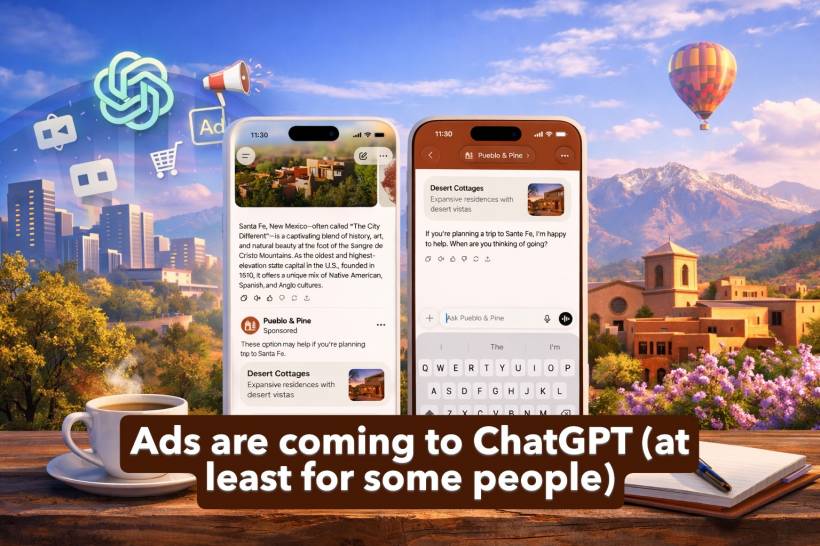
For a long time, ChatGPT has been one of the rare mainstream "big" apps that didn't interrupt you with advertising. That's about to change. OpenAI says it will begin testing ads in ChatGPT "in the coming weeks," starting in the United States, and the test will apply to the Free tier and the lower-priced ChatGPT Go plan.
This isn't a quiet experiment either. OpenAI is framing it as a deliberate shift in how it funds broader access to ChatGPT, while trying hard to avoid the usual "ads ruined the product" storyline that people associate with many ad-driven platforms.
What OpenAI says will (and won't) happen
OpenAI's core promise is basically: ads will be there, but they won't be inside the assistant's thinking.
They've said ads will be clearly separated from ChatGPT's generated responses, and they won't influence how the chatbot answers your questions. In other words, the assistant's output is supposed to stay optimized for helpfulness, not for selling you something.
They also say conversations won't be shared with advertisers, and user data won't be sold to advertisers.
So what will the ads look like?
From what's been reported so far, the first version is expected to look less like banner ads splashed across the screen and more like "sponsored" or shopping-style placements that appear in a distinct area (for example, placed below the conversation rather than blended into the assistant's text).
That design choice matters. If ads are visually and structurally separated, it's easier to trust that the answer you got is the answer the model would have given anyway, not something nudged by a sponsor.
Personalization, privacy, and the big "tracking" question
One of the first things people worry about with ads is tracking: "Are they building a profile on me from everything I type?"
OpenAI says these ads won't be personalized based on your past ChatGPT usage in the way traditional ad platforms often personalize using behavior history. They've also said users will be able to reset ad-related data once the feature is available.
There's still a practical reality worth keeping in mind, though: even without deep personalization, ads can be "contextual" (shown based on what you're asking right now). That can feel helpful when it's transparent and clearly labeled, and creepy when it's subtle or overly aggressive. OpenAI is trying to signal it's aiming for the first version, not the second.
Who won't see ads, and where ads won't appear
OpenAI says it will not show ads to users under 18, and it will block ads related to sensitive topics like health, mental health, and politics.
And if you're on the higher tiers, OpenAI says those plans stay ad-free: Plus, Pro, Business, and Enterprise won't get ads during or after the testing phase (based on current statements).
Why do this now?
Running AI at global scale isn't cheap, and OpenAI is openly under pressure to fund massive infrastructure and operating costs. Multiple reports describe ads as part of a broader revenue push, especially since the majority of users are on free access while only a smaller portion pays subscriptions.
This is also why the "Go" plan matters here. OpenAI has been positioning ChatGPT Go as a lower-cost subscription meant to widen access, and it's specifically included in the first wave of ad testing in the U.S.
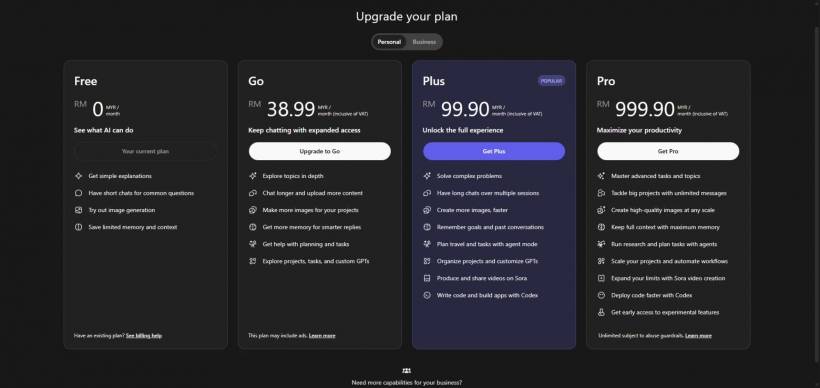
Will this reach Malaysia?
Right now, the test is U.S.-first. But if the test performs well (meaning it brings in revenue without triggering a user backlash), it's reasonable to expect expansion to other regions over time. That said, the timing and exact rollout for Malaysia hasn't been confirmed publicly in a "here's the date" way—so treat any prediction as just that: a prediction.
The real question: can they add ads without "enshittifying" the experience?
This is the tightrope. OpenAI (and Fidji Simo, who leads applications) is emphasizing trust-first principles—specifically saying they won't optimize ChatGPT for time spent or engagement just to increase ad exposure. That's a direct shot at the incentives that made many ad-driven platforms feel worse over time.
If they stick to: clear labeling, minimal intrusion, strict sensitive-topic boundaries, and genuinely unaffected answers, ads might feel like a tolerable tradeoff for keeping free access widely available. If they drift toward "more ads, more often, more targeted," people will notice fast—and they'll have plenty of alternatives.
If you want, I can rewrite this again in your preferred blog-house style (longer, more reflective, and Malaysia-context-first) and tailor the intro/outro to your Lemon-Web tone.











Comments 0