

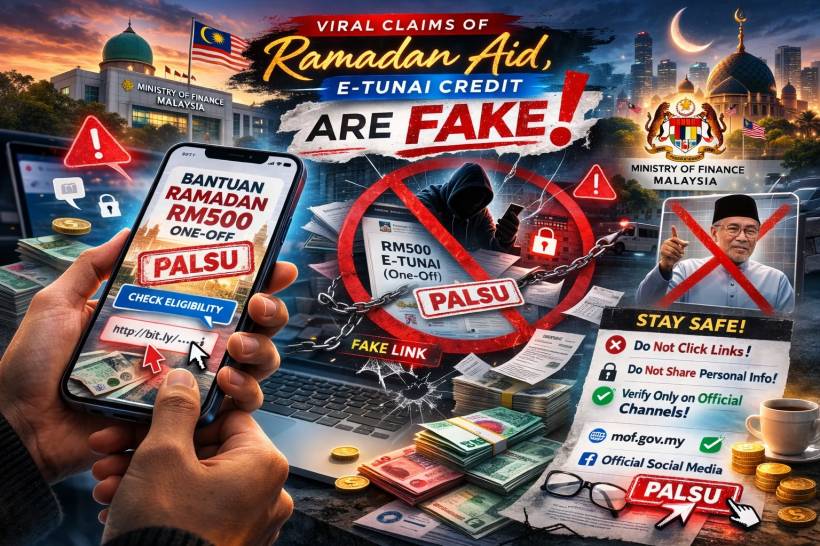
Every year around Ramadan, the internet suddenly becomes "generous." A poster pops up, a link appears, and before you know it, people are forwarding it in family WhatsApp groups like it is official news. This time, the claim making the rounds is a supposed RM500 Ramadan aid, sometimes described as a one-off "E-Tunai" credit credited in stages. Malaysia's Ministry of Finance (MOF) has come out clearly to say it is fake.
What the fake post typically looks like
Based on the examples highlighted in reporting, the message usually includes:
• A link telling you to "check eligibility"
• A Prime Minister's photo to make it look official
That "check eligibility" link is the real hook. It is designed to make you type in personal details, which can later be misused for scams, identity theft attempts, or account takeovers.
MOF's clarification, amplified by national leaders
MOF clarified the claim through its official channels and warned the public not to fall for it. The clarification post was also shared publicly by Prime Minister Anwar Ibrahim, which is usually a sign the government wants to shut down the rumour quickly before it spreads further.
Some versions of the story also mention the post being reshared in a chain involving Housing and Local Government Minister Nga Kor Ming, but the main point stays the same: MOF says the poster is fabricated.
Why these Ramadan "aid" scams spread so easily
Scammers love moments when:
• Emotions are high (helping family, preparing for expenses)
• A "small effort" feels reasonable (just click a link and check eligibility)
A fake RM500 aid promise is perfectly designed for that environment. It feels plausible enough that people share it first, then verify later.
What MOF is telling the public to do
MOF paired its clarification with the usual, but important, reminders:
• Do not share personal information with unverified sources
• Stop forwarding unverified "aid" messages
• Verify information through MOF's official website and verified social channels
A quick "before you share" checklist
If you want a simple rule that saves a lot of trouble:
• If it uses a VIP's photo as "proof," be extra suspicious
• If the link is not clearly an official government domain, do not touch it
Final thoughts
The most annoying part about scams like this is that they hijack something meaningful. Ramadan is already a season when people think about charity and support, so scammers exploit that goodwill with "aid" posters and fake eligibility links. MOF has already confirmed this RM500 claim is not real, so the safest move is simple: do not click, do not submit details, and do not forward it. Verify first, then share.











Comments 0