

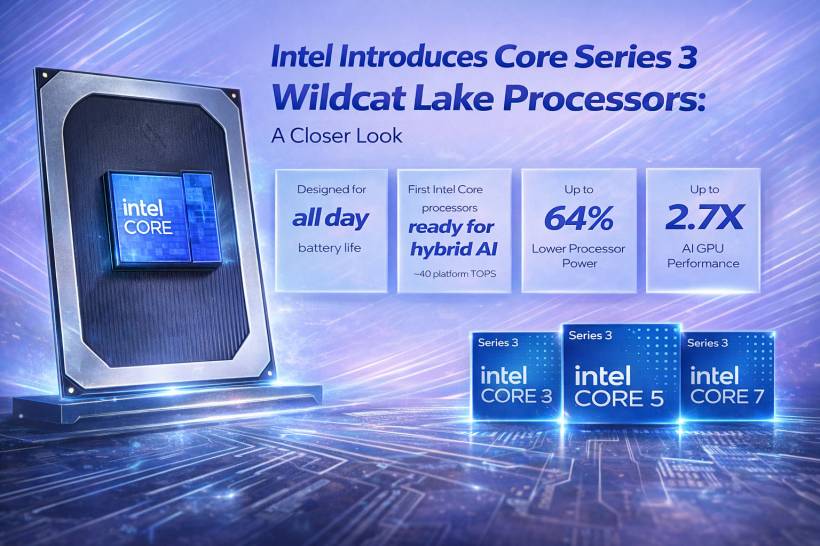
Intel has officially unveiled its latest lineup of mobile processors under the Wildcat Lake family, expanding its Core Series 3 portfolio. While the naming may sound familiar alongside Panther Lake, there's a clear distinction this time around. These are non-Ultra variants, aimed at a different segment of users.
At first glance, Wildcat Lake appears to be a more streamlined, efficiency-focused alternative within Intel's evolving mobile CPU strategy.
A More Compact Lineup For Mobile Devices
Wildcat Lake processors are designed specifically for laptops and mobile systems, with a noticeable emphasis on lighter configurations.
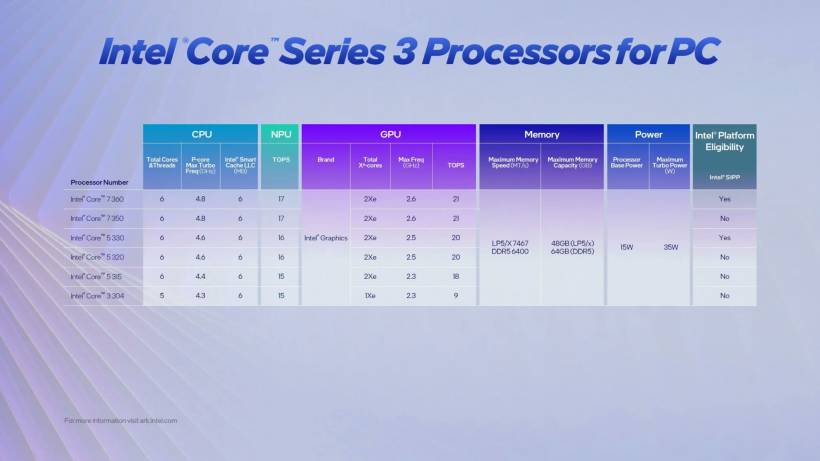
Compared to Panther Lake, these chips come with fewer cores and a simpler structure. Intel has introduced a total of seven models in this lineup, ranging from entry-level options like the Core 3 304 all the way up to the more capable Core 7 360.
This positions Wildcat Lake as a flexible option for manufacturers looking to build devices across different price points without stepping into high-end territory.
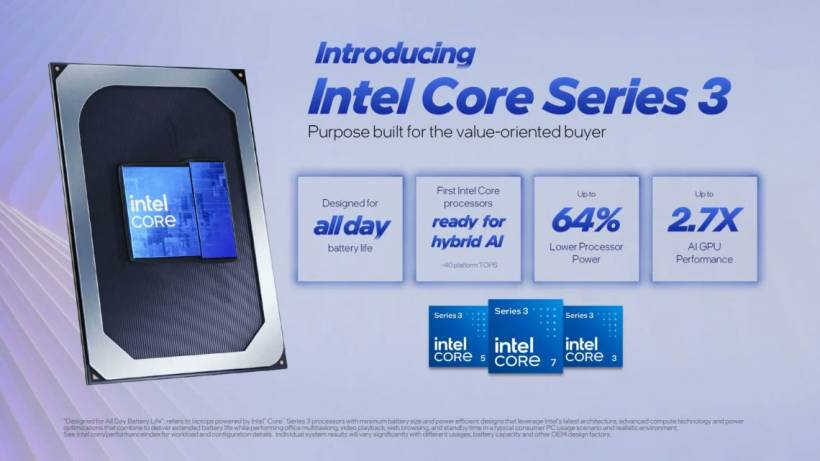
Core Design And Architecture Choices
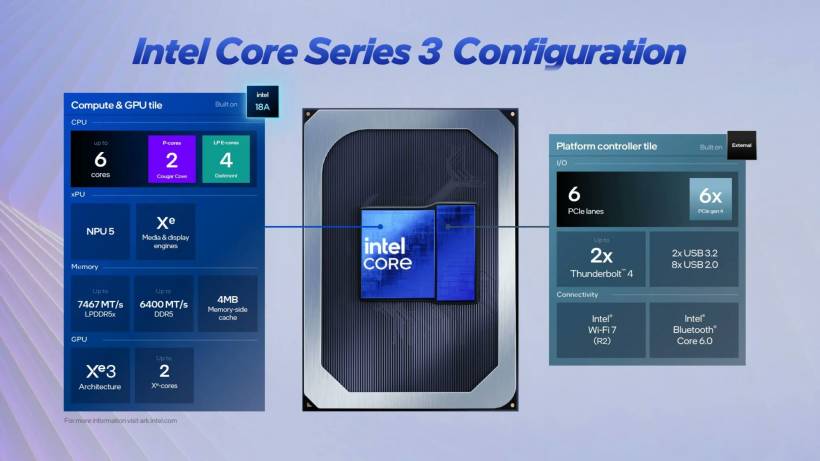
One of the key characteristics of this lineup is the absence of hyperthreading. In practical terms, this means each core handles a single thread, keeping performance predictable but more conservative compared to higher-tier chips.
Another notable decision is the lack of traditional efficiency cores (E-Cores). Instead, Intel has introduced low-power E-Cores designed for extremely lightweight tasks. These are meant to handle background processes with minimal energy usage rather than heavy workloads.
In terms of configuration, Wildcat Lake chips can include up to:
• Four Darkmont low-power E-Cores
This setup reflects Intel's continued effort to balance performance and efficiency, especially for portable devices.
Graphics, AI, And Performance Features
Despite being positioned as a non-Ultra lineup, Wildcat Lake still brings a respectable set of features.
On the graphics side, the processors can include up to two Xe cores, with boost speeds reaching around 2.6GHz. While not aimed at high-end gaming, this should be sufficient for everyday visuals, light creative work, and media consumption.
The inclusion of an NPU (Neural Processing Unit) is another highlight. With up to 17 TOPs of AI performance, these chips are clearly designed with modern workloads in mind, including AI-assisted applications and background processing.
Other key specifications include:
• Configurable power range from 15W to 35W
• Support for up to 48GB LPDDR5X-7467 or 64GB DDR5-6400 memory
Built On Intel's Latest Process Technology
Wildcat Lake is manufactured using Intel's 18A process, the same advanced node used in Panther Lake. This suggests that even with a smaller configuration, these processors should still deliver solid efficiency and improved battery life.
For mobile users, that balance between performance and power consumption is often more important than raw speed, especially in thin and light laptops.
Positioned As A Value-Focused Alternative
Intel's Core Series 3 lineup, including Wildcat Lake, appears to be targeting a growing segment of users who want good performance without stepping into premium pricing.
In that sense, these processors are shaping up as a potential competitor to newer lightweight laptop platforms, offering a balance between capability and affordability. For everyday productivity, media use, and general computing, they may hit a sweet spot.
Availability And What Comes Next
Wildcat Lake processors are already making their way into the market. Major laptop brands such as Acer, ASUS, HP, Lenovo, MSI, and Samsung are expected to release or have already released devices powered by these chips.
As for pricing, it will vary depending on how manufacturers integrate the processors into their systems, so the final cost will largely depend on the laptop configurations offered.
Final Thoughts
Wildcat Lake may not be Intel's most powerful lineup, but that's not the point.
This series is about efficiency, practicality, and accessibility. By focusing on balanced performance and modern features like AI acceleration, Intel is clearly aiming to cover the mid-range mobile space more effectively.
For users who want reliable everyday performance with better power efficiency, Wildcat Lake could turn out to be a surprisingly strong contender.











Comments 0