

Microsoft Authenticator is one of those apps many people rarely think about after setting it up. It quietly sits on the phone, approving sign-ins, protecting work accounts, and helping users access Microsoft 365, cloud services, internal systems, and business applications. Because of that, many organisations treat it as a trusted layer of protection.
That is exactly why a security flaw in an authenticator app deserves serious attention. Microsoft has released an important update for Microsoft Authenticator after confirming a critical vulnerability that could expose sign-in access tokens linked to work accounts. The issue affects both Android and iOS versions of the app, and Microsoft has urged users to update immediately.
Why This Vulnerability Matters
Multi-factor authentication is supposed to make account access harder for attackers. Even if a password is stolen, the attacker still needs another form of approval. For many companies, Microsoft Authenticator has become part of that daily security routine.
The problem with this vulnerability is that it targets the authentication process itself. According to Microsoft's advisory coverage, the flaw could allow an attacker to obtain a sign-in token for a user's work account. A token is important because it can represent an already approved session. If an attacker gets hold of it, they may be able to access the same services and data the affected user is allowed to use.
In a business environment, that could mean access to email, files, collaboration tools, cloud apps, or internal systems, depending on the user's permissions. If the affected user has administrative rights, the possible impact becomes even more serious.
How the Attack Could Work
The attack is not described as something that happens silently without any user involvement. The user still needs to interact with a request. The danger is that the request may appear legitimate enough to trick the person into approving it.
In simple terms, an attacker would need to convince the victim to respond to what looks like a normal authentication request. Once the user approves it, the app could be manipulated into requesting an access token on the user's behalf. That token could then be sent to a server controlled by the attacker.
One of the worrying parts is that affected users may not be shown clear enough information about what access they are granting. That makes the attack harder to recognise, especially for ordinary users who are used to approving Microsoft Authenticator prompts throughout the workday.
This Is Not Just a Normal App Bug
Some mobile app bugs are inconvenient but limited. This one is more serious because it involves identity and access. Microsoft classified the issue as critical, with reports referring to CVE-2026-41615 and a CVSS score of 9.6 in Microsoft's own assessment.
The reason this matters is that authentication tokens can extend the impact beyond the app itself. A compromised token could potentially be used to access connected services that trust the authentication flow. That makes this a wider organisational risk, not just a mobile app issue.
For companies that rely heavily on Microsoft 365, Entra ID, SharePoint, Teams, Outlook, Azure, or other cloud-connected platforms, identity security is often the front door to everything else. If that front door is weakened, the rest of the environment becomes more exposed.
Microsoft Says There Is No Known Active Exploitation So Far
The good news is that Microsoft has stated the vulnerability has not been actively exploited so far, and there are no publicly available exploits currently known. That does not mean the issue can be ignored. In security, a patch released before widespread exploitation is an opportunity to close the gap early.
Attackers often move quickly once details of a serious vulnerability become public. Even if there is no known exploitation today, organisations should not wait until incidents begin appearing. Updating early is the safer option.
Updated Versions Are Already Available
Microsoft has already released fixed versions of Microsoft Authenticator through the official app stores. Android users should update to version 6.2605.2973 or newer. iPhone users should update to version 6.8.47 or later.
For users with automatic app updates enabled, the update may already be installed or will arrive automatically. However, this is not something organisations should simply assume. Some users disable automatic updates, delay updates, use older phones, or have devices managed under different policies.
For that reason, IT teams should verify that devices are receiving the patched version, especially for users with access to sensitive systems or privileged accounts.
What Users Should Do Now
The first step is simple: update Microsoft Authenticator immediately from the Google Play Store or Apple App Store. Users should also check the app version after updating to make sure the patched version has been installed.
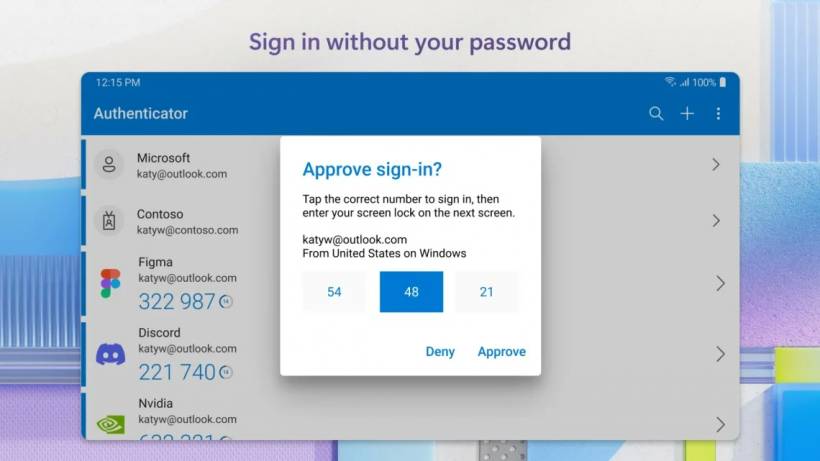
It is also worth reminding users not to approve authentication prompts they did not initiate. MFA fatigue and fake approval prompts remain common risks. If a sign-in request appears unexpectedly, the safest response is to deny it and report it to IT or the account administrator.
This is especially important for work accounts. Many people approve prompts automatically because they are busy or distracted. That habit can be dangerous when attackers rely on users clicking approval without checking the request properly.
What Organisations Should Review
For businesses, this update should be treated as more than a normal mobile app patch. IT teams should confirm whether Microsoft Authenticator is widely used across the organisation and whether users are running vulnerable versions.
Where mobile device management is in place, administrators should push or enforce the update. For unmanaged devices, communication is important. Users should receive clear instructions on what version they need and how to update it.
Organisations should also review sign-in logs for unusual activity, especially where token misuse may be suspected. Conditional Access policies, risk-based sign-in alerts, device compliance rules, and privileged account monitoring can all help reduce exposure.
A Reminder That Security Tools Also Need Maintenance
There is an easy mistake to make with security tools. Once deployed, people assume they are protecting the environment automatically. But security tools are still software, and software needs updates. Authenticator apps, endpoint agents, VPN clients, password managers, and security plugins all require maintenance.
This case is a reminder that even trusted security components can contain vulnerabilities. The answer is not to abandon MFA. MFA is still important. The answer is to keep the MFA ecosystem updated, monitored, and supported by good user awareness.
A security control is only effective when it is properly maintained.
Final Thoughts
The Microsoft Authenticator flaw is serious because it affects something many organisations depend on every day: trusted sign-in approval. While Microsoft says there is no known active exploitation so far, the safest response is still immediate action. Users should update the app, organisations should verify patched versions, and IT teams should remind users to be careful with unexpected authentication prompts.
This incident also highlights a bigger lesson. Security is not only about enabling MFA once and moving on. It is about maintaining the whole identity protection chain, from app updates and user awareness to access reviews and monitoring. When authentication tools are kept current and users understand what to watch for, organisations are in a much stronger position to prevent account compromise.











Comments 0