

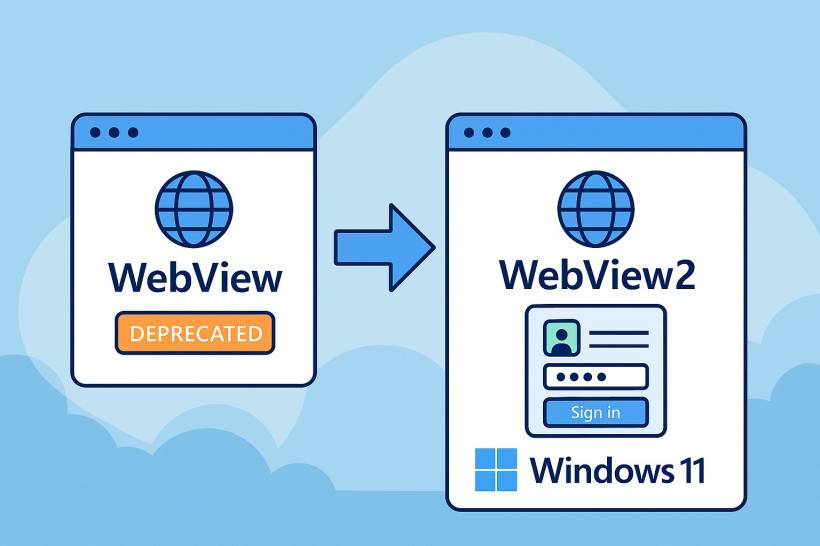
If you use Windows 11 regularly, you've probably interacted with WebView without ever realizing it. That login window that pops up when you sign into Microsoft Teams, Outlook, or other Microsoft apps isn't a full browser. It's a web control quietly embedded inside the app itself, designed to display web content without launching Edge or another browser.
That technology is now undergoing an important shift, and Microsoft is making it clear that WebView2 is the future.
What WebView Actually Does Behind the Scenes
At its core, WebView is a way for Windows applications to render web technologies like HTML, CSS, and JavaScript directly inside a native app window. Developers use it to create modern-looking interfaces and web-based sign-in flows while keeping everything inside the app.
This approach gives apps the flexibility of the web without breaking the user experience by sending you off to a separate browser window. It's convenient, familiar, and widely used across Microsoft's own ecosystem.
Why WebView2 Matters More Than the Original
WebView2 is Microsoft's modern take on this idea, built on the same Chromium engine that powers Microsoft Edge. That matters because it brings consistent behavior, better performance, and support for modern web standards that the older EdgeHTML-based WebView simply can't keep up with anymore.
Starting with the latest Patch Tuesday update for Windows 11, Microsoft is enabling Entra ID app sign-ins handled through the Web Account Manager to run on WebView2. This change is aimed at making authentication more secure and more consistent across apps and devices.
Better Security and Modern Authentication Features
One of the biggest reasons for the shift is security. WebView2 supports modern authentication scenarios that are becoming the norm in enterprise environments. This includes passwordless sign-in, passkeys, and conditional access policies that adapt based on risk, device state, or user location.
On top of that, WebView2 works smoothly with modern web frameworks like React and Fluent UI. This makes it easier for developers to build interfaces that look and behave the same across different apps, while also improving compatibility with third-party identity providers.
What IT Admins Need to Know
For most users, this transition should be invisible. Sign-in windows will still look familiar and behave as expected. Behind the scenes, though, IT administrators need to ensure that the WebView2 runtime is available and supported in their environments.
Microsoft has provided guidance for admins who want to explicitly enable or disable WebView2 usage in the Entra ID plugin. This involves registry changes, which means it should be approached carefully and tested before rolling out broadly.
If authentication already works correctly in Microsoft Edge, there's a strong chance it will work just fine in WebView2 as well.
A Strategic Shift, Not Just a Technical One
Microsoft has been clear that this move goes beyond a simple engine swap. According to the company, transitioning to WebView2 is part of a broader strategy to deliver more secure and user-friendly identity experiences for modern organizations and developers.
Looking ahead, future versions of Windows will rely entirely on WebView2 for Web Account Manager authentication. The older EdgeHTML-based WebView is on its way out, marking the end of an era and the beginning of a more consistent, web-standard-driven foundation for Windows apps.
For users and admins alike, this is one of those under-the-hood changes that quietly improves security and reliability without demanding much attention. And that's exactly how it's supposed to work.











Comments 0