

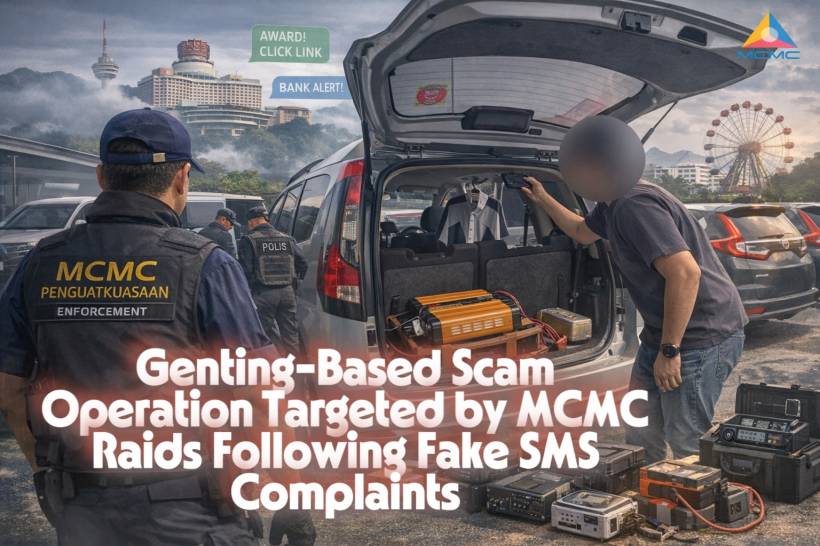
If you were up in Genting Highlands recently and your phone suddenly got weird messages that looked "legit enough," this news will feel a bit too close to home.
Malaysia's Malaysian Communications and Multimedia Commission (MCMC) says it has dismantled a scam operation in Genting Highlands that used fake base transceiver station (BTS) equipment to interfere with mobile networks and push out fraudulent SMS to people nearby. The operation reportedly involved two vehicles carrying the equipment, which investigators believe were used to intercept or manipulate communications and blast scam texts at potential victims.
Fake BTS: the "mobile tower in a car" trick (in plain terms)
A real BTS is basically a telco's cell tower equipment that helps your phone connect to the network. A "fake BTS" setup tries to imitate that environment.
Here's the scary part: your phone is designed to connect to the strongest/most suitable signal around you. If a rogue setup is close enough (and configured the right way), it can create conditions where nearby phones may connect or be influenced—then scammers can use that advantage to send messages that feel more believable because they appear in ways normal users don't expect.
MCMC's statement described the incident as involving network disruption plus the spread of scam SMS in the area, which lines up with what these setups are typically used for: reach people at scale, fast, and locally, especially in crowded places.
How MCMC found it (and what they seized)
According to reporting based on MCMC's statement, this wasn't a random traffic stop. It was the result of:
• technical intelligence
• network analysis
• an integrated operation involving a telecommunications company
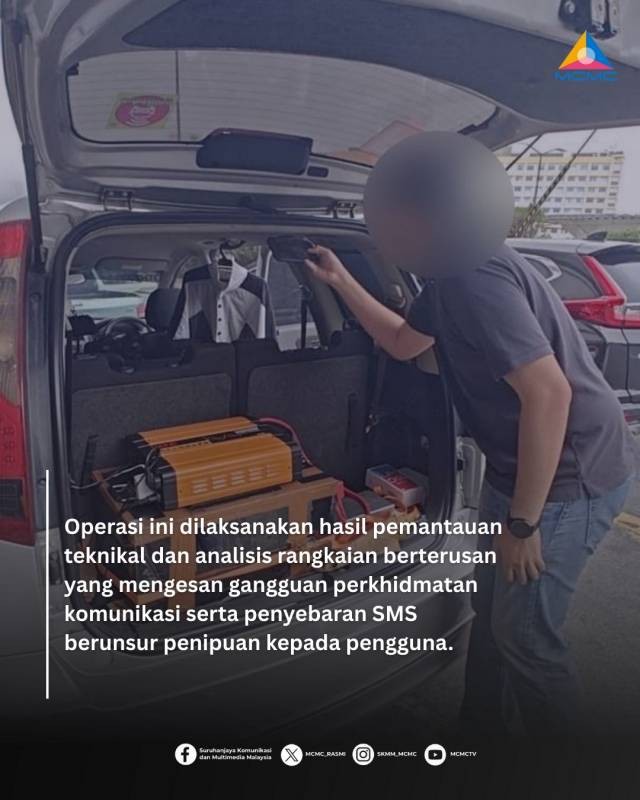
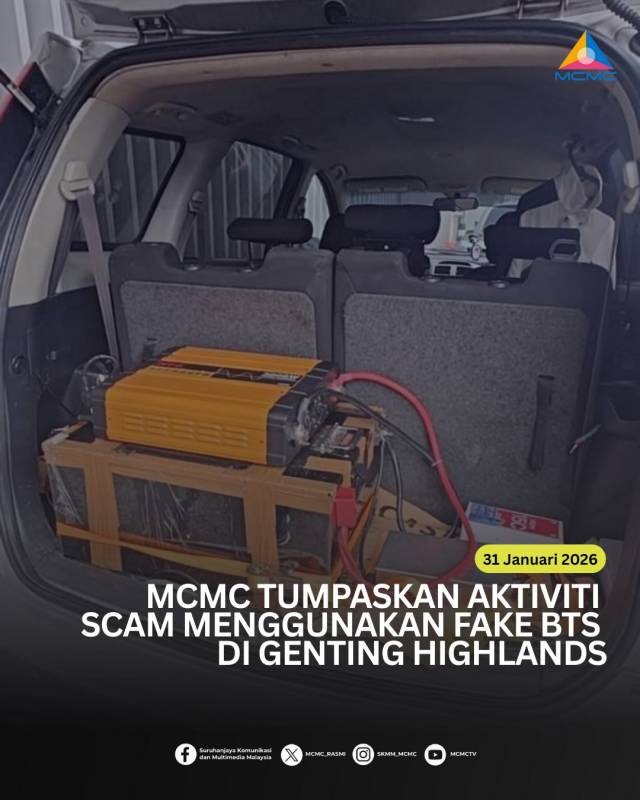
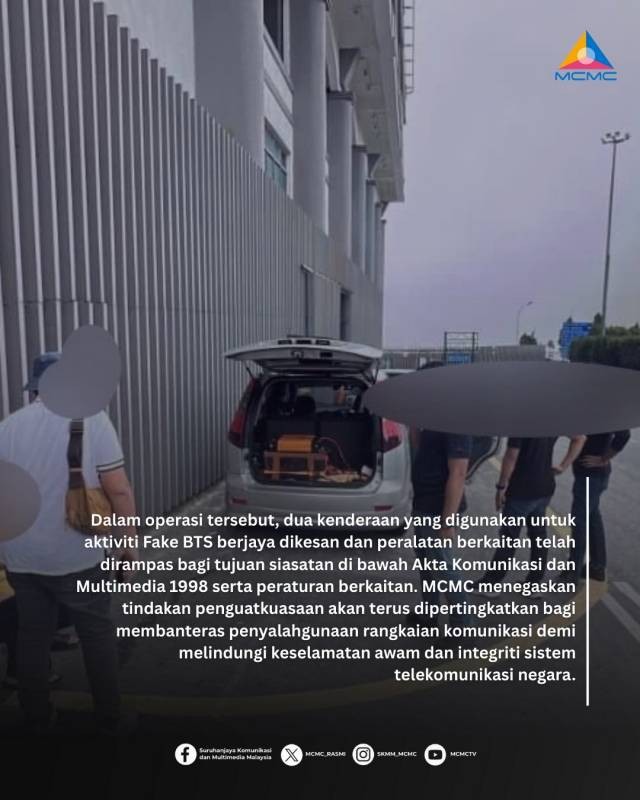
MCMC said the team detected two vehicles involved in fake base station transmissions on January 19, 2026, and that the equipment and control devices were seized for further investigation.
Why scam SMS from a fake BTS is such a big deal
Most people think scam SMS happens only when your number leaks somewhere and you get targeted from "somewhere else." But a fake BTS approach changes the game:
• It can be used in high-footfall areas where there are lots of potential victims
• It can create service disruptions, so people are already confused or distracted (not ideal when you're trying to stay alert)
• It adds a layer of credibility because the scam arrives through what people assume is a "normal" mobile channel
And Genting Highlands makes sense as a hunting ground: lots of visitors, lots of short-stay tourists, and plenty of moments where someone might click first and think later.
The laws involved, and the penalties MCMC highlighted
MCMC said the case is being investigated under:
• Regulation 16(1)(b) of the Communications and Multimedia (Technical Standards) Regulations 2000
The penalties cited in coverage include:
• For Regulation 16 (Technical Standards Regulations 2000): up to RM300,000 fine, up to 3 years' imprisonment, or both
(As always, the actual outcome depends on what prosecutors prove in court, but the point is clear: Malaysia treats this as a serious communications-security offence.)
What you can do if you receive suspicious SMS (especially in busy areas)
You don't need to become a telecom engineer overnight. A few habits cover most real-world situations:
1) Assume urgency is the scammer's main weapon
If the message screams:
• "fine will increase in 2 hours"
• "your parcel is held, pay now"
2) Don't tap links in SMS when you can verify another way
If it's "from a bank" or "from a delivery company," open the official app manually or type the official website yourself (not via the link). If the SMS is legit, the info will match what you see in your account.
3) If money is involved, move fast
Malaysia's National Scam Response Centre (NSRC) is set up to respond to online financial fraud. If you believe you've been scammed or funds have moved, contact your bank immediately or call 997 as soon as possible.
4) Report patterns, not just pain
Even if you didn't lose money, reports help enforcement map how scams are spreading. MCMC-related complaint routes and official advisories exist, and scam-awareness campaigns consistently encourage reporting suspicious activity rather than "just ignoring it and moving on."
The bigger picture: enforcement is becoming more technical (because scams are too)
MCMC said it will continue strengthening enforcement to keep Malaysia's networks secure. And honestly, that's the right direction—because scammers aren't just sending random spam anymore. They're using hardware, mobility (vehicles), and location-based tactics.
Also, it's a reminder that "scam prevention" isn't only about telling people not to click links. It's also about protecting the infrastructure so scammers can't weaponize the network layer in the first place.
Final thoughts
This Genting Highlands case is a solid example of why scam SMS can't be treated like "just annoying messages" anymore. When criminals start driving around with fake BTS gear, it becomes a communications security issue, not merely a consumer nuisance. Hopefully the takedown discourages copycats, and hopefully more high-traffic zones get the same level of technical monitoring—because nobody wants their weekend trip (or even a quick mall visit) to come with surprise scam texts as a bonus feature.











Comments 0