

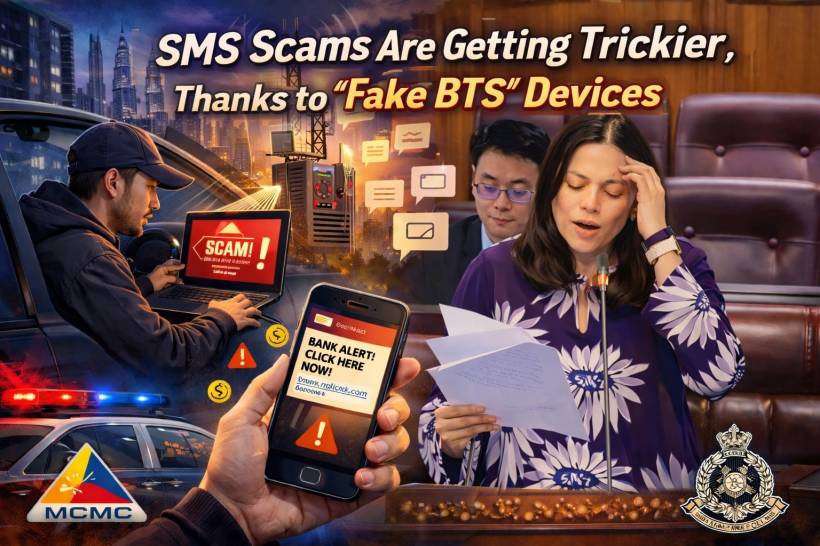
If you feel like scam SMS messages are getting harder to avoid lately, you are not imagining it. Malaysia has been tightening rules, improving filtering, and running enforcement operations for years, but scammers keep adapting. One of the biggest headaches right now is the rise of "fake BTS" devices, which can bypass the usual telco-based controls that normally help stop scam messages.
What is a "Fake BTS" and Why It's a Big Deal?
A BTS (base transceiver station) is basically the equipment that helps your phone connect to a mobile network. A "fake BTS" is a portable device that imitates that network equipment and can trick phones in a nearby area into interacting with it.
In practical terms, it lets syndicates push scam SMS directly to phones within range, without relying on the normal telco routing path where many scam filters and monitoring systems sit. Because it works locally (within a radius), it can be deployed in busy areas, move around, and still hit lots of targets fast.
Why Enforcement Is So Difficult
Deputy Communications Minister Teo Nie Ching's key point is mobility: these devices can be hidden in vehicles or carried in bags, which means the "where" changes constantly. That makes classic enforcement (identify a fixed location, raid it, seize equipment) much harder.
As a result, investigations often depend heavily on public reports and tip-offs to narrow down the real-time location of a syndicate operating a fake BTS.
What Malaysia Has Been Doing So Far
According to Teo, MCMC and the police have been running joint operations since September 2024, focusing on high-density areas such as Kuala Lumpur and Johor Bahru. These operations have disrupted multiple groups using fake BTS tactics.
Separately, recent reporting also shows ongoing enforcement actions specifically targeting fake BTS activity (including cases in Genting Highlands and Johor Bahru), which suggests this is being treated as an active and continuing threat, not a one-off trend.
The Legal Consequences: Not a Small Offence
Teo stressed that using or possessing fake BTS devices is an offence under the Communications and Multimedia Act 1998, with penalties that can reach up to RM1 million in fines, up to 10 years imprisonment, or both.
SIM Card Misuse: New Registration SOP Starts 27 February 2026
Fake BTS is one part of the problem. Another major factor is how SIM cards are misused for fraud (for example: large-scale registration, "industrial" use of numbers, or weak identity verification at registration points).
Teo said a new SIM card registration standard operating procedure will take effect on 27 February 2026, aimed at reducing line misuse, and the updated approach includes heavier penalties for telcos that fail to comply. Since today is 24 February 2026, this change is basically around the corner.
This comes alongside broader efforts around strengthening prepaid SIM registration safeguards that MCMC has been discussing publicly, including tightening accountability across the registration chain.
What You Should Do If You Receive a Suspicious SMS
Even with enforcement, the fastest "damage control" is still user behaviour. The basic rule is boring but effective: do not engage. A practical checklists:
• Do not call numbers included in a suspicious SMS
• Take a screenshot and note the sender number/short code and your rough location when received
• Report it to MCMC via their Aduan portal (aduan.mcmc.gov.my)
The Bigger Picture: This Is an Arms Race
What this story really shows is that scam prevention is no longer just "block bad numbers" or "filter suspicious links." When syndicates can bring their own portable infrastructure into the field (fake BTS), the fight becomes more physical and location-based, not purely digital.
That is why public reporting matters more than people expect: when the attacker is mobile, real-time information is what helps enforcement teams catch up.
Final thoughts
Scammers are getting more technical, and fake BTS devices are a good example of how they are trying to dodge the usual protections built into telco networks. The good news is Malaysia is actively enforcing against it and tightening SIM registration rules starting 27 February 2026. The part that still depends on all of us is simple: treat unexpected SMS messages like a trap by default, and report what you receive so enforcement can locate the syndicates faster.











Comments 0