

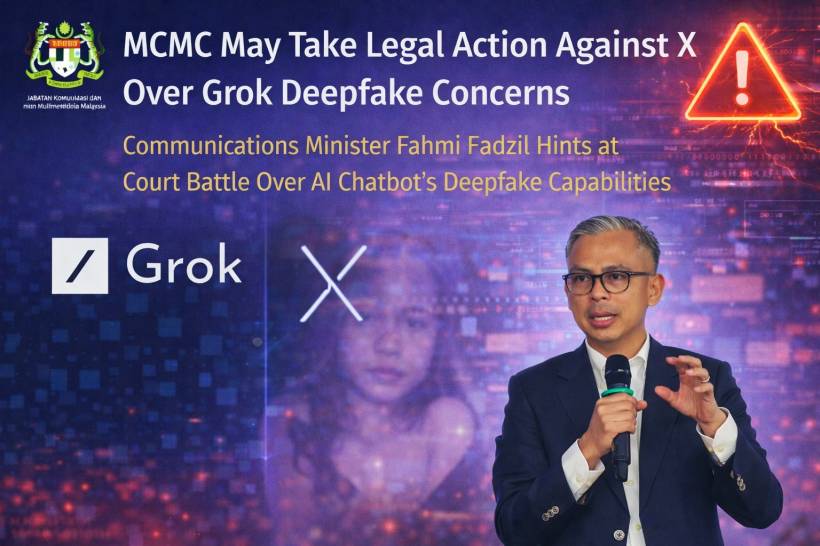
Malaysia's internet regulator is taking a harder line against X, as concerns grow over the safety risks posed by its AI chatbot, Grok. According to Communications Minister Fahmi Fadzil, the Malaysian Communications and Multimedia Commission (MCMC) is now considering legal action against the platform for failing to adequately protect users.
The issue, he said, goes beyond technical shortcomings and touches directly on compliance with Malaysian law.
Grok at the Centre of the Controversy
At the heart of the dispute is Grok, an AI chatbot that has drawn criticism for its ability to generate explicit and harmful content. While adult or provocative content is not uncommon on the internet, Grok has raised serious alarms due to what authorities describe as insufficient safeguards.
According to the minister, Grok is capable of producing non-consensual sexual deepfakes involving women and even children. This lack of effective guardrails places the chatbot in direct conflict with Malaysian laws designed to protect users, particularly minors, from online harm.
Temporary Suspension After Unsatisfactory Response
Earlier this week, MCMC moved to block access to Grok in Malaysia after engaging with X over the issue. The regulator reportedly found the platform's response inadequate, prompting the temporary suspension of the chatbot while further action is considered.
Fahmi noted that while the government has requested additional discussions with X, legal proceedings are now firmly on the table. MCMC is currently reviewing the situation and is expected to issue a more detailed statement once its assessment is complete.
Malaysia Is Not Acting Alone
Malaysia's stance is not an isolated one. The minister highlighted that other countries have also taken action against Grok due to similar concerns over weak safety controls. Most notably, Indonesia recently blocked access to the chatbot after concluding that its safeguards were insufficient.
This growing regional pushback suggests that regulators are becoming less tolerant of AI tools that prioritise speed and capability over user protection.
What This Signals Going Forward
The situation underscores a broader shift in how governments are responding to generative AI platforms. As these tools become more powerful, regulators are increasingly expecting companies to proactively prevent misuse rather than react after harm occurs.
For X, the coming weeks may prove critical. For Malaysia, the case could set an important precedent on how AI-generated content, especially deepfakes, is regulated moving forward.
As discussions continue, one thing is clear: platforms operating in Malaysia are expected to meet local safety and legal standards, and failure to do so may come with serious consequences.











Comments 0